
Last updated: November 27, 2026
Quick answer: for how to choose a sprinkler for sloped yards and runoff-prone areas, start with a rotary sprinkler and use short cycles of 5 to 10 minutes with a timer so the soil can absorb water before it runs downhill. In short, the sprinkler for sloped yards that waters slowly and evenly is usually the safer first pick on a slope; an oscillating sprinkler often throws water too fast for runoff-prone ground.
Key takeaways
- Slow watering matters more than wide coverage on a hill.
- Rotary heads usually fit slopes better than fast, flat spray patterns.
- Short watering windows with pause time help the soil drink instead of shed water.
- Sandy soil, hard soil, and bare patches all change how fast runoff starts.
- A timer does not fix the slope by itself, but it makes cycle-and-soak easier to manage.
What should the sprinkler do on a slope?
A sprinkler for a sloped lawn should match the soil’s intake speed, not just the shape of the yard. In how to choose a sprinkler for sloped yards and runoff-prone areas, water moves downhill before it soaks in, so the best choice is a head that applies water in a calmer pattern and lets you run shorter cycles.
Therefore, thinking about watering pace first matters. A rotary sprinkler turns or sweeps water in a slower stream, while an oscillating sprinkler lays water down in a wider, faster sheet. On uneven ground, that faster sheet can collect in the low end of the slope and leave the high end dry.
The point is not to chase the biggest spray pattern. The point is to keep the topsoil damp enough to absorb each pass. If you can picture water puddling after 2 or 3 minutes, that is a sign the pattern is too aggressive for the site.
How do rotary and oscillating sprinklers compare on hills?
A rotary sprinkler is usually the better fit for hills because it applies water more slowly than an oscillating sprinkler. That slower pace gives the soil time to take in moisture before gravity pushes it downhill.
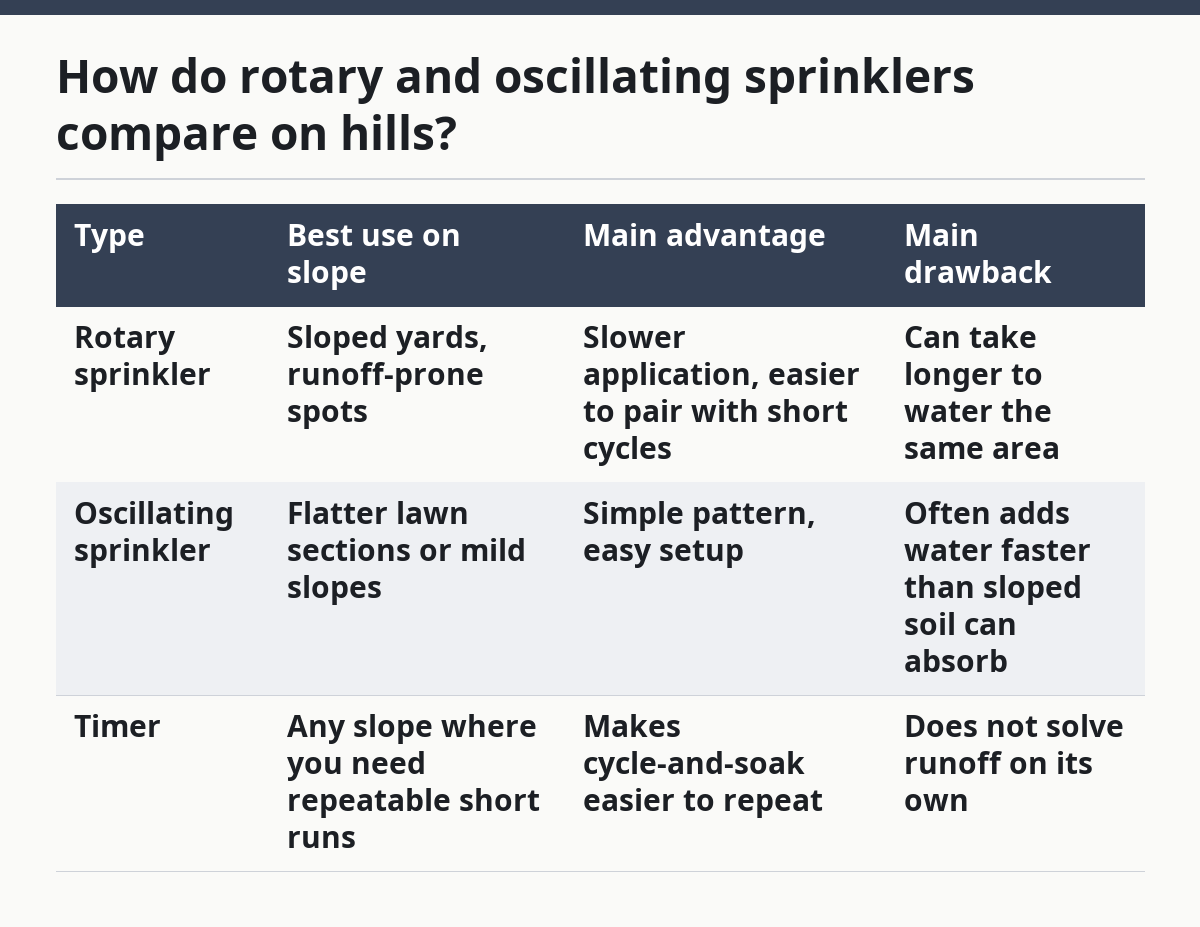
| Type | Best use on slope | Main advantage | Main drawback |
|---|---|---|---|
| Rotary sprinkler | Sloped yards, runoff-prone spots | Slower application, easier to pair with short cycles | Can take longer to water the same area |
| Oscillating sprinkler | Flatter lawn sections or mild slopes | Simple pattern, easy setup | Often adds water faster than sloped soil can absorb |
| Timer | Any slope where you need repeatable short runs | Makes cycle-and-soak easier to repeat | Does not solve runoff on its own |
A rotary sprinkler is not perfect for every yard. If the slope is very uneven, a rotary head can still cause puddling where the ground dips. But it usually gives you more control than an oscillating sprinkler, especially when you need to water in short bursts of 5 to 10 minutes.
This is also where a timer helps. Set the timer for a short run, then leave a gap so the surface can absorb the water. The timer does not change the spray pattern, but it does make the pace predictable.
How does soil change the choice?
Soil decides how fast runoff starts, and that should shape the sprinkler choice. Clay-heavy soil absorbs water slowly, while looser soil takes it in faster, so the same sprinkler can behave very differently from one yard to the next.
For example, if the yard has hard-packed soil, water tends to bead up and move downhill quickly. In that case, a slow rotary sprinkler and shorter watering cycles are usually the better match. If the soil is looser, an oscillating sprinkler may work on a mild slope, but it still needs a gentler schedule than on flat ground.
The hill’s drainage also matters. A slope with a low edge that catches water will show the problem faster than a slope that sheds water into a border or drain area. When the low side gets soggy after 1 watering session, the issue is not just the sprinkler head; it is the speed of application versus the soil’s absorption rate.
What settings help reduce runoff?
Cycle-and-soak is the main method that helps a sprinkler keep up with sloped ground. Instead of one long watering session, run the sprinkler for a short period, stop, and let the water sink in before the next pass.
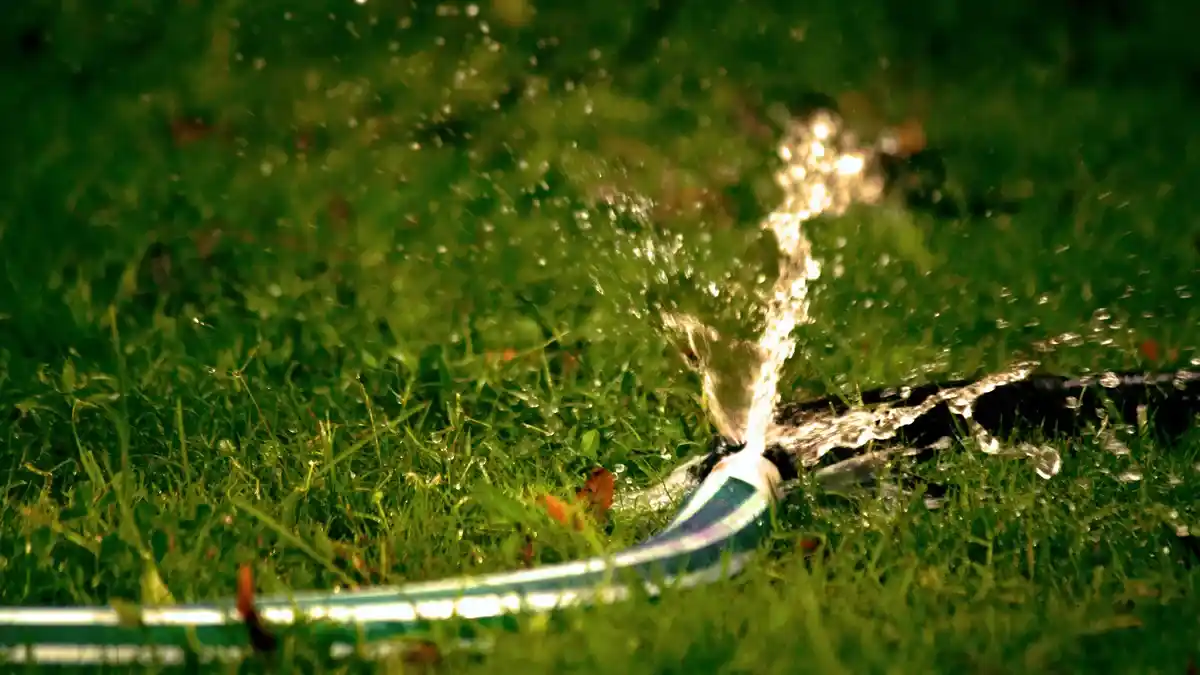
Then, use a timer to make that repeatable. A simple schedule of 2 or 3 short cycles is often easier to manage than one long stretch, because the soil gets a pause between doses. On a slope, that pause is what keeps water from racing downhill.
A good starting point is to watch the first 10 minutes closely. If water starts moving downhill before the run ends, the pace is too fast. If the upper part of the slope looks dry while the lower edge is glossy or muddy, the pattern is also too fast for the yard.
The goal is even wetting, not maximum output. A sprinkler that dumps water quickly can look efficient for a minute and still leave the slope unevenly watered by the end of the cycle.
What mistakes cause uneven watering?
The biggest mistake is choosing a sprinkler for coverage alone and ignoring pace. A wide throw looks useful, but on a slope it can create dry stripes at the top and runoff at the bottom.
Another common mistake is running one long session because it feels simpler. A 20-minute run can work on flat ground, but on a slope it often gives gravity too much time to carry water downhill. Shorter cycles with pauses usually do better than one long blast.
A third mistake is expecting the sprinkler to fix poor soil on its own. If the soil seals over, a slow sprinkler still needs more pause time. If the hill drains quickly, a timer can help with repeat runs, but it cannot make the soil absorb water faster than it naturally does.
The wrong choice for this job is any setup that pushes water hard and fast. That includes an oscillating sprinkler run too long, or any pattern that leaves standing water after a single pass. For more broad selection guidance, the main guide to how to choose a sprinkler sits on the hub page.
Which sprinkler is the best starting point for a sloped lawn?
A rotary sprinkler is often the best starting point for most sloped lawns because it gives you slower application and better control over runoff. That makes it a stronger default than an oscillating sprinkler when the ground is steep, patchy, or hard-packed.
If the slope is mild and the soil absorbs water well, an oscillating sprinkler can still work, but it needs a careful schedule. A timer becomes more useful as the slope gets steeper, because cycle-and-soak depends on consistency.
If the yard has serious drainage issues, neither type is magic. The right answer is still the one that matches the soil’s intake speed, the hill’s shape, and the need to water in shorter runs rather than one long wash.
For background on outdoor water use and irrigation timing, EPA WaterSense has practical watering guidance, and the Irrigation Association also publishes irrigation basics that support this approach. For more planning help, see lawn watering schedules and runoff control tips.
What sprinkler reduces runoff on a slope?
A rotary sprinkler usually reduces runoff better than an oscillating sprinkler because it applies water more slowly. That slower pattern gives the soil time to absorb moisture before it moves downhill. A timer helps too, because short cycles are easier to repeat than one long run.
Should I water a slope in short cycles?
Yes, short cycles are usually the better choice on a slope. They give the soil a break so water can soak in between runs instead of sliding downhill at once. A timer makes this easier to manage, especially when the yard needs the same pattern every few days.
Does sprinkler type matter on hills?
Yes, sprinkler type matters a lot on hills because spray speed changes runoff. Rotary sprinklers usually suit slopes better, while oscillating sprinklers can add water too quickly for the soil to absorb. The steeper the hill, the more the watering pace matters.
Drafted with AI; not yet reviewed by a person.




Leave a Reply