
Last updated: November 27, 2026
Quick Answer: For flower beds, gardens, and mixed planting areas, start with one of 4 options—soaker hose, micro-sprinkler, stationary sprinkler, or drip irrigation emitter—and pick the one that matches the root zone, bed width, and plant sensitivity. This guide on how to choose a sprinkler for flower beds, gardens, and mixed planting areas focuses on watering the planting area gently and only as wide as the bed needs. In many beds, that means a soaker hose, a micro-sprinkler, or a stationary sprinkler with a soft spray; for delicate flowers and mixed beds, drip irrigation emitters are often the safer choice.
Key takeaways
- Beds usually need slower, gentler watering than turf.
- The right choice depends on plant type, bed width, and how much leaf wetting the plants can handle.
- Soaker hoses and drip emitters keep water low and targeted.
- Micro-sprinklers and stationary sprinklers suit broader plantings, but they can wet leaves and paths.
- The wrong match wastes water, throws spray onto hardscape, or bruises tender blooms.
What kind of watering does the bed need?
The right sprinkler for planted beds is the one that matches how the plants drink, not the one that throws the farthest spray. Flower beds and garden rows usually need water delivered slowly to the soil, while mixed planting areas may need both spot watering and wider coverage.
A bed full of perennials, shrubs, and vegetables often does better with low, steady delivery than with overhead spray. Delicate plants can spot-burn or flop under strong spray, and mulch can block water if the output is too weak and too short. EPA WaterSense explains the value of watering only where plants need it and avoiding waste on sidewalks and driveways; the same logic applies here: target the soil, not the edge of the bed.
Source: EPA WaterSense “Watering on a Schedule” and related watering guidance.
For more background, see the internal guide on how to choose a sprinkler, and compare it with sprinkler types and drip irrigation basics. A 6-foot border and a wide mixed bed do not need the same spread.
A good rule is simple: if the planting is dense and mixed, choose a gentler system; if the bed is broad and open, a wider spray may work; if the plants are fragile, keep water low and controlled. That is why turf-style coverage often feels too broad or too aggressive for flower beds.
Which sprinkler type fits each planting area?
The fit depends on the plants, the bed shape, and how much overhead wetting the area can take. Use the comparison below to narrow the field before buying anything.
| Option | Best for | Main advantage | Main drawback | Usually wrong for |
|---|---|---|---|---|
| Soaker hose | Rows, borders, shrubs, perennial beds | Slow, low watering at soil level | Can wet unevenly if coiled badly or buried too deep | Beds that need broad spray over foliage |
| Micro-sprinkler | Mixed beds, young shrubs, small garden zones | Covers a small area with a light spray | Can wet leaves and flowers | Very delicate blooms or beds next to paths |
| Stationary sprinkler | Open planting beds, larger beds, spot watering | Simple, fixed coverage | Less precise than drip or soaker setup | Narrow, crowded, or highly delicate beds |
| Drip irrigation emitter | Individual plants, vegetables, shrubs, container edges | Puts water right at the root zone | Needs more planning than a basic spray head | Areas that need quick blanket coverage |
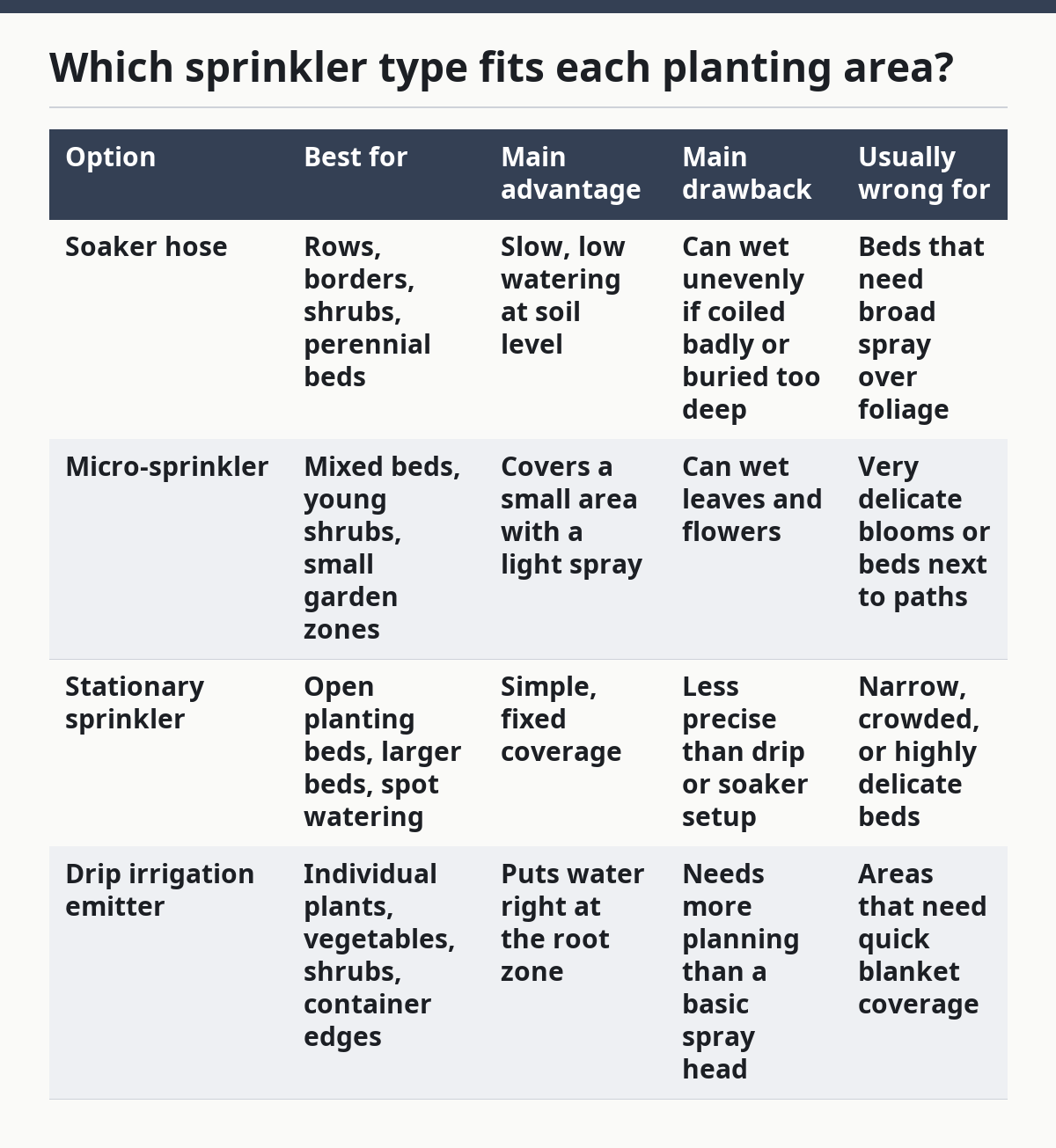
A soaker hose is a practical starting point for many flower beds because it keeps water low and calm. A micro-sprinkler is useful when plants spread out more and need a light spray instead of a trickle. A stationary sprinkler can work when the bed is wide and open, but it is the least precise of the four.
For mixed planting areas, drip irrigation emitters often solve the hardest problem: one bed, many plant types. A vegetable plant may want water at the base, while shrubs around it need less frequent moisture. Emitters let each plant get its own flow pattern instead of forcing one spray style on the whole area.
How do you choose a sprinkler for flower beds?
Choose a sprinkler for flower beds by matching the spray pattern, water delivery, and plant sensitivity to the bed itself. That means judging the bed first, then buying the tool.
- Measure the planted area and note where the bed ends, because a compact border needs a different setup than a broad island bed.
- Identify the plant mix, because shrubs, perennials, and vegetables tolerate watering differently. Delicate flowers usually do better with low delivery than with overhead spray.
- Pick a delivery style, because soaker hose, micro-sprinkler, stationary sprinkler, and drip irrigation emitter each solve a different problem. Soil-level watering is usually gentler than leaf-level spray.
- Match the output to the shape, because an open bed can handle wider coverage while a dense bed needs tighter control. A bed that spills onto a walkway needs less throw, not more.
- Check how often the area dries out, because thirsty vegetables and shallow-rooted annuals need more regular moisture than many shrubs.
- Avoid using a broad turf-style spray when the plants are fragile, because strong overhead spray can flatten blooms and waste water on mulch or paving. A gentler pattern keeps the root zone wetter and the leaves drier.
That process usually leads to one of two answers: soil-level watering for precision, or a soft spray for open beds. A convenient setup is not always a good one if it waters half the sidewalk.
When is overhead spray the right call?
Overhead spray is the right call only when the bed is open enough to benefit from broad coverage and the plants can handle wet foliage. A stationary sprinkler or micro-sprinkler can work for some perennial beds, shrub borders, and mixed garden plots, especially when the planting is not dense.
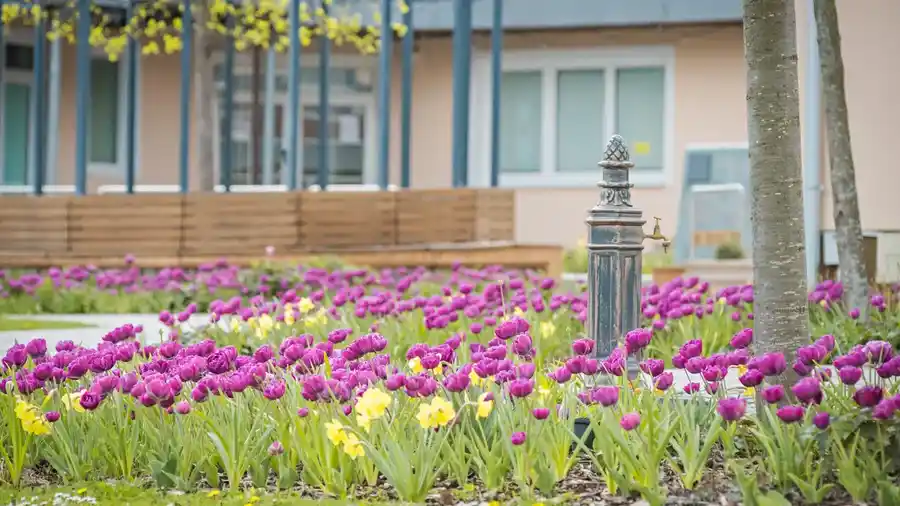
The downside is plain: overhead water lands on flowers, leaves, mulch, and paths. That can mean more evaporation, more runoff, and more disease pressure on plants that dislike wet foliage. The EPA’s WaterSense guidance on efficient watering points in the same direction: water the root area and avoid waste from overspray.
Source: EPA WaterSense irrigation and watering guidance.
This is why overhead spray is usually a poor fit for roses, compact annuals, and many delicate flowering plants. It is also a weak match for beds crowded with stakes, cages, or low foliage, where spray gets blocked before it reaches the soil.
Use overhead spray when speed matters more than pinpoint accuracy, or when the bed is so broad that a narrow emitter system would take too long to set up. Do not use it just because it is the easiest thing to buy.
What mistakes cost the most?
The costliest mistake is choosing a sprinkler that waters the wrong part of the bed. Overspray wastes water, leaves dry pockets in the root zone, and sends moisture where plants cannot use it.
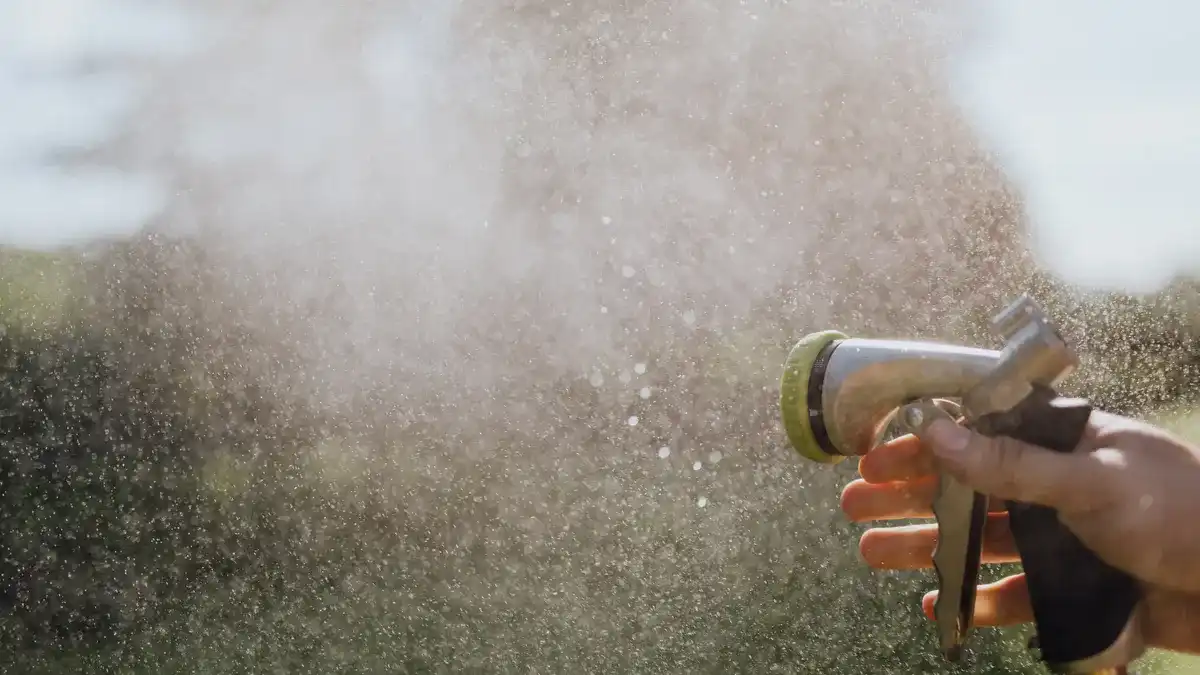
A second mistake is using a strong spray on delicate plants. That can bend stems, knock petals off blooms, and leave the bed looking uneven after every watering. Another common error is assuming all mixed planting areas can use the same method. A bed with shrubs, perennials, and vegetables often needs a split approach, not one blanket setting.
Soaker hose can also be misused. If it is buried too deep or looped too tightly, water may not reach the full root area. A micro-sprinkler can create the opposite problem: it may wet too much foliage and too little soil if the bed is crowded.
The fix is usually simple. Slow the delivery, narrow the coverage, or split the bed into zones. If the same setup is trying to serve roses, lettuce, and a shrub edge all at once, the setup is doing too much at once.
How do shrubs, perennials, and vegetables change the choice?
Shrubs, perennials, and vegetables change the choice because each group wants water in a different place and at a different pace. Shrubs usually tolerate deeper, less frequent watering, perennials often want steady moisture while establishing, and vegetables generally need more regular root-zone watering.
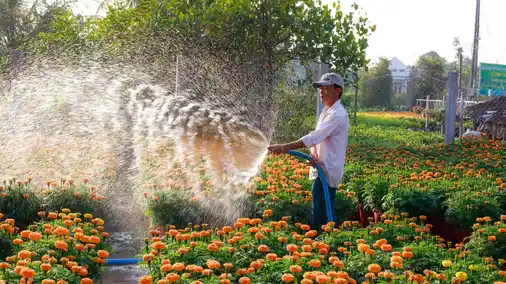
A shrub border can work well with soaker hose or drip emitters because the goal is to soak the root area without drenching the foliage. Perennials are more mixed: sturdy clumps may handle a light spray, but many flowering perennials do better with water delivered low and slow. Vegetable beds often favor drip irrigation emitters because the leaves stay drier and the water goes where the roots can use it.
Mixed beds are the hardest case. If the same bed holds shrubs at the back, perennials in the middle, and vegetables at the front, one uniform spray is rarely ideal. In that setup, a split system usually makes more sense than a single head throwing water across everything.
If the bed includes delicate plants, treat that as the deciding factor, and when the planting mix is unusual or valuable, consult a qualified irrigation professional before installing a system. Delicate flowers usually push the choice toward soaker hose or drip, not toward more spray.
How I chose the options
I chose the options here by comparing the four tools named in the brief: soaker hose, micro-sprinkler, stationary sprinkler, and drip irrigation emitter. The guide looks at how each one handles planted beds, how much leaf wetting it causes, and where it fits poorly, using general irrigation guidance from EPA WaterSense and standard garden watering principles.
The goal was not to rank one product as “best” for every bed. The goal was to sort the choices by plant type and bed shape, because that is the question most readers actually need answered. A guide that ignores shrubs, perennials, vegetables, and delicate flowers would miss the real decision.
For more on the broader decision, the hub guide to how to choose a sprinkler gives the larger framework. This page stays focused on planted beds where turf-style watering can be too broad or too aggressive.
Should I use a sprinkler or drip irrigation for beds?
Drip irrigation is usually the better choice for beds that contain delicate flowers, shrubs, or mixed plantings that need targeted watering. It keeps water low and close to the roots, which reduces overspray and leaf wetting.
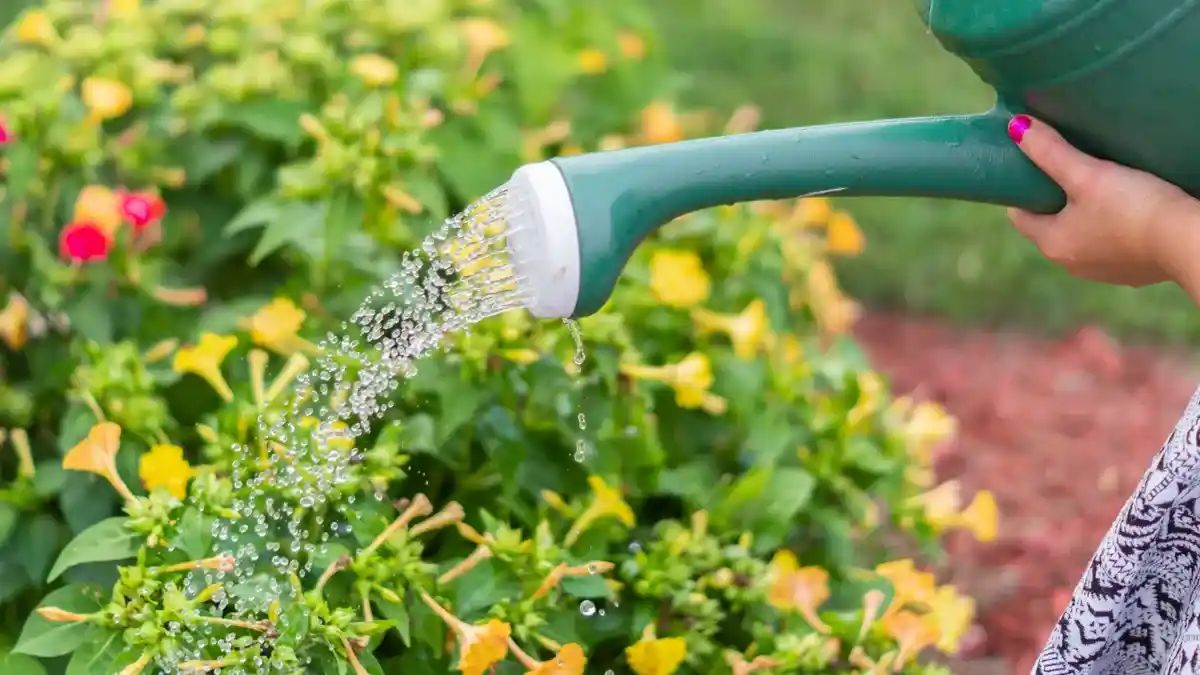
A sprinkler makes more sense when the bed is open, broad, or planted in a way that tolerates light overhead spray. If the bed has a lot of mixed plant types, drip often wins because it can be aimed more precisely than a spray pattern.
What sprinkler is safest for flowers?
The safest option for flowers is usually a soaker hose or drip irrigation emitter, because both keep water low and gentle. They are less likely to flatten blooms or splash soil onto petals.
A micro-sprinkler can also work for some flowers, but it is less gentle than soil-level watering. If the flowers are fragile or densely planted, overhead spray is the riskiest choice.
Can sprinklers water mixed lawn and beds?
Yes, but a single turf-style setup is often a poor compromise for both. Lawns usually tolerate wider spray, while beds often need slower, more precise watering.
Mixed lawn-and-bed areas often work better when the bed portion is separated into its own zone or watered with drip, soaker hose, or a micro-sprinkler. If one head has to serve both, the lawn usually gets too much and the bed still gets the wrong kind of water.
Drafted with AI; not yet reviewed by a person.




Leave a Reply