
Last updated: November 27, 2026
Quick Answer: Use 2 numbers—psi and gpm—to choose the right sprinkler for different water pressure and flow conditions. In short, pick the sprinkler that matches both your psi and your gpm. Pressure decides how hard water pushes; flow decides how much water is available. For different water pressure and flow conditions, a rotary sprinkler or a low-pressure model usually fits better than an oscillating sprinkler when a hose bib has weak flow or pressure loss; if pressure is high, a pressure regulator helps protect the setup.
Key takeaways
- Pressure and flow are not the same problem, and both affect performance.
- A hose bib can look “strong” at the tap and still starve once a long hose or several heads are added.
- An oscillating sprinkler needs steadier pressure; rotary sprinklers usually cope better when pressure or flow is limited.
- A pressure regulator helps when the line runs too hot, but it cannot create more flow than the supply has.
- The right choice is the one that matches the weakest part of the system, not the label on the box.
What water pressure and flow mean for sprinkler choice
Water pressure and flow decide whether a sprinkler throws a clean pattern or just dribbles. Pressure, measured in psi, is the push behind the water. Flow, measured in gpm, is the volume moving through the hose or pipe.
A generic sprinkler box can hide the real issue. Two homes can both show acceptable pressure at the hose bib, yet one can only supply a small gpm once the hose is long or narrow. That is why a sprinkler that looks fine on paper may underperform in the yard.
This is where the type matters. An oscillating sprinkler usually wants enough steady pressure to sweep its bar across the full width. A rotary sprinkler tends to tolerate lower flow better because it applies water more slowly and in rotating streams. If the pressure is too high, a pressure regulator can help keep the spray from misting or scattering.
The simple rule is this: match the sprinkler to the supply you actually have, not the one you wish you had. The U.S. Environmental Protection Agency’s WaterSense program and the Irrigation Association both point readers toward matching irrigation hardware to site conditions and water delivery limits.
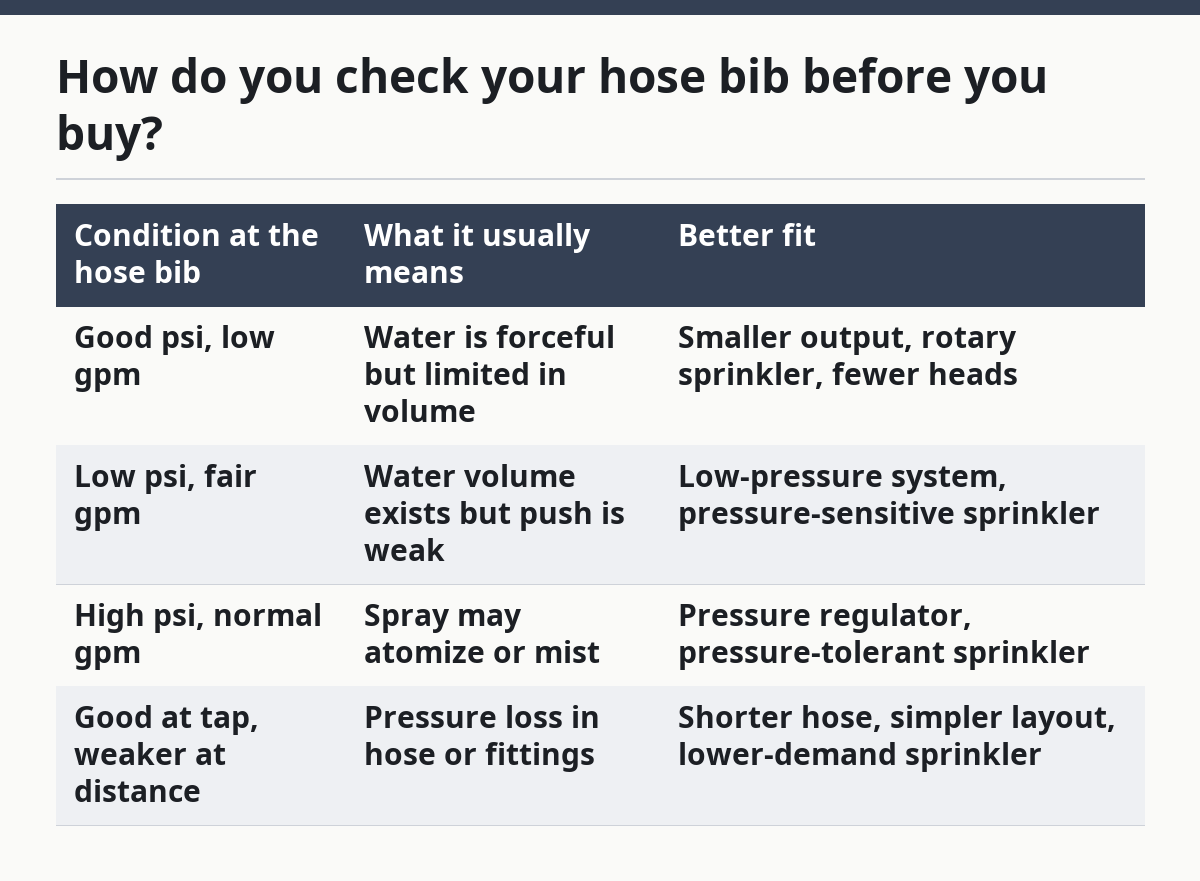
How do you check your hose bib before you buy?
You check the hose bib by measuring pressure and flow before you choose the sprinkler. That step tells you whether the problem is low psi, low gpm, or both.
Start with pressure if you can. A hose-bib pressure gauge screws onto the tap and gives a direct reading in psi. Then check flow with a flow meter or a simple timed fill test so you know how much water the line can actually deliver. The reading matters more than the brand name on the sprinkler.
Use the hose bib as your reference point because it is where many home sprinklers start. If the reading drops after you add a long hose, a splitter, or multiple sprinklers, that is pressure loss in the line, not a bad nozzle. The same hose bib can behave very differently once the system is extended 50 feet or more.
An easy way to think about it: pressure tells you whether water can reach the head with force; flow tells you how many heads or how much spray the supply can support. If either number is weak, the sprinkler choice should change.
| Condition at the hose bib | What it usually means | Better fit |
|---|---|---|
| Good psi, low gpm | Water is forceful but limited in volume | Smaller output, rotary sprinkler, fewer heads |
| Low psi, fair gpm | Water volume exists but push is weak | Low-pressure system, pressure-sensitive sprinkler |
| High psi, normal gpm | Spray may atomize or mist | Pressure regulator, pressure-tolerant sprinkler |
| Good at tap, weaker at distance | Pressure loss in hose or fittings | Shorter hose, simpler layout, lower-demand sprinkler |
A flow meter is worth using when multiple sprinklers are on one line. It shows the limit fast, and that limit is what controls the choice.
Which sprinkler type fits low-pressure systems?
Low-pressure systems usually fit rotary sprinklers better than oscillating sprinklers. That is the practical answer when the hose bib cannot hold strong psi over distance.
An oscillating sprinkler throws water through a moving bar and relies on enough pressure to keep the motion even. When pressure drops, the pattern can turn patchy and the ends of the sweep may dry out. It is a poor fit for a weak line.
A rotary sprinkler spreads water in slower, rotating streams. That slower application is kinder to low-pressure setups and helps when the available gpm is limited. It is not magic, though. If the line cannot supply enough volume, even a rotary head will underperform.
A pressure regulator belongs in the discussion when pressure is the problem and flow is still usable. It trims excess pressure so the sprinkler works at a calmer setting. It does not add water to the line, and it cannot fix a supply that is already too thin.
Choose the sprinkler by reading psi and gpm together
Choose the sprinkler by matching its demand to both psi and gpm at the same time. Focusing on only one number leads to the wrong purchase.
| What you measure | What it tells you | What to favor | What to avoid |
|---|---|---|---|
| psi only | How hard water pushes | Sprinklers that perform across a range | Any model that needs strong pressure to stay even |
| gpm only | How much water is available | Rotary sprinkler or low-demand setup | Large spray patterns that need lots of volume |
| psi and gpm together | What the hose bib can truly support | The closest match to both limits | A high-output head on a weak line |
A useful test is to imagine the sprinkler running after 25 feet of hose, then again after a splitter or a second head is added. If the setup still needs strong pressure to look even, an oscillating sprinkler may be too demanding. If the line already feels marginal, a rotary sprinkler is often the safer choice.
The trade-off is coverage speed. A rotary sprinkler may water more slowly than an oscillating model, so it can take longer to finish the same area. That is the cost of using less pressure and less flow. For a weak supply, slow and even beats fast and uneven.
What changes when you run multiple sprinklers?
Multiple sprinklers change the job because they divide the same flow across more heads. That is where many setups fail.
A hose bib that seems fine with one sprinkler can collapse when two or three are added. The pressure drops, the spray shortens, and the farthest head gets starved first. If the line already runs through a long hose, the loss becomes more obvious.
The fix is not to force the system harder. It is to reduce demand. Run fewer sprinklers at once, choose heads that need less volume, or use a layout that keeps the load light. A flow meter helps here because it shows when the line is out of margin.
This is also the point where a pressure regulator can be misunderstood. It helps only when pressure is too high. If the real issue is too little gpm, a regulator will make the problem worse by taking away some of the push the line already had.
If you need several heads, a rotary sprinkler usually ages better than an oscillating sprinkler on the same supply. It is less likely to fall apart when the line is split, though it still needs enough water to keep turning.
When should you avoid an oscillating sprinkler?
You should avoid an oscillating sprinkler when pressure is weak, flow is limited, or pressure loss is already showing up in the hose line. That model is the most sensitive to a shaky supply.
The problem is not just low psi at the tap. Long hoses, tight connectors, and running more than one head at once can turn a decent reading into a weak one at the far end. The oscillating arm then loses the steady sweep that makes its pattern useful.
A rotary sprinkler is the better choice in those cases because it is less dependent on a strong, even push. It still has limits, but it usually handles a marginal supply with less drama. If your line is very weak, a low-pressure system may be a better match than trying to make a standard oscillating unit behave.
This is the honest trade-off: oscillating sprinklers can cover a broad rectangle neatly, but only when the supply cooperates. If the water supply is inconsistent, the neat rectangle becomes a striped patchwork. The cheaper purchase can become the more expensive mistake because the lawn still needs water later.
How to make the final pick without overbuying
Make the final pick by starting with the weakest number, then choosing the simplest sprinkler that works with it. That keeps the purchase aligned with the real supply instead of the box label.
First, check the hose bib for psi. Second, check flow with a flow meter or timed fill test. Third, think about pressure loss from the hose length and any fittings. Fourth, decide whether the line can support one sprinkler or multiple sprinklers at once. Fifth, choose a rotary sprinkler for weaker or uneven supplies, or an oscillating sprinkler only when pressure and flow are both comfortable.
A pressure regulator is part of the decision when pressure is too high. It is not a universal add-on, and it is not a fix for weak gpm. That distinction matters because a regulator solves one problem by design and can worsen the other if used blindly.
If you want a broader buying path after this, the main guide on how to choose a sprinkler belongs on the same site as this sprinkler pressure guide. This page only covers the water-supply side of the choice, because that is the part most readers miss on the first pass. For hose setup details, see the related hose bib pressure guide.
How do I know my water pressure for sprinklers?
You know your water pressure by reading it at the hose bib with a pressure gauge. That gives you psi, which is the number that tells you how hard water is pushing into the line.
The reading matters more than guessing from household water use. A hose can feel strong in one moment and weak after a long run or a second head is added. Pressure is only one part of the story, so it should be checked with flow, too.
Can a sprinkler work with low water pressure?
Yes, a sprinkler can work with low water pressure if you choose a model that matches the supply. A rotary sprinkler is often the safer pick because it handles weaker conditions better than an oscillating sprinkler.
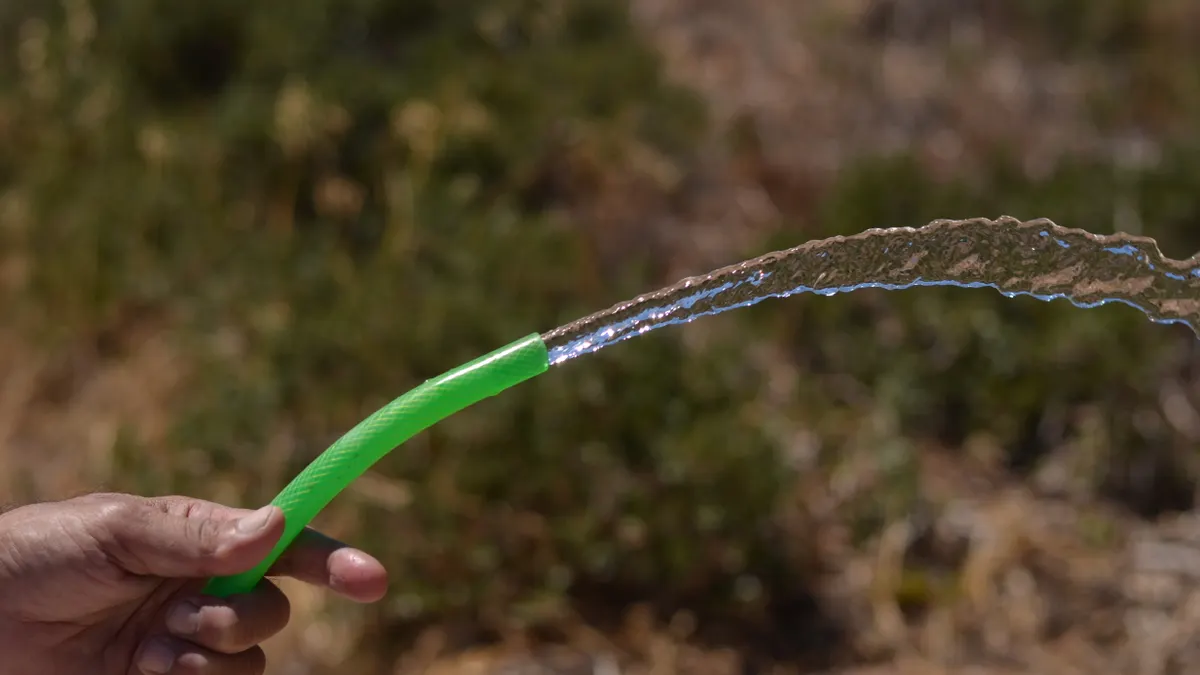
The catch is output. Low pressure can shorten reach and slow the pattern, so the sprinkler may need more time to water the same area. That is a trade-off, not a defect in the head.
What happens if sprinkler pressure is too high?
Too much pressure can make the spray mist, scatter, or run unevenly. A pressure regulator can bring the pressure back into a better range for the sprinkler.
High pressure does not necessarily mean better watering. It can waste water and make the pattern less even, especially on heads that are not built to handle it. If the pressure is high at the hose bib, controlling it is usually better than letting the sprinkler fight it.
Drafted with AI; not yet reviewed by a person.




Leave a Reply