Last updated: November 27, 2026
Choose a sprinkler that gives gentle, even coverage without blasting soil or grass blades apart. For new sod or newly seeded grass, that usually means a sprinkler with a soft spray pattern, a controllable output, and the ability to run in short, frequent cycles with a hose timer. A hard, uneven stream is the wrong tool.
Key takeaways
- New grass needs moisture spread lightly and evenly, not a strong jet.
- A sprinkler that is good for old turf can be a poor fit for seed because it can wash seed or leave dry patches.
- Oscillating sprinklers, stationary sprinklers, and fine spray nozzles can all work, but the best choice depends on how calm the spray is.
- A hose timer helps when watering needs to happen more than once a day, because missed cycles dry the surface fast.
- The wrong sprinkler costs time twice: it wastes water and forces reseeding or patch repair.
What matters most for new grass?
The right sprinkler for new sod or seed is the one that keeps the top layer moist without moving it around. That means soft output, close control, and enough uniformity that the same strip of ground does not dry out before the next watering. A sprinkler that throws water hard, far, or in a narrow pattern is usually a poor match.
New seed sits on the surface or just under it, so the first concern is seed washout. New sod has its own problem: the roots are still tying into the soil, so dry spots can show up fast at the edges and seams. A gentle pattern matters more than distance or speed.
Look at the spray before you look at the box claims. A fine mist can be useful in calm weather, but a mist can drift and evaporate faster than a heavier drop pattern. A slow oscillating sprinkler or a stationary sprinkler with a soft output usually gives more dependable moisture than a hard, spinning jet.
This is also why many readers end up with a simple setup instead of a fancy one. For establishing grass, the goal is not dramatic coverage. It is a wet surface, repeated often, with as little disturbance as possible.
How do I choose the right type?
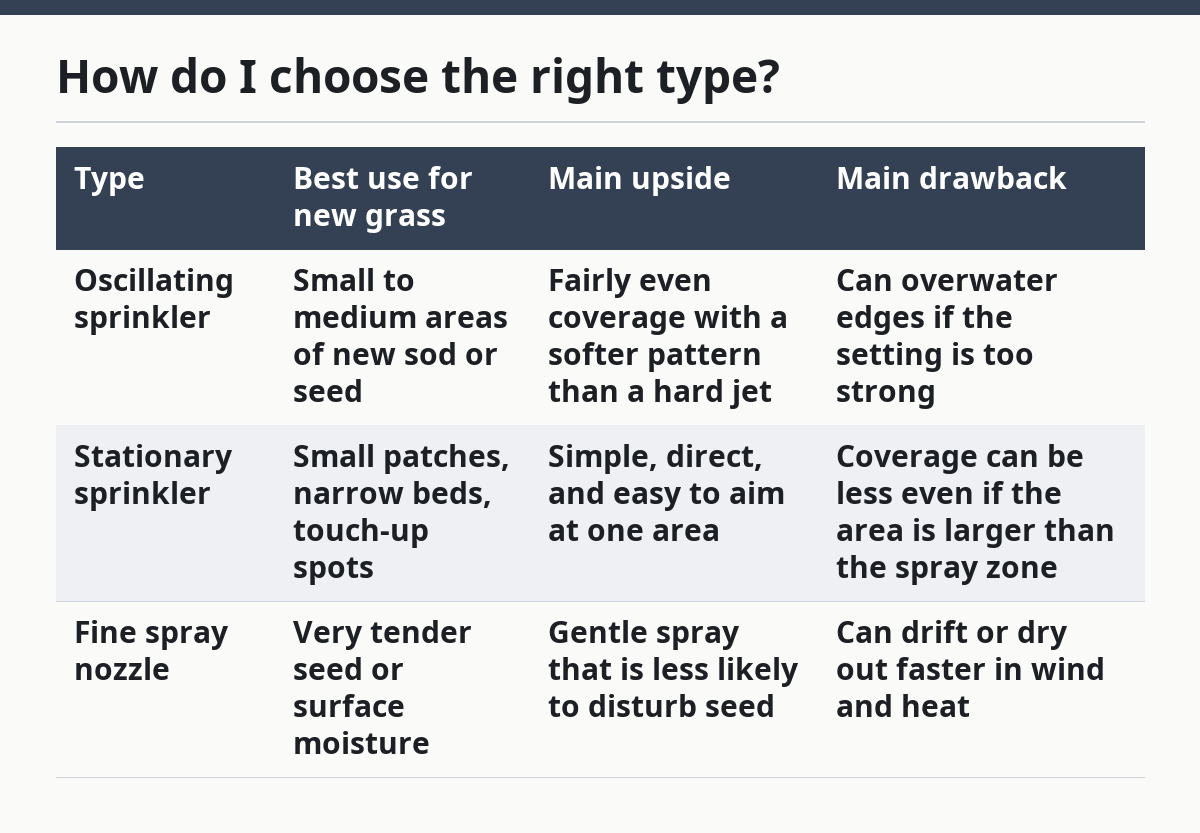
The right type is usually the one that spreads water gently and can stay in one place long enough to soak the surface without pooling. For new sod or seed, the most useful names on the shelf are oscillating sprinkler, stationary sprinkler, and fine spray nozzle. Each has a different trade-off.
| Type | Best use for new grass | Main upside | Main drawback |
|---|---|---|---|
| Oscillating sprinkler | Small to medium areas of new sod or seed | Fairly even coverage with a softer pattern than a hard jet | Can overwater edges if the setting is too strong |
| Stationary sprinkler | Small patches, narrow beds, touch-up spots | Simple, direct, and easy to aim at one area | Coverage can be less even if the area is larger than the spray zone |
| Fine spray nozzle | Very tender seed or surface moisture | Gentle spray that is less likely to disturb seed | Can drift or dry out faster in wind and heat |
An oscillating sprinkler is often the practical middle ground. It is less aggressive than a strong stream and more useful than a tiny spot sprayer when the area is not a perfect square. A stationary sprinkler works well when the patch is small and the goal is simply to keep one area damp. A fine spray nozzle is useful when the seed is so fresh that even a light blast would move it.
This is the part many generic guides skip: a sprinkler can be “gentle” and still be wrong. A soft spray that does not reach the full patch leaves dry bands, and those dry bands turn into patchy germination. Uniform moisture matters more than brand language on the package.
Which setting should the sprinkler have?
The best setting is the lowest one that still wets the full area in an even layer. That usually means avoiding a hard jet and choosing a spray that lands like light rain, not like a hose left half open. If the sprinkler has adjustable output, start with the gentlest useful pattern.
The practical test is simple: the top surface should look evenly damp, not puddled, after a short run. If the water beads and runs off, the output is too strong or the run is too long. If one side stays dry, the pattern is too narrow or the placement is off.
For new sod, the setting needs to soak the shallow root zone without lifting seams or washing soil from the edges. For seed, the setting needs to be even enough that the seed stays where it was spread. A soft oscillation or mist-like spray usually beats a concentrated spray head here.
A hose timer helps when the setup needs repeated short cycles. New grass often needs frequent watering, and a timer prevents one missed interval from leaving the surface too dry. That matters more with a fine spray nozzle, since a light spray can dry fast once the sun and wind pick up.
How I chose what to recommend
This guide was built from the watering needs of new sod and newly seeded grass, plus the common sprinkler categories that fit those jobs. It focuses on the practical questions that matter at establishment stage: gentle output, even coverage, and the risk of seed washout.
The comparison centers on the sprinkler types named in the brief, along with the hose timer as a support tool. For broader sprinkler selection beyond new grass, the hub guide on how to choose a sprinkler gives the wider framework and other use cases.
Two authoritative references worth reading alongside this guide are the U.S. Environmental Protection Agency’s WaterSense materials on lawn watering and university extension guidance on establishing turf. They are useful because they focus on even moisture and avoiding overwatering, which are the same concerns that matter here.
What mistakes ruin new grass?
The biggest mistake is choosing a sprinkler that throws water too hard. That can move seed, flatten tender blades, and carve little channels in loose soil. The cost is patchy germination or sod that dries unevenly at the seams.
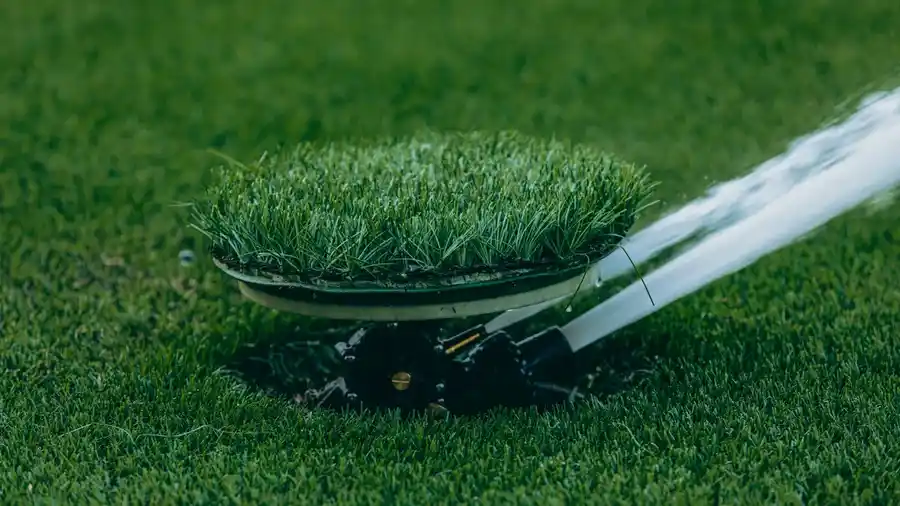
The second mistake is using a sprinkler that covers a broad area when only part of that area needs water. Overspray sounds harmless, but it often leads to puddles in one spot and dry edges in another. New grass punishes uneven moisture fast.
A third mistake is assuming a strong setting will save time. It usually does the opposite. A hard spray can force the surface to crust over or wash material aside, which means reseeding, extra watering, or both.
The fix is to choose a gentler pattern and watch the surface, not the clock. If the seed starts to move, the setting is too aggressive. If the water lands in narrow bands, the sprinkler is not spreading it evenly enough.
How should a hose timer fit in?
A hose timer fits when the watering plan needs short, repeated runs and a person cannot stand outside to start and stop them. For new sod or seed, that matters because the surface should not swing from wet to dry too fast. A timer keeps the cycle steady and reduces missed watering.
The timer is not the main tool. It is support for the sprinkler you choose. A fine spray nozzle or a gentle oscillating sprinkler can do the watering, but the timer helps that setup happen at the right pace, especially on hot or windy days.
This is where many people overbuy the sprinkler and underthink the timing. A fancy sprinkler with no timer can still leave new grass dry by noon. A simple sprinkler with a reliable timer is often the more useful combination for establishment work.
Do not use the timer to force a weak sprinkler to do more than it should. If the output is too light to keep the surface damp between runs, the answer is a different sprinkler pattern, not a longer blast.
How do I know I picked the wrong one?
The wrong sprinkler shows itself fast. If seed shifts, piles up, or disappears into small ruts, the spray is too strong. If sod edges curl, dry in stripes, or stay pale while the center looks wet, the coverage is uneven.
Another warning sign is runoff. Water that moves across the surface instead of soaking in means the sprinkler is delivering too much at once or hitting the soil too hard. That is common when a broad area is watered with a setting better suited to older turf.
A good choice keeps the surface calm. The water should settle in without disturbing the top layer, and the wet area should look consistent from edge to edge. If that is not happening after a short run, change the pattern before changing anything else.
What should I buy if the area is small?
A stationary sprinkler is often enough for a small patch of new sod or a seeded bed. It is simple, cheap in concept, and easy to direct at one problem area without spraying the rest of the yard. For a small area, simplicity is a strength.
If the patch is a little larger and still needs a soft touch, an oscillating sprinkler is usually the better fit. It spreads water more evenly across a wider strip while staying gentle enough for establishment work. That makes it a better match when the goal is uniform moisture rather than a single wet spot.
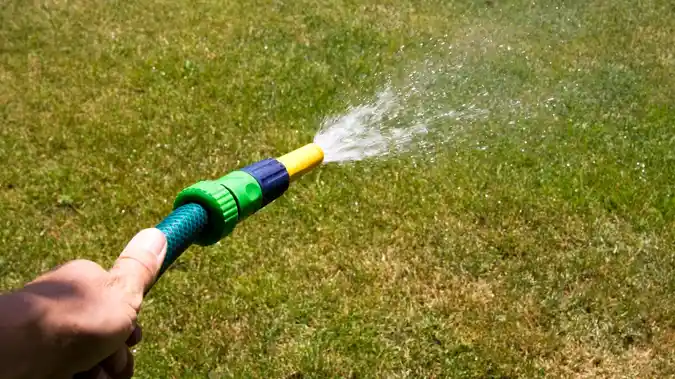
A fine spray nozzle is the most delicate option. It can be useful when the seed is fresh and the surface cannot handle much force, but it is also the easiest to set too lightly or let drift away. That is why it is best for very specific situations, not as a one-size answer.
For readers trying to choose one tool and be done, the safe default is a gentle oscillating sprinkler with a hose timer. It is not the only answer, and it is not right for every shape of yard, but it is the most balanced choice for many new sod and seed jobs.
What sprinkler is best for new grass seed?
A gentle oscillating sprinkler or a fine spray nozzle is usually the best fit for new grass seed because both can water the surface without blasting the seed out of place. The key is even, light coverage that does not create runoff or bare stripes. A hard stream is the wrong tool for fresh seed.
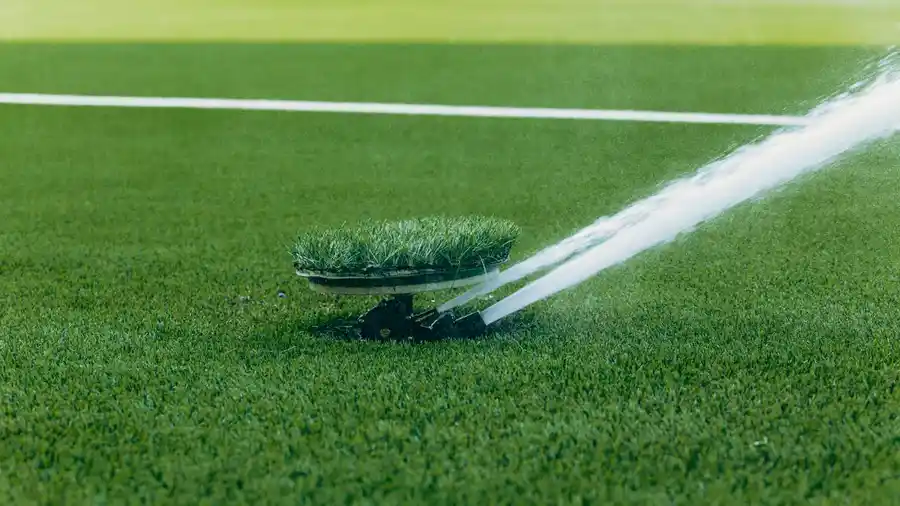
Can a sprinkler damage newly laid sod?
Yes, if the spray is too strong or too uneven. Newly laid sod can dry at the seams or shift at the edges when water lands with too much force. A softer pattern, such as a gentle oscillating sprinkler or a stationary sprinkler, lowers that risk.
How often should new grass be watered?
New grass usually needs frequent watering in short cycles so the surface stays evenly moist. The exact rhythm depends on the weather, the soil, and whether the grass is sod or seed, so the better rule is to keep the top layer from drying out. A hose timer can help keep that schedule steady.
What is the safest choice if I want one simple answer?
A gentle oscillating sprinkler is the safest all-around choice for many new sod and seeded areas. It offers a balance of soft spray and wider coverage without the harsh impact of a strong stream. If the area is tiny, a stationary sprinkler may be enough, but the oscillating style is the more flexible default.
Drafted with AI; not yet reviewed by a person.





Leave a Reply