Last updated: November 19, 2026
Key Takeaways
- Make the first pass slow, high, and light so the mower does not clog or scalp the grass.
- Start at a higher deck setting so the blades trim the tops without cutting into the crown.
- Lift and clear lodged grass before it forms clumps that can smother the turf.
- Bag long clippings when they clump, sit on the surface, or cover the grass below.
Your lawn got shaggy while you were gone; the first cut can wreck it if you rush. How to mow a lawn after a long vacation starts with a high deck, a slow first pass, and clipping cleanup. Below, the steps show how to handle overgrown lawn mowing without tearing the turf.
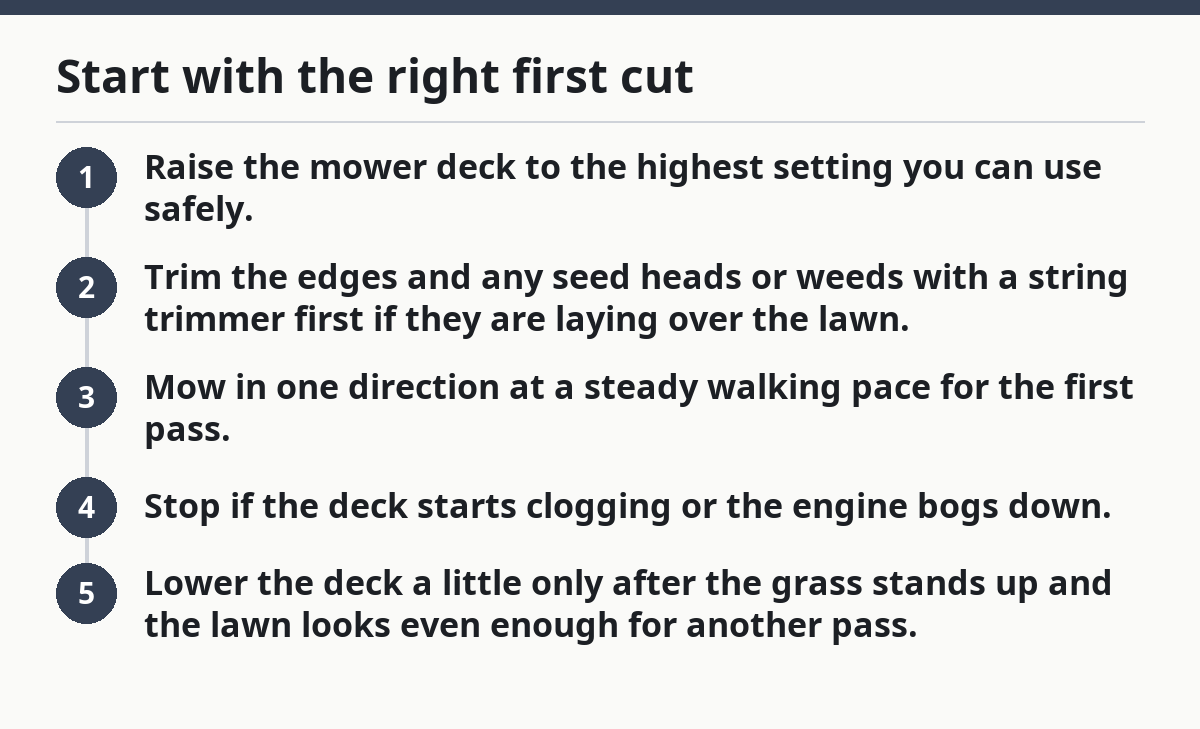
Start with the right first cut
Picture the scene: you’re back home, the lawn is knee-high in spots, and the mower deck is still set for a normal weekly cut. Go slow. Keep the first pass high and light so the mower does not clog or scalp the grass.
Take off about one-third of the blade height, not the whole mess at once. With very tall grass, set the mower deck to its highest safe setting and shave the top off first. That eases strain on the lawn mower and keeps the mower deck from packing with wet, heavy grass.
- Raise the mower deck to the highest setting you can use safely.
- Trim the edges and any seed heads or weeds with a string trimmer first if they are laying over the lawn.
- Mow in one direction at a steady walking pace for the first pass.
- Stop if the deck starts clogging or the engine bogs down.
- Lower the deck a little only after the grass stands up and the lawn looks even enough for another pass.
Here’s the catch: plenty of people try to “save time” by cutting tall grass short on the first run. Bad bet. That usually leaves brown tips, clumps, and ruts. A high first cut takes longer, but it protects the lawn.
How do you mow a lawn after a long vacation?
Cut it in stages. Clean the mower deck between passes. Change your route so the grass doesn’t mat down under the wheels. This is the shortest safe answer, and it works better than trying to force the mower through everything in one go.
Use a mower you can control, not the biggest machine you own just because the yard looks rough. A sharp blade matters here because torn grass frays fast when the lawn is already stressed from being overgrown. If the lawn is wet, wait if you can; damp blades of grass stick to the deck and pile up under the chute.
- Set the deck high for the first pass.
- Cut only enough to open the canopy and let the rest stand up.
- Bag or rake the worst clumps so they do not smother the turf.
- Repeat with a slightly lower deck if the lawn still looks uneven.
- Finish with a last pass only if the mower is still clearing cleanly.
Honestly, a vacation lawn often needs two passes, sometimes three. That is normal. What is not normal is forcing a full-height reduction in one cut and then wondering why the mower stalls.
Reset the mower height before you begin
Set the mower height higher before the first pass so the blades can slice the tops without digging into the crown of the grass. On many walk-behind mowers, that means starting near the top notch and working down later, one notch at a time.
Don’t know the exact height in inches? Use the turf itself as the guide: the first cut should only skim the top third of the standing grass. That simple rule beats guessing. It keeps the mower deck from chewing into thick patches and helps the lawn recover faster.
- Lift the mower deck on all wheels evenly.
- Check the route before you start so the mower can move cleanly through the lawn.
- Match the height on both sides so the cut stays level.
- Recheck the deck after the first pass, since thick clippings can make you think the setting changed.
- Lower only after the lawn is standing up cleanly again.
A deck set too low can make overgrown grass look worse. It can scalp high spots, leave streaks, and expose brown stems that take time to green back up. If your mower has a height scale, use it. If it does not, adjust by the wheel positions and make the first cut conservative.
What to do about clumps and lodged grass
Lift it, clear it, and remove the clumps before they smother the turf. Long grass that has folded over from rain, shade, or plain neglect can hide shorter shoots underneath, and the mower can miss them unless you break it up first.
Rake out the heaviest mats before you mow, if they are thick enough to block the blades. If the grass is pressed flat, a string trimmer or a quick hand lift can help stand it up enough for the blades to catch it. After each pass, check the ground for clumps the size of a hand or larger. Those are the pieces most likely to block sunlight and trap moisture.
- Rake heavy mats and dead piles out of the lawn.
- Lift laid-over patches with a rake or trimmer before mowing.
- Mow across the grain of the flattened spots, not only with it.
- Collect the clumps if they are thick enough to sit on top of the grass.
- Spread any small, dry clippings thinly only if they disappear into the canopy.
Lodged grass is where many generic guides go off the rails. They tell you to mow twice, but they skip the part where the mower cannot reach grass that is lying flat. If the lawn is matted from days of rain or heat stress, clear the surface first or the first cut will look uneven no matter how carefully you drive.
Should you bag the clippings after long grass?
Bag the clippings after long grass if the pieces are long enough to clump, sit on the surface, or hide the turf underneath. Thin, dry clippings can often be left to fall back into the lawn, but vacation growth usually produces more debris than a normal trim.
A bagging mower or a rear bag helps most on the first pass because overgrown grass can dump a heavy line of cut material behind the deck. That line can smother the lawn if you leave it in place. If you prefer side discharge, keep the chute aimed away from sidewalks and beds, then rake the biggest piles afterward.
- Bag thick clippings on the first cut.
- Rake visible piles even if the mower scattered the rest.
- Mulch only when the clipped pieces are short and dry.
- Dispose of clumps so they don’t mat into the grass overnight.
- Repeat with less collection only after the lawn is nearly back to normal.
You do not have to pick one method for the whole yard. Many lawns do best with bagging on pass one, then mulching or leaving fine clippings on pass two. Cleaner surface, less mess — that’s the trade-off. You avoid turning the yard into a waste pile.
Avoid these mistakes on an overgrown lawn
Treat overgrown lawn mowing like recovery work, not a normal Saturday chore. The biggest errors are cutting too short, mowing too fast, and leaving piles where air and light can’t reach the soil. If you are unsure about the lawn’s condition, check with a local lawn professional.
A rushed first cut can shear the tops and leave the stems ragged. That weakens the lawn and makes it look patchy for longer. Another mistake is trying to mow wet grass just because it is easier to bend. Wet clippings stick to the mower deck and form a heavy mat that the blades can’t clear well.
- Do not drop the deck low for the first pass.
- Do not mow when the lawn is soaking wet unless you have no choice.
- Do not leave thick clumps on the lawn overnight.
- Do not assume one pass will fix everything.
- Do not force a dull blade through stalky growth.
The cost of the wrong approach is plain: more clogging, more cleanup, and a lawn that looks worse than when you started. A sharper blade, a higher deck, and a second pass do more good than brute force.
What your lawn should look like after the last pass
Your lawn should look even, open, and free of clumps after the last pass, even if it is a bit taller than your usual weekly cut. That is the right finish for recovery mowing. It should not look scalped, striped with piles, or smeared with wet debris.
After the final cut, check three things: the grass height is consistent, the mower deck stayed clear, and no large clumps are sitting on the surface. If the lawn still looks shaggy in one area, trim that patch again rather than lowering the whole yard another notch. Local fixes beat another full cut.
Leave the lawn a touch taller than a normal maintenance mow after a long absence. That gives the roots shade and keeps stress down while the lawn catches up. If the yard is thin or heat-stressed, that matters even more.
A quick way to think about the whole job
Cut less, clean more, and come back for another pass. That means a high deck, a slow first mow, and honest cleanup of clippings and lodged grass.
For a bigger picture on mowing, edging, and trimming, the broader lawn mowing guide can help after this recovery cut is done.
Should you mow very tall grass in stages?
Yes. Very tall grass should usually be cut in stages so the mower doesn’t bog down and the lawn doesn’t get scalped. Start high, remove only the top part, then come back after the grass has stood up and you can see the surface again.
Can you mow wet overgrown grass?
You can, but it is a bad time for the mower and the lawn. Wet, overgrown grass clumps under the deck, sticks to the chute, and can mat across the surface. If you can wait for a dry day, the cut will be cleaner and easier to clear.
Do you need to bag long clippings?
Usually, yes, at least on the first pass. Long clippings can sit on top of the lawn and block light and air. If the pieces are short and dry on later passes, you can often leave them in place.
What mower height should you use on overgrown grass?
Use a higher mower setting for the first cut, then lower it gradually if the lawn still needs more trimming. The best target is to remove only about the top third of the standing grass at a time. That keeps the cut safer for the mower and gentler on the turf.
Drafted with AI; not yet reviewed by a person.





Leave a Reply