
Last updated: November 19, 2026
Key Takeaways
- A simple kit works: scraper, hose, stiff brush, rag, and gloves.
- Use a light touch, layer by layer, to protect the underside and blade area.
- Tip the mower the correct way, or you can flood the air filter or carburetor side with oil or fuel.
- Clean the deck when buildup starts to hurt discharge or cut quality; do not wait for a solid pack.
Quick Answer
How to clean a lawn mower deck? Use a scraper, a garden hose, a stiff brush, a rag, and gloves. Shut the mower off, disconnect the spark plug, and clean the deck before grass buildup becomes a problem. A quick cleanup can take about 15 to 30 minutes if the underside is not badly caked.
A dirty lawn mower deck can clog fast and leave clumps on the lawn. Clean the deck with the mower off, the spark plug disconnected, and a scraper plus garden hose. The steps below show how to remove grass buildup without bending the deck or leaving wet steel to rust. This is the core of how to clean a lawn mower deck safely and without extra damage.
Why a clean mower deck matters
Picture this: you finish mowing, tip the mower wrong, and find a thick mat of wet grass stuck under the deck. That mess blocks airflow, drags cut quality down, and can turn a 20-minute job into a 45-minute scrape session.
A clean deck keeps grass moving through the housing the way it should. It also helps prevent packed debris from holding moisture against bare metal, which is where corrosion starts. If you want a mower that cuts evenly, this is not optional.
- Packed grass can choke discharge.
- Wet buildup holds rust against steel.
- Heavy buildup makes the mower work harder.
- A clogged underside leaves straggly rows and clumps.
The truth is, most deck cleaning problems come from waiting too long. A light layer is easy. A dried slab of grass is a chore.
How do you clean a lawn mower deck?
You clean a lawn mower deck by shutting the mower down, removing loose grass with a scraper, rinsing the underside with a garden hose, then drying the deck before you store it. That process keeps the cleaning safe and stops water from sitting in seams and corners.
Follow the order below. Each step does one job, and each one has a reason.
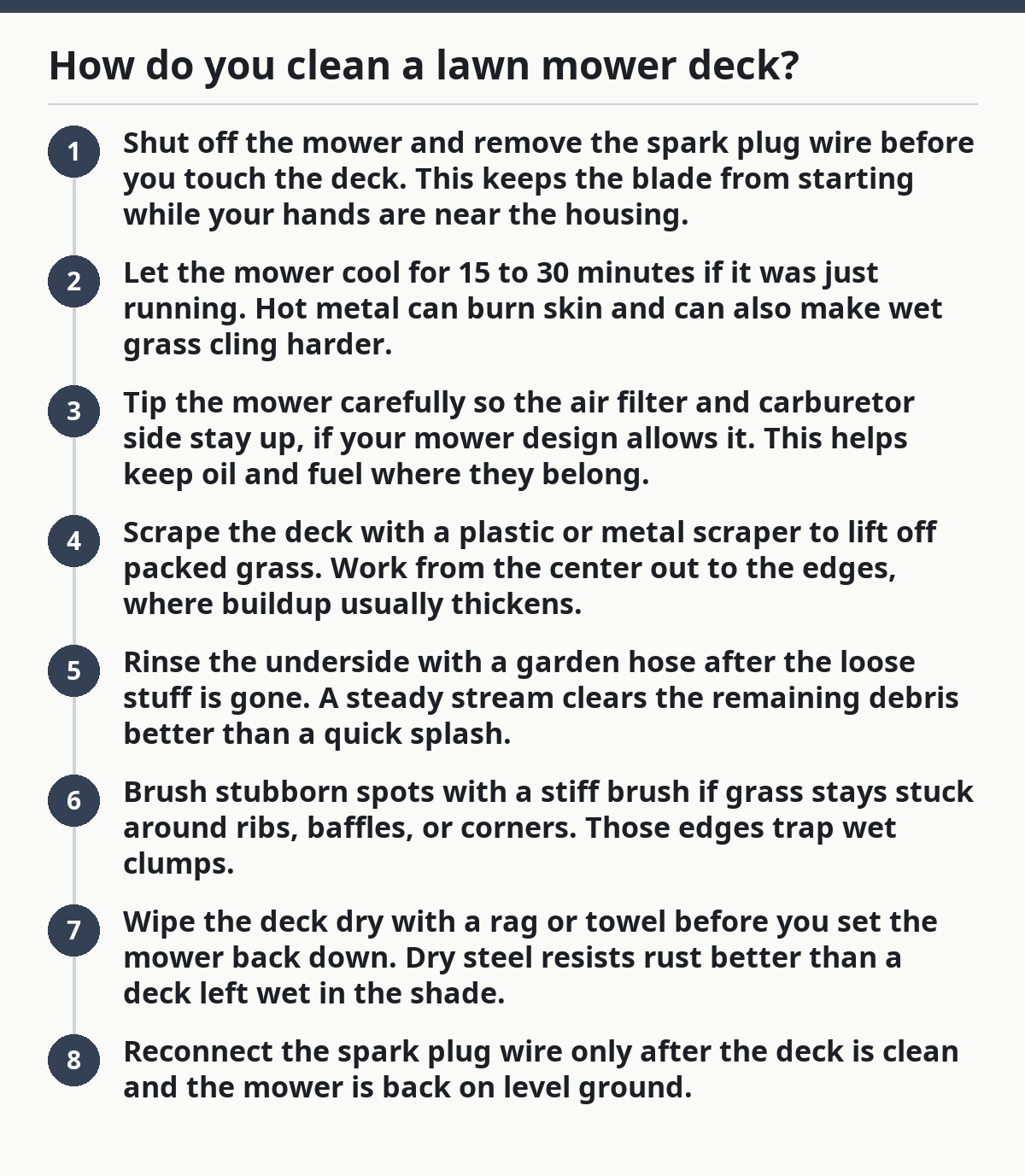
- Shut off the mower and remove the spark plug wire before you touch the deck. This keeps the blade from starting while your hands are near the housing.
- Let the mower cool for 15 to 30 minutes if it was just running. Hot metal can burn skin and can also make wet grass cling harder.
- Tip the mower carefully so the air filter and carburetor side stay up, if your mower design allows it. This helps keep oil and fuel where they belong.
- Scrape the deck with a plastic or metal scraper to lift off packed grass. Work from the center out to the edges, where buildup usually thickens.
- Rinse the underside with a garden hose after the loose stuff is gone. A steady stream clears the remaining debris better than a quick splash.
- Brush stubborn spots with a stiff brush if grass stays stuck around ribs, baffles, or corners. Those edges trap wet clumps.
- Wipe the deck dry with a rag or towel before you set the mower back down. Dry steel resists rust better than a deck left wet in the shade.
- Reconnect the spark plug wire only after the deck is clean and the mower is back on level ground.
Here’s the catch: water alone rarely solves a caked deck. The scraper does the hard work; the hose finishes the job. For related upkeep, see the lawn equipment maintenance guide on this site and the lawn mower blade sharpening guide for cut quality.
What tools do you need to clean mower deck grass buildup?
You only need a few simple tools: a scraper, a garden hose, a stiff brush, a rag, and gloves. That small kit handles most buildup without special cleaners or a pressure washer.
The scraper is the key tool here. A plastic one is gentler on paint and galvanized surfaces, while a metal one cuts through hard, dried clumps faster. Use the right edge for the job, and don’t gouge the deck just to save a minute.
- Scraper: lifts packed grass from flat areas and corners.
- Garden hose: rinses away loosened debris.
- Stiff brush: clears ribs, baffles, and tight edges.
- Rag or towel: dries the deck after rinsing.
- Gloves: protect your hands from sharp edges and stuck debris.
On the flip side, a pressure washer sounds faster but can drive water where it doesn’t belong. It can also strip loose paint and force grime into seams. A regular hose is the safer bet for routine deck cleaning, and the U.S. Consumer Product Safety Commission advises keeping mower maintenance steps simple and controlled.
If you keep one thing nearby, make it a scraper. That tool does more for a caked deck than a minute of spraying ever will.
How to clean the underside without damaging the deck
You clean the underside without damage by using a light touch, working in layers, and avoiding hard prying at the blade area. The deck is built to shed grass, not to survive a chisel.
Start with the thickest buildup first. Push the scraper under the packed grass and lift, instead of stabbing straight into the metal. If the deck has a painted finish, a sharp metal edge can scratch it; scratched paint gives rust an easy path.
Use the hose only after the heavy layer is gone. Water on top of a solid mass just makes a muddy paste that smears around the housing. That waste of time is common, and it leaves more cleanup later.
- Scrape dry buildup first.
- Rinse after the loose layer is gone.
- Brush around blade mounts and baffles.
- Dry the housing before storage.
In particular, a thin film is one thing; thick, damp mats are another. Clean enough that air can move through the deck and clippings can exit freely.
Common cleaning mistakes that cost you time
The biggest mistake is tipping the mower the wrong way, then flooding the air filter or carburetor side with oil or fuel. That turns a cleaning task into a repair problem, and it can delay mowing for a day.
A second mistake is using a pressure washer too close to seals, bearings, or belts. High pressure can shove water into parts that should stay dry. That extra moisture can lead to noise, rust, or slipping later.
A third mistake is leaving the deck wet after rinsing. That seems harmless for an hour, but a damp deck sitting in a shed can flash rust fast, especially after mowing wet grass.
- Wrong tip angle can contaminate the engine side.
- High pressure can force water into protected parts.
- Skipping the dry-down invites rust.
- Scraping too hard can gouge paint and bare metal.
So, none of these mistakes take special skill to avoid. Slow down, use the scraper first, and dry the deck when you finish. That simple sequence solves most problems.
How often should you clean a mower deck?
You should clean the deck any time grass buildup starts to affect discharge or cut quality, and you should not wait until the housing is packed solid. For many lawns, that means checking the underside after use patterns that leave wet or heavy clippings.
A deck that sees damp grass, thick growth, or long mowing sessions will need attention sooner than one used on dry, short turf. The point is not a fixed calendar date. The point is to stop buildup before it hardens.
Look for these signs:
- Clumps dropping from the deck.
- Grass sticking to the underside after mowing.
- Uneven discharge on one side.
- A cut that looks messy even with a sharp blade.
- A deck that feels heavy with wet debris.
If you’re already seeing clumps, the deck is overdue. Don’t wait for the next mow to solve it. For more on timing, the mowing schedule guide on this site pairs well with this cleanup routine.
How do you keep mower deck corrosion from starting?
You keep corrosion from starting by drying the deck, clearing trapped grass, and avoiding long periods with wet debris sitting underneath. Moisture and plant sap are a bad mix for metal.
After cleaning, wipe around seams, corners, and the lip where grass tends to pack in. Those are the places that hold water longest. If the deck has chipped paint, watch those spots closely; bare steel rusts faster than coated steel.
A light coating of protective spray can help if the manufacturer allows it, but don’t spray anything near belts, pulleys, or the blade path without reading the mower’s manual first. Safe cleaning usually beats a shortcut that creates another problem.
- Dry the deck after every rinse.
- Remove clumps from corners and ribs.
- Watch for chipped paint and bare steel.
- Keep the mower stored in a dry place.
This is the same reason equipment manuals from mower makers stress keeping the underside free of packed debris. If you want a broader maintenance checklist, the lawn equipment maintenance guide on this site sits one level above this page and fills in the rest. The Consumer Product Safety Commission also recommends following the manufacturer’s instructions for service and storage.
FAQ
How often should you clean a mower deck?
You should clean it whenever buildup starts to affect airflow, discharge, or cut quality. For some lawns that means after a few mows; for wet or thick grass, it can mean after every use. The deck tells you when it needs attention.
Can you hose off a mower deck?
Yes, you can hose off a mower deck after you scrape away the heavy buildup. Use a normal garden hose, not a high-pressure stream, and keep water away from the engine side and electrical parts. Dry the deck when you finish.
Does grass buildup affect mowing?
Yes, grass buildup affects mowing by blocking airflow and packing the underside of the deck. That usually leads to clumps, uneven discharge, and a rougher-looking cut. A clogged deck also makes cleanup harder the longer you wait.
Should you clean the deck after every use?
You should clean the deck after every use if the mower picked up wet grass, heavy clippings, or a visible mat underneath. Dry mowing conditions may need less cleanup, but a quick scrape is still worth doing when buildup is starting.
Drafted with AI; not yet reviewed by a person.





Leave a Reply