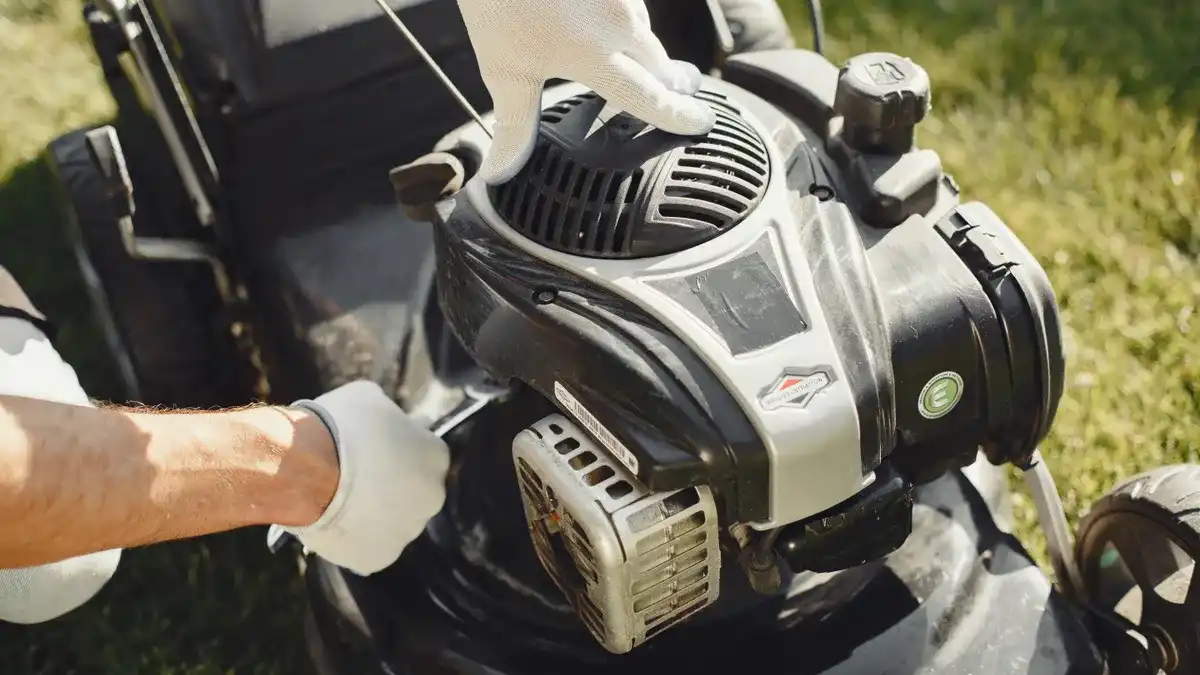
Last updated: November 19, 2026
Key Takeaways
- The swap should take about 10 minutes and avoid a stripped hole or no-start problem.
- A feeler gauge shows whether the plug gap matches the engine’s specified space.
- Cross-threading the new plug and using the wrong gap are the two biggest mistakes.
- Replace the mower spark plug at the manual’s interval, or sooner if starting is hard, misfires happen, or the plug is worn.
A dead or tired spark plug can leave a mower hard to start, lumpy at idle, or completely useless. This guide to how to replace a lawn mower spark plug covers the plug, the gap, and the tightening step. Below, you’ll see which tool fits, how far to tighten, and what to check if the mower still refuses to fire.
What you need before you start

Gather the tools first, then let the engine cool. Before you replace a lawn mower spark plug, that little bit of prep keeps the job to 10 minutes instead of turning it into a stripped hole or a no-start headache.
- Spark plug socket, often 5/8 inch or 13/16 inch depending on the engine
- Ratchet or wrench
- Feeler gauge for the gap check
- New spark plug matched to the mower engine
- Clean rag
- Gloves, if you want extra grip
A spark plug socket is not just a regular socket with a different name. It grips the plug better and leaves more room around the porcelain body. Without one, the work gets fiddly fast.
Match the old plug’s code or check the mower manual before buying the replacement. Thread size, reach, and heat range all have to suit the engine. A plug that almost fits is still the wrong one. For more on seasonal upkeep, see the lawn equipment maintenance guide.
How do you replace a lawn mower spark plug?
Remove the old plug with a spark plug socket, check the new plug’s gap with a feeler gauge, then thread the replacement in by hand before snugging it down. That’s the whole task; the sequence is what keeps it clean.
-
Remove the spark plug wire from the plug.
Pull the boot straight off, not at an angle. That helps avoid cracking the boot or tugging the wire loose at the terminal. -
Loosen the old plug with a spark plug socket.
Set the socket squarely over the hex and turn counterclockwise. If it fights you, keep steady pressure on it instead of snapping at it with short jerks. -
Inspect the old plug after it comes out.
Look for heavy black soot, oil, cracked porcelain, or worn electrodes. A badly fouled plug can explain hard starting even before the new one goes in. -
Check the new plug gap with a feeler gauge.
Slide the gauge between the electrodes and compare it with the mower engine spec on the decal or in the manual. If the gap is off, adjust it gently. -
Thread the new plug in by hand.
Turn it several times with your fingers first. If it won’t spin easily, back it out and begin again. Cross-threading a small aluminum cylinder head is an expensive mistake. -
Tighten the plug with the socket.
Snug it firmly, but do not muscle it down. Too loose and it can leak compression; too tight and you can damage the threads or the plug washer. -
Reconnect the spark plug wire.
Push the boot on until it seats fully. Then start the mower and listen for a clean, even idle.
Most of the work happens in the first 2 turns of the new plug. Those first turns tell the story. If they feel wrong, stop.
How do you check the spark plug gap?

Use a feeler gauge to compare the space between the center and side electrodes with the engine’s specified gap. The mower manual or engine label normally gives that number, and the check should happen before installation.
Hold the new plug in one hand and the gauge in the other. Light drag is the goal, not force and not slop. If the gauge slips through too easily, the gap is too wide. If it won’t go in, the gap is too tight.
Use this quick check:
- Find the gap spec for your lawn mower engine.
- Insert the correct blade on the feeler gauge.
- Compare the fit against the electrodes.
- Adjust only the ground electrode if the plug needs a small correction.
Bend the side electrode only a little at a time. Don’t pry on the center electrode or crack the insulator. And if the plug is the wrong type, no amount of bending will rescue it.
A lot of generic advice skips this step and acts like it’s optional. It isn’t. Wrong gap, wrong result — the engine can start badly, miss under load, or foul early. For a broader maintenance schedule, the lawn equipment maintenance guide covers the rest of the routine without repeating the repair.
What can go wrong when you change the plug?
Cross-threading the new plug and using the wrong gap are the two big traps. Either one can turn a simple 15-minute task into a repair that needs a thread insert or another new plug.
Picture this: the plug starts by hand, then binds after a turn or two. That is the warning sign. Stop, back it out, and start over. Never force the ratchet if the threads are not lined up.
Common mistakes and the cost:
- Starting with a ratchet instead of fingers — can strip soft cylinder-head threads.
- Overtightening — can crack the plug washer or damage the head.
- Skipping the gap check — can cause hard starting or rough running.
- Using the wrong plug type — can create poor combustion or fit issues.
- Leaving the wire loose — can make the mower act dead when the plug is fine.
The spark plug socket helps because it keeps the plug centered as it threads in. A plain socket can work, but it gives you less control in a tight mower shroud. Not ideal.
If the old plug looked wet with fuel, the mower may have a different problem. A new plug can still help, but it won’t fix a clogged carburetor, stale fuel, or a blocked air filter. This page is about the plug itself, not the whole engine system. For fuel-related checks, see the mower fuel system guide.
How often should you replace a mower spark plug?
Replace a mower spark plug at the interval listed in the engine manual, or sooner if the mower starts hard, misfires, or the old plug is visibly worn. Many small engines use spark plugs that are cheap enough to swap during routine service rather than wait for failure.
Picture this: after a season of mowing, you pull the plug and find rounded electrodes or heavy deposits. That part is done; nursing it along just wastes time. A fresh plug is small, but the effect on starting and throttle response is not small.
Use these signs as a replacement cue:
- Hard starting, especially after storage
- Rough running or sputtering
- Black, oily, or crusted plug tips
- Cracked porcelain
- Electrode wear you can see with your eyes
The exact interval depends on the engine design, use, and plug type. Some mower manuals call for a new plug during seasonal service; others stretch longer. If you can’t find the interval, use the manual first and the plug’s condition second.
One thing to skip: guessing based on the mower’s age alone. A 5-year-old mower with light use may still have a decent plug, while a hard-used machine can wear one out much sooner. For seasonal timing, the seasonal mower checklist helps you line up the interval with the rest of maintenance.
How do you know if the old plug was the problem?
You know the old plug may have been the problem if replacing it brings back easy starting and steadier running right away. A bad spark plug often shows up as a mower that cranks but won’t fire, fires once and dies, or runs with a steady miss.
Picture this: you install the new plug, seat the wire, and the engine starts on the first pull. That points straight at ignition at the plug, not a deeper engine fault. If the mower still won’t start, the plug was only part of the story.
Look at the old plug after removal:
- Dry black soot can point to rich running or weak spark.
- Wet fuel can mean the cylinder is flooding.
- Oil on the threads or tip can suggest engine wear.
- Cracked ceramic means the plug is done, no debate.
The truth is, a spark plug is often the easiest fix in small-engine maintenance, but it is not magic. If the new plug does nothing, check the fuel, air filter, and safety controls next. Don’t keep cranking a mower for minutes at a time; that can flood the engine and waste the battery on electric-start models.
Safety and thread care that saves the engine
Work on a cool mower, start the plug by hand, and stop at the first sign of thread drag. That simple discipline keeps the repair cheap.
Picture this: the engine has sat long enough that the muffler is cool and the spark plug wire is off. That makes the job easier and safer.
Keep these rules in mind:
- Let the engine cool before touching the plug.
- Pull the spark plug wire before turning the wrench.
- Use the socket to remove and install, but use fingers first on the new plug.
- Do not coat the threads with grease unless the engine maker says to do it.
- Stop if the plug won’t seat with light finger force.
Thread care matters because mower cylinder heads are often aluminum. Aluminum threads damage fast. A plug that starts crooked may feel only slightly off, then turn into a stripped hole on the next half-turn.
If you want a single practical standard, this is it: the plug should thread in smoothly, then tighten until the washer seats without brute force. That is the line between a repair and a bigger bill.
How do you know if a spark plug is bad?
A spark plug is bad when the electrodes are worn, the porcelain is cracked, or the tip is fouled with carbon, oil, or fuel. Hard starting and rough running are common signs too. If the plug looks damaged or the engine only starts after repeated pulls, replacement is usually the next step.
Do mower spark plugs need gapping?
Yes, mower spark plugs need gapping if the new plug does not already match the engine specification. Use a feeler gauge to check the gap before installation. If the plug is pre-gapped, still compare it to the mower manual, because shipping and handling can shift it slightly.
Can a bad spark plug stop a mower from starting?
Yes, a bad spark plug can stop a mower from starting. If the plug can’t fire, the engine may crank without catching, or it may start and die right away. A spark plug is one of the first parts to check when a mower suddenly won’t run.
How often should you replace a mower spark plug?
Replace a mower spark plug at the interval in the engine manual, or sooner if the plug is worn or fouled. Many small engines need a new plug as part of seasonal maintenance, especially if the mower gets heavy use. If starting gets harder, don’t wait for the scheduled interval.
For more on the rest of the mower care routine, the lawn equipment maintenance guide is the right next stop.
Drafted with AI; not yet reviewed by a person.





Leave a Reply