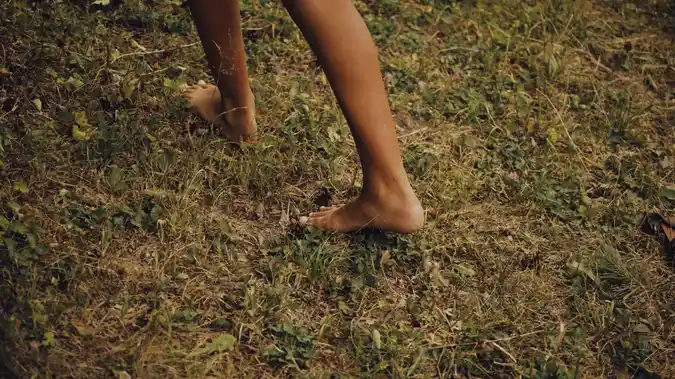
Last updated: November 19, 2026
Quick answer: How to tell if your lawn needs water is to check three signs in one spot: grass blades lose spring, soil feels dry below the surface, and footprints stay visible. This guide shows the signs to watch, the footprint test, and the soil check that settles the question.
Key Takeaways
- Look for color change, a softer feel, and footprints that linger.
- The footprint test gives a quick read in 10 seconds.
- A trowel and soil check can confirm dryness below the surface.
- Late afternoon usually gives the clearest read, when thirsty grass stays limp.
Start with the signs your lawn is already giving you
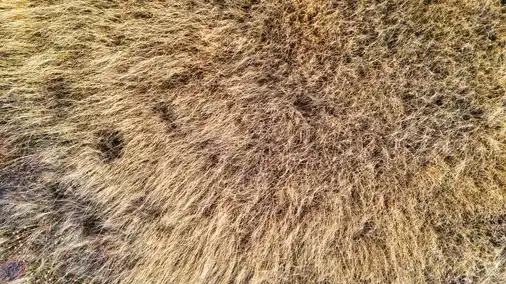
Picture this: you’re crossing the same patch of grass every day, and it stops looking lively before you ever touch a hose. You see color change, feel the turf underfoot, and wonder if the lawn is just hot or actually thirsty. The clue is a pattern, not one symptom.
A lawn that needs water usually changes in more than one way at once. Grass blades may fold, curl, or look flat instead of upright. The color can shift from bright green to a dull, blue-green, or gray-green cast. If the lawn looks tired in the morning and stays that way by late afternoon, that matters more than a brief midday flop in heat.
Use the signs together:
- Blades that no longer stand up after you walk across them
- Color that looks dull, gray-blue, or muted
- Patches that dry out faster than the rest
- A surface that feels crisp instead of springy underfoot
The truth is, color alone can fool you. Some lawns darken in shade, and some soils hold moisture unevenly, so one thirsty-looking corner does not always mean the whole yard needs a soak. A sprinkler can hide that problem too, because wet topsoil may sit over dry soil below. For more on coverage and timing, see the lawn watering guide and the sprinkler coverage check.
How do you do the footprint test on grass?
The footprint test tells you a lot in 10 seconds. Walk across a dry-looking area and see whether the grass blades spring back or stay flattened and marked by your steps.
Picture this: you’re standing in a section of lawn that looked fine last week, but now every step leaves a mark. You don’t need a tool for this first check, just your eyes and shoes. If the print lingers, the turf is losing elasticity.
Because that read can change with light and shade, try the same step in two spots—one sunny, one shaded—so you can compare them. At least 2 spots make the result easier to trust.
Here’s the catch: this test works best when the lawn is not freshly cut and not just shaded by a tree or fence. Shade can keep grass cooler, and that can make it look less stressed than a sun-baked patch nearby. Try the same step in two spots—one sunny, one shaded—so you can compare them.
Use this simple check:
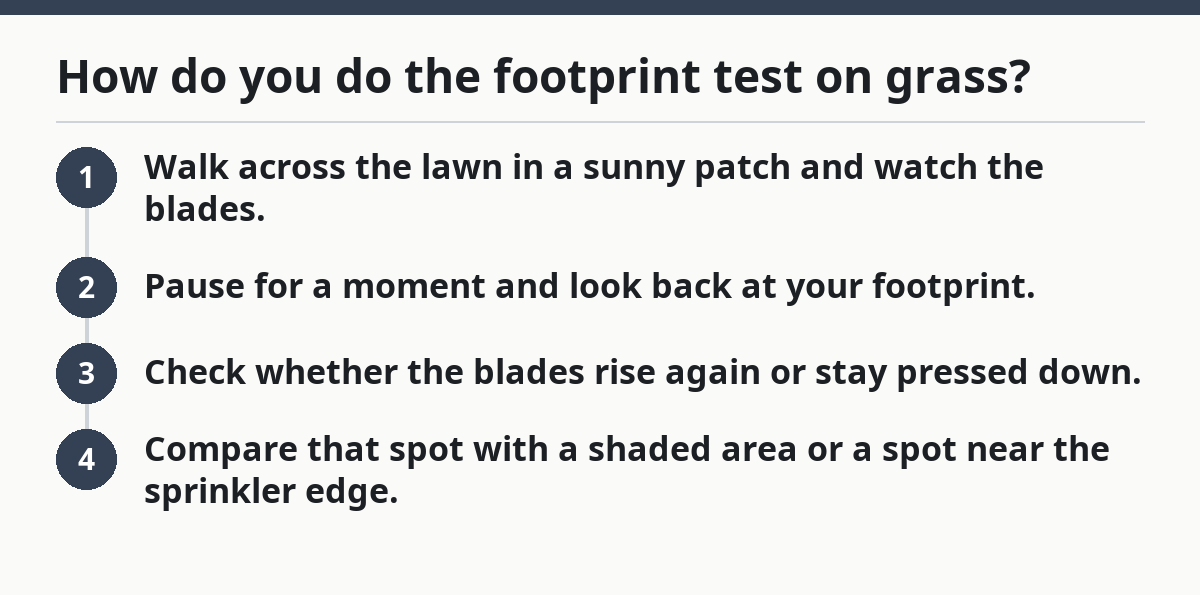
- Walk across the lawn in a sunny patch and watch the blades.
- Pause for a moment and look back at your footprint.
- Check whether the blades rise again or stay pressed down.
- Compare that spot with a shaded area or a spot near the sprinkler edge.
A footprint that vanishes quickly usually points to enough moisture in the blades and upper root zone. A footprint that hangs around often means the grass has stopped pushing back, which is one of the clearest home clues that the lawn needs water. The test itself takes 10 seconds, but the comparison with another spot makes it more useful.
What soil clues tell you the lawn is thirsty?

Soil tells the truth, and a trowel can give you a better answer in a patch that looks unsure. Dig a small slice of soil about 2 to 4 inches deep and feel whether it is cool and slightly damp or dry and crumbly.
Picture this: you’re kneeling at the edge of a brown patch, lifting a thin wedge of earth with a trowel. The surface may look dry while the lower layer still holds moisture, or the top may feel damp from dew while the root zone is already dry. That difference is why the soil check matters.
A dry root zone often feels dusty, loose, or powdery. Soil that still has useful moisture usually clumps a little when squeezed and does not fall apart instantly. If you can push the trowel in easily but the lifted soil breaks into dry crumbs, the lawn may be past the point where surface color can tell you much.
One more clue: soil near downspouts, hard edges, or compacted walkways often dries at a different rate than open ground. That means the lawn can need water in one section and not in another. Don’t let one damp corner talk you out of checking the rest. For a deeper check, compare the root zone with the soil moisture guide.
What to look for:
- Dry, crumbly soil at 2 to 4 inches
- Soil that feels warm and dusty instead of cool
- Root zone dryness even when the top looks dark
- Uneven moisture near sidewalks, trees, and roof drip lines
The best part? This check is simple enough to repeat after a rain or a sprinkler cycle, so you can tell whether the moisture is reaching the part of the lawn that actually feeds the grass. The lawn watering guide explains how that timing affects the rest of the yard.
Which time of day gives the clearest read?
Late afternoon usually gives the clearest read because grass that is truly thirsty stays limp after the heat of the day passes. Morning can hide the problem, and midday can make healthy grass look stressed for a few hours.
Picture this: you’re looking at the lawn at 8 a.m., then again after work. At sunrise, dew can make blades look fuller than they are. By the hottest part of the day, even a healthy lawn may lean and curl a bit. The late-day check is the one that counts.
That does not mean you should ignore a morning check. Morning is useful for spotting a lawn that never recovered overnight. If the grass still looks flat, gray-blue, or folded by early daylight, that is a stronger warning than a brief midday slump.
Watch for these timing clues:
- Morning: blades should look more upright after the cool night
- Midday: stress can show, but it can be misleading in heat
- Late afternoon: a thirsty lawn often looks tired again after the day’s heat
- Evening: a lawn that remains dull after sunset is worth checking
On the flip side, don’t confuse normal heat response with drought stress. Some grasses perk up once the sun drops even if they were a little droopy at noon. That’s why timing works best when you pair it with the footprint test and the soil check.
How to tell if your lawn needs water without guessing
You can tell with a simple 3-step check: look, step, and dig. Start with the grass blades, confirm with a footprint, then verify with a small soil sample from 2 to 4 inches deep.
Picture this: you’re not trying to be a botanist. You’re trying to avoid watering when the lawn is fine and missing the moment when it is truly dry. This is a decision test, not a theory test.
Follow the same order each time:
- Look at the grass blades in sun and shade for a dull, gray-blue cast or folding leaves.
- Step on one dry-looking area and watch whether the footprint remains.
- Dig a small plug or slice with a trowel and feel the soil below the surface.
- Compare more than one spot, because a lawn can dry unevenly.
If all three signs point the same way, the lawn needs water. If only one sign shows stress, hold off and check again later the same day. A single clue can lie; a set of clues usually does not.
This is also where many people go wrong. They see one patch that looks weak and water the entire yard, even though the rest still has enough moisture. That wastes water and can blur the real problem, which might be a dry spot from poor sprinkler coverage or compacted soil.
What common mistakes lead to the wrong call?
The wrong call usually comes from checking only the top inch of soil or judging the lawn at the hottest point of the day. Both can make a healthy lawn look needy, or hide a lawn that is drying out below the surface.
Picture this: you’re standing in the yard at noon, seeing a little curl on the leaf tips, and reaching for the hose. That rush can cost you. Shallow checks and bad timing make the lawn look more stressed than it is.
Here are the mistakes that matter most:
- Checking only the topsoil instead of the root zone
- Judging by one spot while ignoring dry patches elsewhere
- Confusing shade, heat, and true drought stress
- Assuming a green lawn is always hydrated
- Looking only after a sprinkler run, when the surface can fool you
A better move is to check the same area at two times, such as morning and late afternoon, and use a trowel in more than one part of the yard. That takes a few extra minutes, but if the lawn still looks borderline, consider checking the system or asking a lawn care professional before you water the whole yard. For irrigation setup, see the sprinkler coverage check.
Who this is not for: if your lawn has only a small isolated dry patch, the better fit is a sprinkler coverage check, not a whole-yard watering decision. This page helps you tell whether the lawn needs water at all; it does not fix an uneven irrigation pattern.
For a broader look at timing and coverage, the lawn watering guide on this site is the next stop.
What the lawn is telling you by the end of the day
By the end of the day, a thirsty lawn still looks flat, dull, and slow to spring back. A lawn with enough water usually rebounds after you walk on it and does not feel dry below the surface.
Picture this: you’ve done the tests, and now you want a clean answer before you drag out the hose. The answer is in the pattern, not one dramatic symptom. If the blades, the footprint, and the soil all say dry, water is justified.
Use this quick rule:
- All three signs match: the lawn needs water
- Only one sign matches: check again later
- Signs conflict: trust the soil test over the surface look
That final point matters. Grass blades can lie in heat, but soil is harder to fake. If the top looks dry and the root zone still feels cool and slightly damp, the lawn can usually wait.
The cleanest judgment comes from repeating the same checks on different days, especially after warm weather or a long dry spell. The more often you compare the same spots, the faster you learn what normal looks like in your yard.
What does thirsty grass look like?
Thirsty grass looks dull, folded, and less springy than usual. It may take on a gray-blue tint, and footsteps can stay visible longer than they should.
The blades often curl inward or lie flatter instead of standing up. If that look shows up in more than one area and the soil below is dry, the lawn is asking for water.
How can you check soil moisture without tools?
You can check soil moisture without tools by pressing a finger into the top layer and feeling for coolness and dampness. If the soil feels dry and dusty just below the surface, it may be time to dig a little deeper with a trowel later.
This quick check works best for a first pass. It does not replace a deeper look, because the top inch can be dry while the root zone still has moisture.
Is a gray-blue lawn a sign of drought stress?
Yes, a gray-blue lawn can be a sign of drought stress. That color change often means the grass is losing moisture and starting to close up its blades.
Color alone is not the final word, though. Pair it with the footprint test and a soil check before you decide the lawn needs water. For seasonal guidance, see the seasonal lawn care guide.
Can grass recover after wilting?
Yes, grass can recover after mild wilting if the roots and crowns are still healthy. A lawn that has only just started to fold or fade often perks back up after it gets enough water.
If the lawn stays flat, brittle, or patchy for a long time, recovery gets harder. That is the point where the soil check becomes especially useful, because it shows whether the turf is still holding enough moisture to rebound.
Drafted with AI; not yet reviewed by a person.





Leave a Reply