Last updated: November 19, 2026
Bare soil, thin turf, or a fresh build needs the same thing: a lawn that roots fast, stays level, and survives the first summer. The right lawn installation is the one matched to your soil, sun, slope, and watering plan. This guide settles what to install, when to install it, what it costs, and what separates a good job from a bad one. In Lawn installation and establishment — The Complete Guide, the quick answer is this: choose the method that fits your site, then protect the lawn for the first 2 to 6 weeks.
Key takeaways
- A strong lawn often starts with soil prep and grading before the grass goes down.
- Sod gives instant cover; seed costs less but needs more time and attention.
- Installation price swings with square footage, access, soil repair, and drainage work.
- The first 2 to 6 weeks decide whether the lawn knits in or fails in patches.
- A contractor who skips soil prep is selling you a second job later.
What you should decide first
You should decide between sod, seed, or hydroseeding before you talk about price. That choice sets the timeline, the labor, and the risk level, and it changes what “done” really means.
Picture this: you want green grass fast, but the yard has clay soil, a slope, and a shady side yard. The wrong installation method can look fine for a week and fail in the first dry spell. That is why method choice matters more than grass variety in most first-time installs.
- Sod: instant cover, higher material and labor cost, best when erosion control or curb appeal matters now.
- Seed: lower upfront cost, slower establishment, best when budget matters and you can wait.
- Hydroseed: faster than hand seeding, useful on larger areas or slopes, but it still needs careful watering and good site prep.
Here’s the catch: a “cheap lawn” often becomes an expensive one if the grading is wrong. If water pools, the grass will thin, disease pressure rises, and no grass type fixes that by itself.
How much does lawn installation cost?
Lawn installation cost depends on yard size, site prep, drainage, soil condition, and the method you choose. The material itself is only part of the bill; grading, topsoil, removal of old turf, and irrigation changes can move the price more than the grass does.
Picture this: one yard is flat, open, and ready for sod. Another has old weeds, compacted soil, and low spots that hold water after rain. Those two jobs are not priced the same, even if both are “one lawn.”
Typical cost drivers include:
- Square footage
- Removal of old grass
- Soil amendment or topsoil
- Leveling and grading
- Drainage correction
- Access for equipment
- Seeding vs. sod vs. hydroseeding
For a simple yard, the job can stay close to the base install price. For a complex yard, the prep can add the most cost. That is why quotes need detail, not just one total.
The truth is, a contractor who gives one simple number without seeing the site is usually skipping something. If a quote does not say what soil work is included, ask.
According to the University of Massachusetts Amherst, lawns are often most successful when soil pH is in the 6.0 to 7.0 range, which is one reason soil testing matters before install. The USDA Natural Resources Conservation Service also notes that poor drainage and compaction can limit root growth. Those are both common reasons a new lawn fails even when the grass itself is healthy.
What does good lawn prep look like?
Good lawn prep means the ground is shaped, loosened, and ready to root before any grass is installed. If the base is wrong, the lawn will show it later as thin spots, puddles, high edges, and shallow roots.
Picture this: you rake seed over hard clay or lay sod on a hump-and-dip yard. The lawn may green up, but it will not establish evenly. Roots need contact with soil, and water needs a path away from the surface.
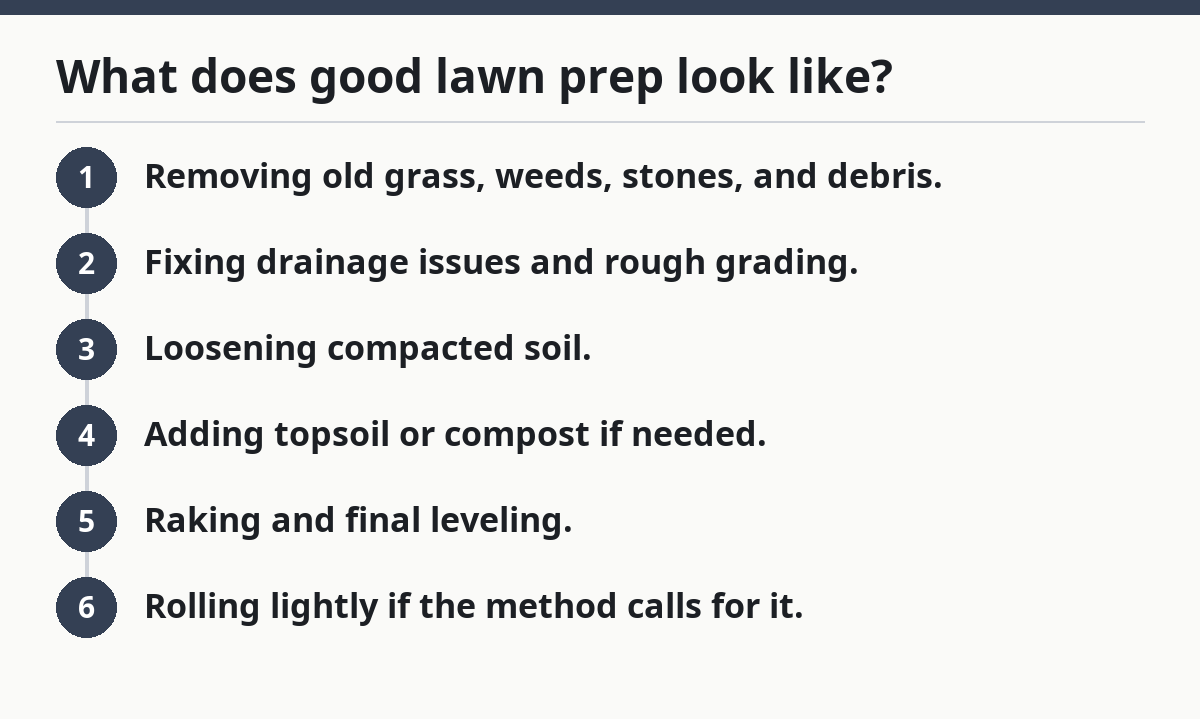
A solid prep sequence usually includes:
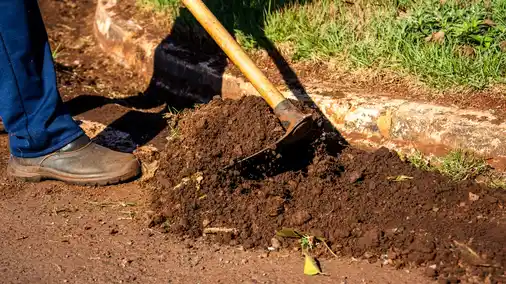
- Removing old grass, weeds, stones, and debris.
- Fixing drainage issues and rough grading.
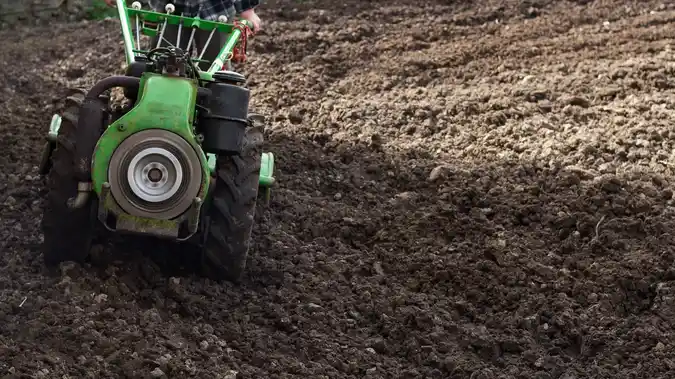
- Loosening compacted soil.
- Adding topsoil or compost if needed.
- Raking and final leveling.
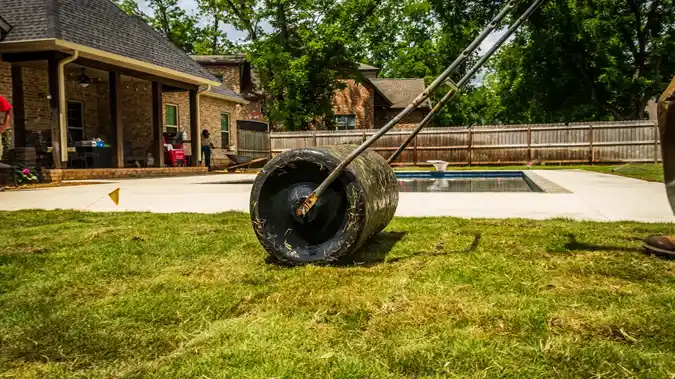
- Rolling lightly if the method calls for it.
- Seed needs tilth: the top layer should be loose enough for seed-to-soil contact.
- Sod needs grade: the finished base should be smooth enough that seams do not bridge over air pockets.
- Both need drainage: water should soak in, not sit on the surface.
A bad prep job is easy to spot later. Edges dry out first, seams lift, moss grows in shade, and water runs down the same channels every storm. That is not a grass problem.
Sod vs. seed: which one fits your yard?
Sod wins when you need immediate coverage, but seed wins when cost and long-term flexibility matter more. The right answer depends on how fast you need a finished look and how much watering discipline you can keep for the first month.
Picture this: a front yard needs to look finished before guests arrive, but the side yard has a slope that washes out in heavy rain. The front may justify sod; the slope may need a tougher establishment plan and possibly erosion control blanket.
Sod: who should choose it
Sod is the better choice when you need instant cover, fewer erosion issues, and a fast visual finish. It is especially useful on new homes, sloped yards, and places where foot traffic will start early.
Sod’s strengths are practical:
- It covers bare soil right away.
- It reduces mud and erosion fast.
- It gives a more uniform look on day one.
Its weaknesses are just as real:
- It costs more than seed.
- It still needs careful watering for rooting.
- It can fail if the base is uneven or the seams dry out.
Who Should Skip This: skip sod if you have a big budget gap and can wait several weeks for establishment; seeded turf or hydroseeding is the better fit for a slower rollout.
Buy this if: you need a yard that looks complete fast and you can water on schedule.
Skip this if: you want the lowest upfront spend and you cannot justify the added material and labor.
Seed: who should choose it
Seed is the better choice when you want a lower-cost installation and you can wait for germination and thickening. It also gives more freedom to match grass type to sun, shade, and climate.
Seed’s strengths:
- Lower material cost.
- Easier to cover larger areas.
- Good for matching blends to local conditions.
Seed’s weaknesses:
- Germination takes time.
- Birds, runoff, and drying can reduce stand quality.
- Weeds can move in while the lawn is still thin.
Who Should Skip This: skip seed if your yard has steep slopes or strong runoff and you need immediate cover; sod or hydroseeding with erosion control is a better match.
Buy this if: you can wait for growth and you want a more budget-aware install.
Skip this if: your timeline is short and bare soil cannot be left exposed.
What happens during installation day?
Installation day should follow a clean sequence: prep, delivery, install, water, and cleanup. If the crew is improvising in the middle of the job, that usually means the plan was weak before they arrived.
Picture this: pallets show up, the soil is still too rough, and the crew is racing sunset. That job may still finish, but the lawn is now relying on luck. Good work gives the roots a stable start, not just a green surface.
A proper day-of process often includes:
- Final walk-through of grade and drainage.
- Delivery staging near the work zone.
- Fast installation to limit drying.
- Immediate watering after placement or seeding.
- Clean edges around beds, walks, and drains.
A well-run install is quiet in the right way. No puddles, no exposed seams, no bare strips along the curb. Just a finished surface that can start rooting.
How long does lawn establishment take?
Lawn establishment usually takes weeks, not days, and the exact timing depends on the method, weather, and care after install. A lawn can look finished quickly and still be nowhere near established underneath.
Picture this: the grass looks green by the weekend, so you cut back on water. A few hot afternoons later, the edges crisp up and the shallow roots give up. That is the most common mistake after a new install.
General establishment patterns:
- Sod: roots start knitting into the soil first, then the lawn can handle normal use later.
- Seed: germination comes first, then the grass thickens, then it can take traffic.
- Hydroseed: behaves like seed in the early stage, with the added need to protect the surface from washout.
Do not treat a new lawn like an old one:
- Keep foot traffic off as long as practical, and consult a lawn professional if you are unsure about timing.
- Water according to method and weather.
- Mow only when the grass is tall enough and rooted enough.
- Avoid practices that stress tender growth; when in doubt, consult a professional.
Now, you might be wondering what “established” really means. It means the roots have taken hold, the stand is filling in, and the lawn can handle normal maintenance without pulling apart. Until then, it is still in recovery mode.
The biggest mistake is treating a new lawn like an established one too soon, and extension guidance from university turf programs says that early use can slow rooting. If a lawn still lifts at the edges or pulls up easily, it is not ready for normal traffic.
How should you water a new lawn?
You should water a new lawn often enough to keep the top layer from drying out, but not so much that the soil stays soggy. The first watering plan is one of the biggest reasons new lawns succeed or fail.
Picture this: you water once in the morning and assume that is enough for the week. For a new lawn, that is often too little. On the flip side, daily soaking that turns the ground muddy can rot roots and invite disease.
A useful approach is:
- Keep the surface evenly moist during the first stage.
- Reduce frequency as roots deepen.
- Watch the edges and the sunny spots first, because they dry faster.
- Adjust for wind, heat, and rain instead of following a fixed calendar.
A lawn that gets the wrong water schedule shows it fast. Seed crusts over. Sod lifts at the seams. Shallow roots stay shallow. Water is not a side detail; it is part of establishment.
The USDA says new turf often needs frequent, light watering at first, then less frequent but deeper watering as roots develop. That shift matters because roots follow moisture downward. A yard that gets shallow water every day may stay green but still root poorly.
What makes a bad lawn job obvious?
A bad lawn job is obvious when the surface is uneven, the seams show, water pools, or the grass fails in patches. The problem is usually not the grass itself — it is the base under it.
Picture this: the lawn looks finished on install day, but after the first heavy rain you see washouts, hummocks, and soft spots. That means the grade, drainage, or compaction was ignored.
Watch for these warning signs:
- Low spots that hold water after rain
- Seams in sod that dry and split open
- Seed washing into gutters or bare corners
- Thin strips along fences, walks, or curbs
- Soil so hard that roots cannot push down
If you see those issues early, ask what part of the prep was skipped. A lawn that is established correctly does not need constant rescue work.
What should you ask a contractor before hiring?
You should ask direct questions about soil prep, drainage, watering, and what is included in the price. A good contractor can explain the job in plain language and show where the money goes.
Picture this: you are comparing two quotes and one is much lower. The cheaper one may not include removal, grading, soil replacement, or follow-up support. That is not a bargain if the lawn fails later.
Ask these questions:
- Is soil preparation included, or is it extra?
- How will drainage and slope be handled?
- What watering plan do you recommend after install?
- What is the expected timeline for rooting or germination?
- What does the quote exclude?
- What happens if the site reveals a hidden problem?
A strong quote is specific. It names the method, the prep work, and the finish standard. If it only says “install lawn,” ask again. For local guidance, your county extension office or state university turf program can also help you compare answers.
What changes in different climates and yards?
Climate and yard conditions change the answer more than most people expect. Hot, dry areas need different watering discipline than cool, wet areas, and clay soil behaves very differently from sandy soil.
Picture this: the same lawn method is used in a shady, damp yard and a sunny, windy one. One side holds moisture too long; the other side dries too fast. That is why a generic answer often fails.
Location and site conditions that matter:
- Heat increases drying and stress.
- Shade slows drying and can favor moss or thin turf.
- Clay soil holds water and compacts easily.
- Sandy soil drains fast and dries fast.
- Slopes need runoff control.
- Local watering rules can limit how you care for new grass.
Because of that, the safest move is to match the installation plan to the site you actually have, not the lawn you pictured. A good lawn starts with the ground in front of you.
University extension resources often advise adjusting irrigation and grass choice to the site, not the other way around. That advice is practical because a slope with runoff, for example, needs a different plan than a flat backyard with deep shade.
FAQ
How do I know if I should install sod or seed?
Sod is the better pick if you need fast cover, erosion control, or a finished look right away. Seed is better if you can wait longer and want lower upfront cost.
The deciding factor is usually time versus budget. If the soil is ready and watering will be consistent, either can work; if the slope is steep or bare soil cannot stay exposed, sod often makes more sense.
How long before I can mow a new lawn?
You should mow only after the grass is rooted enough and tall enough to cut without pulling out. For seed, that usually means waiting until the new grass is established enough to hold steady; for sod, it means the seams have started to knit in.
Do not rush the first mow. A dull blade or a heavy mower can tear tender grass and slow establishment.
Why is my new lawn turning patchy?
Patchiness usually means uneven watering, poor soil contact, or a grading problem. In some yards, shade, heat, or runoff makes the problem worse on one side first.
If patches follow a pattern — along a slope, near downspouts, or across a compacted strip — the issue is probably under the grass, not in the grass type.
Do I need topsoil for a new lawn?
You need topsoil or soil improvement when the existing ground is too poor, too thin, or too compacted for roots to take hold. Not every yard needs a full layer, but many do need some correction before installation.
A good contractor should explain whether the existing soil can support the lawn or whether a better base is needed for establishment. Soil tests can help here, and many extension services recommend them before installation.
What is the biggest mistake people make after installation?
The biggest mistake is treating a new lawn like an established one too soon. That means cutting back on water, walking on it early, or mowing before the roots are ready.
The lawn may look fine for a short time, then fail in the hottest or driest spots. Early care is what turns a green surface into a lasting lawn.
Drafted with AI; not yet reviewed by a person.





Leave a Reply