
Last updated: November 19, 2026
Key Takeaways
- Winterizing small gas-powered lawn equipment means getting fuel, battery, oil, and dirt under control before storage for 3 months or longer.
- Start with the fuel condition, then clear and store the rest of the machine.
- Fuel stabilizer is often the cleaner option for stored fuel, but the manual may still call for draining it.
- Remove any battery before winter storage and keep it in a dry place with moderate temperature.
Small gas-powered lawn equipment needs fuel stabilized, batteries removed, and the outside cleaned before storage. This guide on how to winterize small gas-powered lawn equipment walks through the steps for a string trimmer, leaf blower, and lawn mower so the fuel system doesn’t gum up over winter. For general fuel-storage guidance, see the EPA small engine fuel advice and Stihl’s winter storage guidance.
What winterizing small gas-powered lawn equipment actually means
Picture this: you’re done mowing for the year, the garage is cold, and your trimmer still has half a tank in it. Winterizing means you get the fuel, battery, oil, and dirt under control before that machine sits for 3 months or longer.
The goal is simple: protect the carburetor, keep corrosion down, and make spring start-up less ugly.
- Stabilize the fuel in the tank if you plan to store it with gas inside.
- Remove any battery before the machine goes into storage.
- Clean off grass, sap, and dirt so moisture doesn’t sit on the housing.
- Check the oil level on 4-stroke equipment and deal with old oil if it needs attention.
- Store the tool indoors in a dry place, away from open flame and fuel cans.
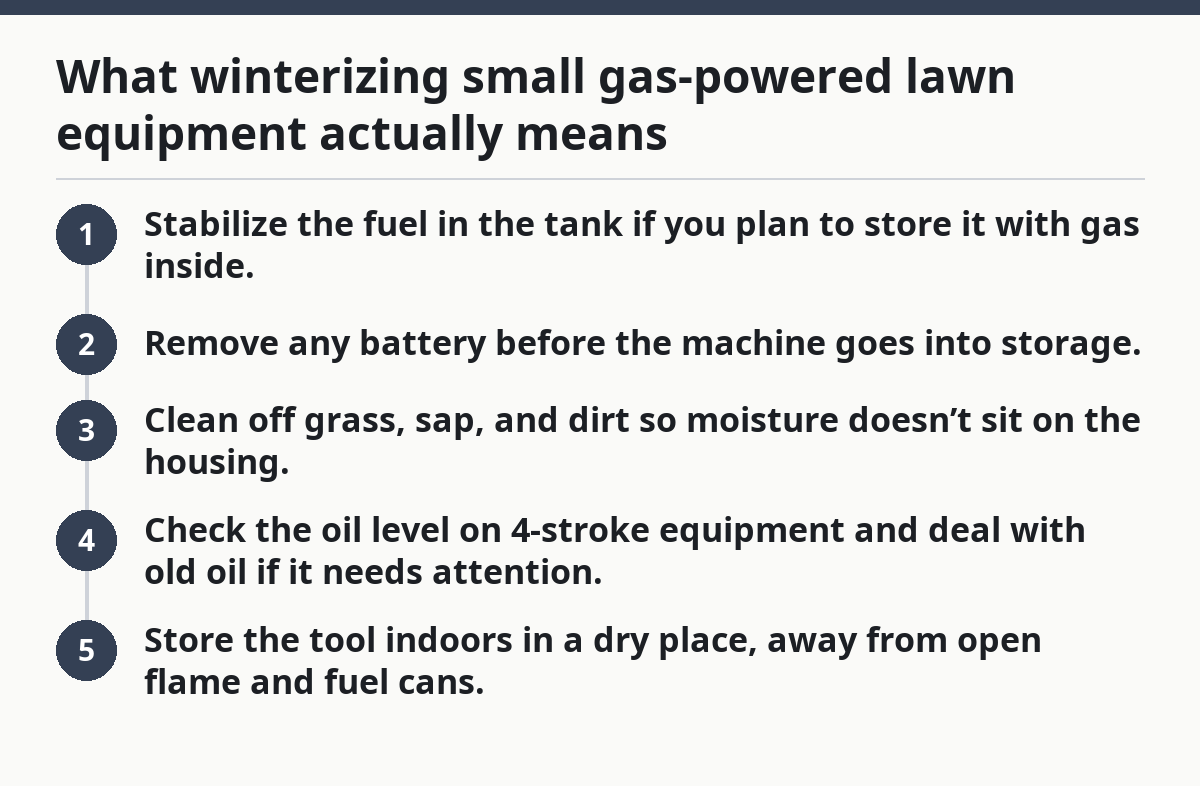
The same rough process works for a string trimmer, a leaf blower, and a lawn mower, but the oil step only applies to 4-stroke engines. A 2-stroke tool uses mixed fuel, so the fuel step matters even more.
How do you winterize a gas trimmer, blower, or mower?
Since fuel condition comes first, you winterize them by getting that part right before you do the rest. That order matters because stale gas is the thing most likely to cause a hard start in spring.
Picture this: you’re standing at the bench with a 2-cycle trimmer, a handheld blower, or a push mower, and all three need different levels of attention. The fuel system is the common weak point, but the cleanup step changes a little by tool.
- Mix fresh fuel only if the engine uses a 2-stroke ratio, and add fuel stabilizer before the last run if you’re storing gas in the tank.
- Run the engine for a few minutes after adding stabilizer, or consult a professional if you are unsure, so treated fuel reaches the carburetor; Briggs & Stratton and other engine makers recommend following the product manual for storage steps.
- Drain or use up the tank only if the maker’s manual says to do that for your model.
- Remove the battery from electric-start equipment or any tool with a removable battery pack.
- Wipe the housing, vents, and deck after the engine is cool.
- Inspect the air filter, spark plug boot, and fuel cap for obvious wear or cracked parts.
- Store the machine indoors on a level surface, not under a tarp outside where condensation builds.
However, generic advice does not always stop at “drain the gas,” because some engines prefer stabilized fuel left in the tank while others tell you to run the carburetor dry. The manual beats the shortcut.
Should I drain the gas or use fuel stabilizer?
Fuel stabilizer is usually the cleaner option if you want to leave fuel in the tank, but the manual can still tell you to drain it instead. That’s the part too many people skip.
Picture this: you have a 1-gallon tank that still holds fuel from late fall, and you’re deciding between pouring it out or treating it. Stabilizer helps slow fuel breakdown, but it doesn’t fix dirty fuel or water-contaminated gas.
Use this rule set:
- Use stabilizer when the fuel is fresh enough to keep and the engine is designed to sit with fuel in the tank.
- Drain the tank when the manual tells you to, or when the gas smells stale, looks cloudy, or may have absorbed water.
- Never leave untreated fuel sitting over winter and hope it will be fine in spring; if you are unsure whether the fuel is still usable, consult a professional or follow the equipment manual.
- Don’t mix old and new fuel just to “use it up.” If the old fuel is questionable, it can still cause starting trouble.
If the machine has a primer bulb or carburetor bowl, stale fuel can leave varnish in those small passages. That’s why fuel treatment matters more on a trimmer or blower than on a big gas can sitting in the shed; if the fuel condition is uncertain, consult a professional.
For a general maintenance overview across the whole yard, the lawn equipment maintenance guide is the hub to start from. This page stays on winter storage prep only, and small engine carburetor care is also worth a look.
What should you do with the battery before storage?
You should remove the battery before winter storage and keep it in a dry place with moderate temperature. That applies to gas-powered tools with electric start systems and any hybrid setup that uses a removable pack.
Picture this: you’ve got a gas mower with a removable starter battery and a blower that clicks to life from a pack. Leaving a battery attached for 4 months is asking for corrosion, drain, or a dead pack when you want to use it again.
Do this instead:
- Remove the battery after the tool cools down.
- Clean the battery terminals with a dry cloth if you see dust or residue.
- Charge it to the level the maker recommends before storage if the manual gives one.
- Store it indoors, not on a concrete floor where cold and damp can sit around it.
- Check it once during winter if the manufacturer gives a storage schedule.
A removable battery is easy to forget because the engine itself still runs on gas. That doesn’t make it optional. A dead battery in spring turns a quick start into a hunt for a charger.
Clean the machine before you put it away
Cleaning before storage keeps moisture, grit, and plant sap from sitting against metal and plastic for months. It also makes spring inspection faster because you can actually see leaks, cracks, and worn parts.
Picture this: you’re finishing a season of mowing wet grass and trimming along fences, and the housing is packed with debris. A 10-minute cleanup now can save you from rust spots and stuck controls later.
Use this sequence:
- Cool the engine completely.
- Brush off loose grass, dust, and leaves from the deck, housing, guard, and vents.
- Wipe down handles, shafts, and covers with a dry cloth.
- Clear the underside of a lawn mower deck only if the engine is off, the spark plug is disconnected, and the blade can’t move.
- Dry the machine before storage so moisture doesn’t sit under clamps or around fasteners.
- Leave no wet clumps inside a blower tube or trimmer shield.
Don’t wash a small engine like a patio chair. Too much water near the carburetor, air intake, or ignition parts can create the next problem you’ll be chasing in spring. Dry cleaning is safer and usually enough.
What about oil and spark plug care?
Oil handling matters on 4-stroke equipment, and the spark plug deserves a quick check before storage. That’s where people often stop too early.
Picture this: your mower has a 4-stroke engine, and the oil is dark from a season of use. Old oil sitting all winter can leave more grime inside the engine than fresh oil would.
Do the following:
- Check the oil level on 4-stroke machines before storage.
- Change the oil if the manual says it’s due, or if the oil is dirty and the engine has seen heavy use.
- Inspect the spark plug boot for cracks or loose fit.
- Clean or replace the spark plug only if the maker’s schedule calls for it.
- Keep the plug area dry and free of debris.
A 2-stroke string trimmer or blower does not use engine oil the same way a 4-stroke mower does, so don’t mix those maintenance habits. That mistake wastes time and can lead you down the wrong path.
If you’re not sure which engine you have, check the fuel cap, oil fill point, or manual before changing anything. The model label usually tells the story faster than guessing does.
Where should small gas equipment be stored for winter?
Small gas equipment should be stored indoors in a dry, ventilated area where fuel won’t sit near flames, sparks, or heaters. A shed is fine if it stays dry and the temperature swings aren’t wild; a damp porch is not.
Picture this: you’ve finished the prep and now need a spot for the leaf blower, string trimmer, and mower until spring. Storage prep is wasted if the machine sits in a wet corner and rust starts all over again.
Use these storage basics:
- Place the tool on a level surface.
- Keep fuel cans away from the equipment.
- Hang or support long tools so hoses and tubes don’t get crushed.
- Cover the machine lightly if dust is a problem, but don’t trap moisture under a sealed plastic sheet.
- Avoid rooms with open flames, pilot lights, or space heaters.
Good indoor storage isn’t fancy. It just has to be dry, separated from ignition sources, and easy to reach when spring starts.
Common winterizing mistakes that cause spring trouble
The biggest mistakes are leaving old fuel in the tank, forgetting the battery, and storing a dirty machine in a damp space. Those three mistakes cause most of the spring frustration.
Picture this: you pull a trimmer out in March and it cranks, sputters, or won’t start at all. That problem often came from something simple back in November.
Watch for these slip-ups:
- Treating old fuel as “good enough.” It can gum up the carburetor and leave the engine hard to start.
- Skipping the battery removal. That can leave you with a flat pack or corrosion at the terminals.
- Putting the tool away dirty. Grass holds moisture against metal parts.
- Storing outside under a tarp. Condensation still gets in.
- Ignoring the manual. Some models want stabilized fuel left in place; others don’t.
One honest limitation: not every engine uses the same winter routine. The manual is the final word when it conflicts with a generic checklist. That’s not a cop-out. It’s how you avoid a preventable repair.
For more on routine upkeep across gas tools, the Equipment, maintenance, and safety hub can point you to the right next step without mixing winter storage with blade care or day-to-day maintenance.
FAQ
Should you drain gas before winter storage?
Sometimes, yes, but not always. If the manual tells you to drain it, do that. If the engine is designed to sit with treated fuel in the tank, fuel stabilizer is often the better choice because it keeps the fuel system primed and reduces stale-gas problems.
Do batteries need to be removed for winter?
Yes, removable batteries should come out before storage. Leaving them attached can drain the pack or invite corrosion at the contacts. Store the battery indoors in a dry place and follow the maker’s charging advice if it gives one.
Can fuel stabilizer keep gas usable over winter?
Yes, fuel stabilizer can help keep fuel usable over winter if the gas is fresh and the fuel system is in decent shape. It won’t rescue contaminated fuel or fix a dirty carburetor, so it’s a prevention step, not a repair.
How do you store small engines for winter?
Store small engines with stabilized fuel or drained fuel according to the manual, remove any battery, clean off debris, and keep the equipment indoors in a dry area. A quick wipe-down and a safe storage spot do more than a cover alone.
Drafted with AI; not yet reviewed by a person.





Leave a Reply