Last updated: October 30, 2026
In short: mow a lawn correctly by setting the right cutting height, mowing on a dry day with a sharp blade, and changing your pattern so the grass does not lean one way or get scalped. Quick answer: set the mower so you remove no more than one-third of the blade each time, which is the standard rule used by university extension guides for how to mow a lawn correctly. Lawn mowing is not hard, but it works best when you treat it as a repeatable process, not a quick chore. For local turf advice, consult a professional if your lawn has weeds, disease, or uneven ground.
Start with the right setup for lawn mowing
Mowing correctly starts before the engine does, because the height setting, blade condition, and grass type decide how clean the cut will be. If the lawn is cool-season grass, the usual target is a higher cut than many people expect; if it is warm-season grass, it can usually be kept lower. A rotary mower handles most home lawns, while a reel mower gives a very clean cut on short, even turf but is less forgiving of tall or uneven grass.
Begin by checking the mower deck height and the blade edge. A dull blade tears the leaf tips instead of slicing them, which leaves the lawn frayed and pale for several days. If the blade looks nicked, bent, or rusty, sharpen or replace it before you mow. For a rotary mower, a simple visual check is enough: the edge should look crisp, not rounded. For a reel mower, the reel and bedknife should meet evenly across the width.
Clear the lawn first. Branches, toys, stones, and hose ends can damage the blade or turn into projectiles. Walk the yard and remove anything hard enough to stop a wheel. If you are mowing after a storm, wait until the turf dries enough that it stands up and the wheels do not sink. Wet grass clumps, smears, and can clog the discharge path.
A lawn that is set up well before the first pass usually looks even after one pass instead of needing a rescue mow. That is the goal. For blade care and mowing basics, the University of Minnesota Extension and Penn State Extension both recommend sharp blades and dry turf.
What height should I mow a lawn at?
Set the cutting height so you remove no more than about one-third of the grass blade in a single mow. That is the easiest rule to remember, and it protects the plant from stress.
The exact height depends on grass type. Cool-season grass, such as Kentucky bluegrass, fescues, and perennial ryegrass, is usually kept taller than many homeowners expect, often in the roughly 2.5- to 4-inch range depending on species and season. Warm-season grass, such as bermuda, zoysia, and St. Augustine, is often mowed shorter, but not so short that the crown gets exposed. If you are not sure which grass you have, keep the cut on the higher side until you identify it.
A too-short cut costs more than a little cosmetic damage. It exposes soil, invites weed growth, and forces the lawn to spend energy regrowing leaf tissue instead of roots. A taller cut shades the soil, which helps reduce moisture loss and keeps the turf more stable in heat. The trade-off is that longer grass can look less manicured, and in some lawns it can mat down if it grows too thick before the next mow. If that happens, check with a local extension office or lawn care professional before lowering the deck.
Set the deck once, then mow a small test strip. If the lawn looks shredded, the blade is dull; if the strip looks scalped or brown at the tips, the deck is too low. A clean strip with even color means the setting is close. The American Lawn Mower Company and university extension guides such as Penn State Extension and NC State Extension both emphasize the one-third rule and grass-type differences for home lawns.
How often should you mow grass?
Mow often enough that each cutting removes only a small amount of leaf, not a full haircut. In spring, that may mean weekly mowing; in peak growth, some lawns need it more often, while slower-growing turf can go longer between cuts.
The best schedule is usually based on growth, not only the calendar. A lawn that grows quickly after rain or fertilizer may need mowing every 4 to 7 days. During dry spells or cool weather, growth slows and the interval stretches. If the grass is getting so tall that you are tempted to take off half the blade at once, the lawn has already gone too long.
Timing matters too. Mow when the grass is dry enough to cut cleanly and the soil is firm enough that your feet and wheels do not sink. Late morning to early afternoon is often practical because dew has dried, but the turf is not yet heat-stressed. Avoid mowing at dawn when blades are wet, and avoid mowing during the hottest part of a scorching afternoon if the lawn is already under stress.
There is a trade-off here: frequent mowing means less clumping and a neater finish, but it also means more time spent outside and more wear on the machine. The reward is that the lawn stays in the right range, and the cut stays cleaner. If your lawn is getting ahead of you, do not try to fix it all in one pass. Raise the deck and take it down over 2 or 3 mowings instead. The Environmental Protection Agency notes that grasscycling can reduce yard waste, and extension services such as Purdue Extension recommend keeping clippings small by mowing before growth gets too far ahead.
Should I leave grass clippings on the lawn?
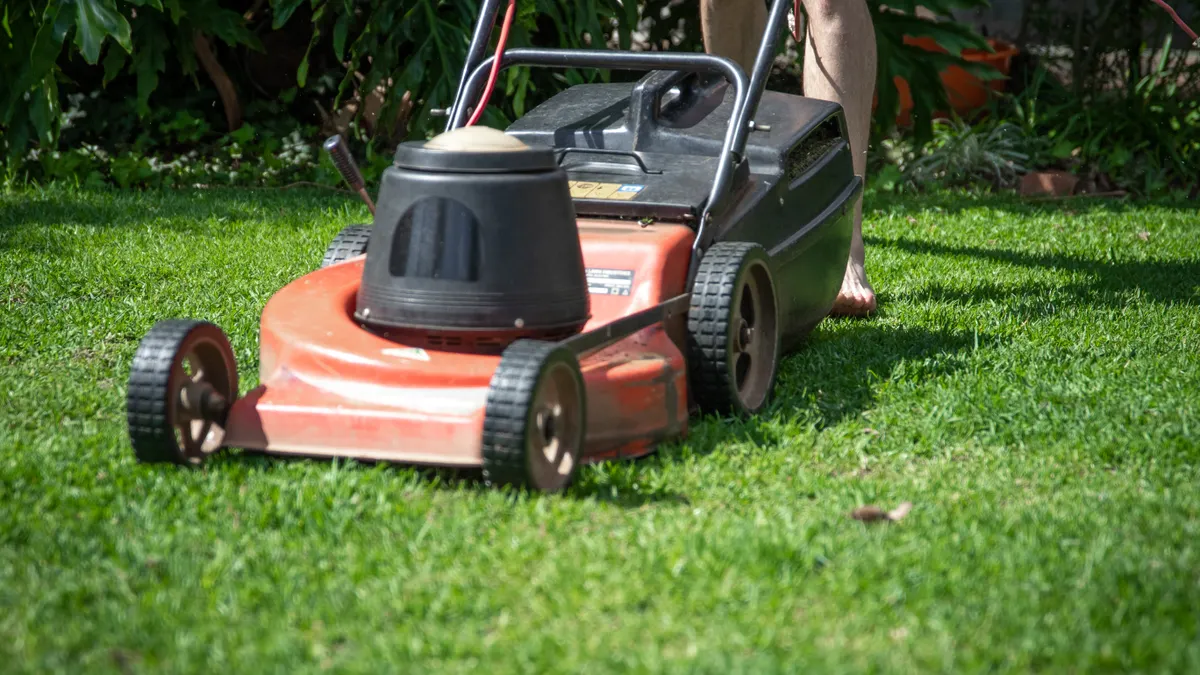
Yes, grass clippings can usually stay on the lawn if they are short, dry, and spread evenly. Fine clippings break down quickly and return nutrients to the soil instead of becoming waste.
That said, clumps are a problem. Thick mats of clippings block light, trap moisture, and can smother the grass underneath. If you see clumps after a pass, stop and rake or disperse them with a second, lighter pass. Side discharge can scatter clippings more evenly than bagging, but it also leaves visible residue if the grass is too tall or damp. Mulching works well when the blade is sharp and the mowing schedule is frequent enough that the clippings are small.
Bagging is useful in a few cases: when the lawn is overgrown, when the grass is wet, when you are trying to remove seed heads, or when thatch-like buildup is a concern. Bagging gives a cleaner visual finish, but it also removes organic material that would otherwise return to the turf. That means more hauling and, in some lawns, more need for fertilizing later. If the lawn has been overgrown, bagging first and fertilizing later may make more sense than leaving heavy clippings in place; if you are unsure, consult a turf professional.
A simple rule helps: if the clippings disappear into the canopy after a few hours, leave them. If they sit on top in visible piles, remove them. The University of Minnesota Extension and Purdue Extension both discuss grasscycling and note that it works best with frequent mowing and proper blade sharpness.
Use mowing patterns that keep the lawn even
Change your mowing pattern each time so the grass does not lean the same direction and the wheels do not wear the same tracks. A simple pattern shift is one of the easiest ways to improve the look of a lawn.
For a rectangular yard, mow the outer edge first, then work back and forth in straight rows. On the next mow, run the rows at a 90-degree angle to the first pass. If that is awkward, even a 45-degree change helps. Alternating directions can help prevent grain lines and may reduce ruts from repeated wheel traffic, especially on softer turf. It also helps lift the grass before the blade reaches it, which can improve cut quality.
Overlap each pass by a few inches so you do not leave narrow strips. On a rotary mower, a small overlap can keep the cut uniform; on a reel mower, it can help the machine track straight and prevent missed blades of grass between wheels. If you turn on the same corner every time, you will eventually see worn circles or browned turf there. Change the turning point when possible. For more on stripe patterns and turf traffic, see the Ohio State University Extension and University of Missouri Extension lawn guides.
Around trees, beds, and fences, use short, careful passes rather than trying to force a full-width turn. If the yard has slopes, mow across the slope when practical, not straight up and down, so the machine stays stable and the cut stays even. This is one of those details a generic guide skips, but it matters in real yards with uneven ground and tight corners.
Avoid the mowing mistakes that damage a lawn
The most common mistakes are cutting too short, mowing with a dull blade, and waiting too long between cuts. Each one costs the lawn in a different way.
Cutting too short exposes stems and soil. The lawn looks trimmed for a day, then fades, thins, and fills in with weeds. The fix is not to mow lower for a cleaner look; it is to raise the deck and keep to the one-third rule. Dull blades tear the leaf edge and leave a gray or white cast. The fix is sharpening on a regular schedule, not forcing the mower through harder grass. Waiting too long between mows makes the job harder and leaves piles of clippings. The fix is to mow before the lawn gets shaggy, even if that means a shorter session more often.
A few other habits create trouble. Mowing when the grass is wet can leave stripes of flattened turf and clumps that rot underneath. Mowing in the same direction every time can create ruts and grain. Mowing after the lawn has been stressed by drought or extreme heat can add more damage than the turf can recover from quickly.
For a practical standard, aim for a clean cut with no ragged tips, no visible clumps, and no bare scalped patches. If the lawn looks uneven after the pass, do not keep lowering the deck. Check blade sharpness, check wheel height, and adjust the pattern first.
A simple finish check before you put the mower away
A good mow ends with a quick inspection, not with the garage door closing. Walk the lawn and look for three things: missed strips, clumps, and scalped spots.
Missed strips usually mean the overlap was too narrow or the blade was not cutting cleanly at the edges. Clumps mean the grass was too tall, too wet, or discharged too heavily in one area. Scalped spots mean the deck was too low or the terrain dipped under the wheels. If you see a missed strip, a second pass in a different direction usually fixes it. If you see clumps, break them up before they smother the turf. If you see scalps, raise the deck before the next mow and take less off the top.
Because clippings can clog the deck, clean the underside if grass is sticking to it. Buildup changes airflow and can spoil the next cut. Shut the mower off before touching anything under the housing, and clear debris only when the machine is fully stopped and cool. That habit matters with both rotary mower and reel mower setups.
The last thing to check is storage. Put the machine away dry, with the blade area free of packed grass. That small step keeps the next mow easier and extends the life of the cutting edge.
Key Takeaways
- Match the cut height to the grass type instead of using one setting year-round.
- Remove only a small part of the blade each time; the lawn should not look “shaved.”
- Sharp blades matter as much as deck height for a clean, healthy finish.
- Dry grass cuts better than wet grass, and it leaves fewer clumps.
- Changing direction each mow helps prevent ruts, grain, and uneven wear.
- Leaving fine clippings is usually fine; leaving thick piles is not.
What height should I mow my lawn?
Mow at a height that removes no more than one-third of the grass blade. For many cool-season grasses, that usually means keeping the lawn on the taller side; warm-season grasses are often cut lower, but not scalped. If the lawn looks thin or sunburned afterward, the setting is too low.
How often should I mow grass?
Mow whenever the lawn has grown enough that a cut would remove more than one-third of the blade. In active growth, that can mean weekly or even more often. In slower periods, the interval can stretch out. Growth rate, not the calendar, should set the schedule.
Should I leave grass clippings on the lawn?
Yes, if the clippings are short and spread evenly. Fine clippings break down fast and can feed the soil. If they form clumps, they should be spread out or removed so they do not smother the grass underneath.
Drafted with AI; not yet reviewed by a person.





Leave a Reply