Last updated: October 27, 2026
In short: how to fix bare spots in a lawn usually means the same sequence—clear the dead material, loosen the top 1 to 2 inches of soil, add a thin layer of compost or topsoil, seed, lightly cover, and keep the area evenly moist until the grass fills in. The right choice is whether to patch, overseed, or replace the area completely.
Key Takeaways
- Small bare spots are often fastest to patch; larger damage usually calls for overseeding or a full reset.
- You need grass seed, a rake, compost or topsoil, a small amount of seed starter fertilizer, and a way to water lightly but often.
- A small bare spot is best repaired as a patch when the rest of the lawn is still dense.
- Overseeding fits lawns with many thin areas, not just one isolated bare spot.
Bare lawn spots are a repair job, not a mystery. A 6-inch patch from dog traffic needs a different fix than a 3-foot dead circle from shade, compacted soil, or grubs. If the wrong cause is ignored, the spot comes back. If the area is small enough and the grass around it is still healthy, repair is usually straightforward with grass seed, topsoil, compost, a rake, and a seed starter fertilizer.
For the broader lawn-care context, this page fits the practical side of lawn care basics. It covers the fix for the spot itself, not the full job of lawn renovation.
What size and cause tell you to patch, overseed, or start over
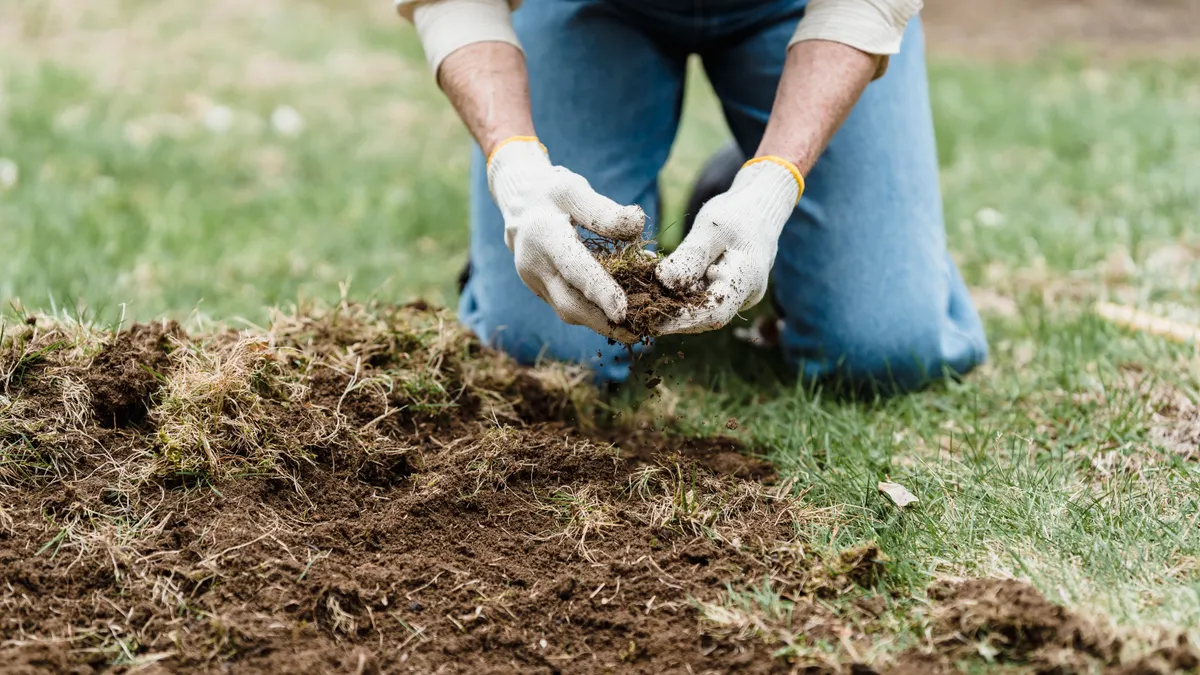
The fastest fix is usually patching small bare spots; larger damaged areas usually need overseeding or a full reset. A spot under about 1 square foot can usually be repaired with seed and topdressing. A patch between roughly 1 and 3 square feet can still be fixed locally, but it benefits from careful soil prep and a little extra compost. If the dead area is wider than that, or if most of the lawn is thin, the repair starts to look more like renovation than spot repair.
Cause matters as much as size. A damaged patch from a spilled herbicide, tree-root competition, or repeated foot traffic can be fixed only if the cause stops. If the bare area came from poor drainage, heavy shade, or ongoing pet urine, seed alone is a temporary bandage. The grass may sprout, then fail again in the same place.
Here is the practical rule: fix the spot if the surrounding grass is healthy and the problem is local. Reset the area entirely if the soil is hard, sour-smelling, puddled, or full of roots, or if the dead patch keeps returning after one full growing season. That is the point where new soil and a broader repair usually save time.
What you need before you start
You need grass seed, a rake, compost or topsoil, a small amount of seed starter fertilizer, and a way to water lightly but often. A hand rake works for a small patch; a leaf rake and a stiff garden rake help on larger ones. A soil knife or spade is useful if you need to cut out dead turf. For coverage, plan on about a quarter inch of topdressing over the seed, not a thick blanket.
Choose seed that matches the lawn already in place. Mixing an obvious texture or color mismatch into a small repair makes the patch stand out for months. If the lawn is cool-season grass, seed the spot when temperatures are mild and the soil is workable. If it is warm-season grass, wait until it is actively growing. The seed packet or local extension guidance matters more than the calendar.
Seed starter fertilizer is optional in the sense that grass can sprout without it, but it often helps the new seedlings establish faster if used exactly as directed. Do not apply a high-nitrogen lawn fertilizer meant for mature turf; that can push top growth before roots are ready. The goal is not a fast green flash. The goal is a rooted patch.
For planning and timing, see lawn care basics and grass seed types before you buy materials.
| Option | Best for | Typical use | Cost level |
|---|---|---|---|
| Patch repair | 1 small bare spot | Seed + thin topdress | Low |
| Overseeding | Many thin areas | Whole lawn or large sections | Medium |
| Full reset | Dead, recurring, or failed areas | Soil fix + reseed | Higher |
How do I fix bare spots in a lawn?
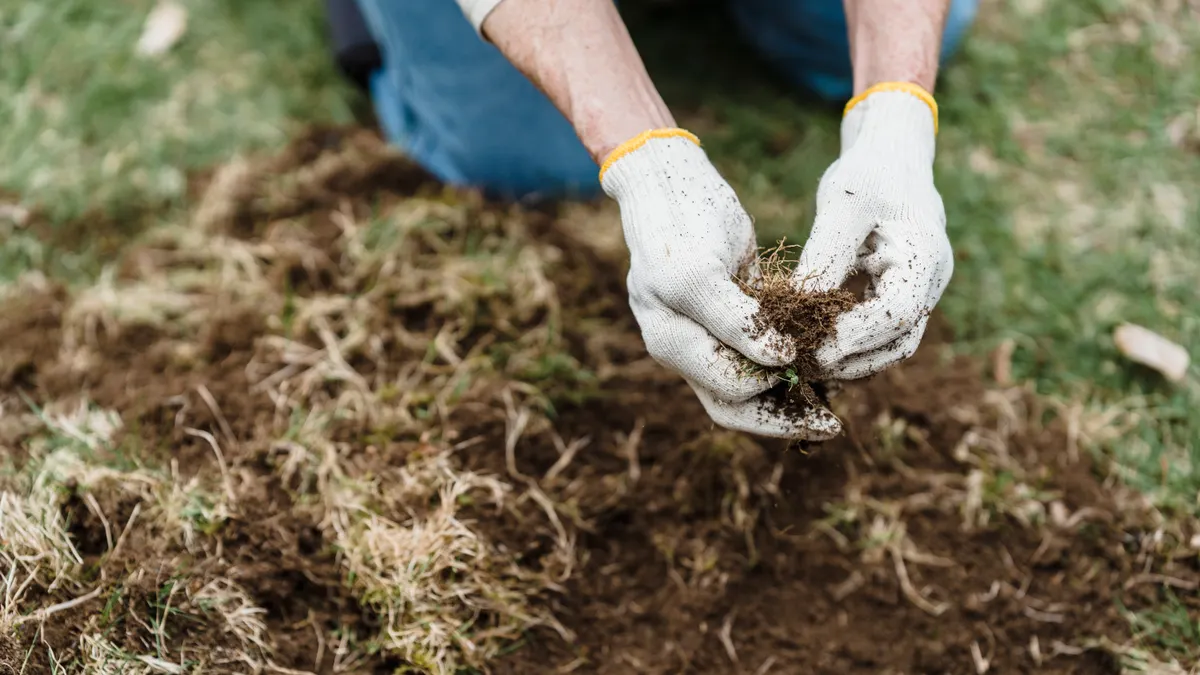
You fix bare spots in a lawn by cleaning the area, loosening the soil, adding a thin layer of compost or topsoil, seeding, and keeping the spot moist until the new grass fills in. The order matters. Skip the prep and the seed dries out, washes away, or sits on hard soil where it cannot anchor.
- Cut away dead grass, weeds, and debris from the bare area. Use a rake or spade to expose clean soil. When this works, the patch looks open and flat instead of matted with dead stems.
- Loosen the top 1 to 2 inches of soil with a rake or hand cultivator. Break up crusted soil and remove stones. The surface should feel crumbly, not packed like a sidewalk edge.
- Mix in a thin layer of compost or screened topsoil, about 1/4 to 1/2 inch deep. This improves seed contact and gives seedlings a friendlier root zone. The area should look slightly raised, not buried.
- Spread grass seed evenly so the soil is visible but dotted with seed. Do not bury it deeply. A light, even scatter is enough for small bare spots; if the seed disappears under soil, it is too heavy.
- Press the seed into the soil with the back of a rake or by walking over it gently in clean shoes. Good contact is the goal. Seed that stays in place after a light touch is usually set properly.
- Apply a thin dusting of topsoil or compost, just enough to barely cover the seed. You should still be able to see some seed or at least the texture of the surface. Thick cover slows germination and can smother seedlings.
- Water the spot lightly right away and keep the surface evenly damp. The top layer should stay moist, not puddled, until the grass emerges. If the area dries out between waterings, the new seed is likely to stall.
- After the grass reaches mowing height, mow carefully with a sharp blade. The new grass should look like part of the lawn, not a separate tuft. Avoid cutting it too short on the first mow.
The most common failure is too much seed-covering soil. A quarter inch of compost is helpful; an inch is not. The second common failure is watering like a mature lawn. New seed wants frequent light moisture, not deep soakings spaced several days apart. If the spot crusts over, the seed cannot break through.
For local repair methods, compare overseeding a lawn with lawn patch repair before you start.
How to repair a small patch with patch repair instead of a full reseed
A small bare spot is best repaired as a patch when the rest of the lawn is still dense. This keeps the repair local and avoids changing the whole yard’s texture. A patch repair is the right call for a hand-sized spot, a pet spot, or a divot from a shovel or patio chair.
Start by trimming the edge of the bare area into a simple shape, usually a circle or square. Straight edges are easier to manage than ragged ones. Remove dead roots and loosen the soil under the patch at least 1 inch deep. If the soil is packed, work in a little compost rather than seed directly into the hard layer.
For very small spots, you can seed by hand and press the seed in with your palm or a board. For spots around 1 foot across, patching with a thin topdressing works better because it holds moisture and protects the seed from birds. The surface should look finished but not buried.
The trade-off with patch repair is that it can stand out for a while because the new grass grows at a different pace than the old turf. That is normal. It is also why the fix is best for isolated damage, not a lawn with many scattered holes. If there are dozens of patches, overseeding the whole area is usually more efficient.
When should I overseed instead of patching one bare spot?
You should overseed when the lawn has many thin areas, not just one isolated bare spot. If the bare or thinning sections are spread across a large part of the yard, local patching wastes time and leaves a blotchy result. Overseeding puts new grass everywhere the lawn needs it, not only in the obvious holes.
Overseeding is usually the better choice when the grass around the spot is still alive but weak, pale, or sparse. It is also the right move when the lawn has a mix of small openings that add up to more than one simple repair. In that case, a single patch job can make the lawn look better for a few weeks, then the surrounding thin turf shows the same problem again.
This approach is not ideal for a spot caused by a hard, dead cause like compaction, drainage failure, or a buried object. Overseeding over bad soil can create a thin green film over a failing base. That looks improved briefly, then thins out again. If you see that pattern, fix the soil first or reset the area.
The honest downside is that overseeding takes more seed, more watering, and more patience than a patch repair. It is a broader job, but it is not the right answer for every hole in the lawn. One damaged area does not always mean the whole yard needs attention.
For timing, use the cool-season lawn calendar or warm-season lawn calendar so the seed matches the weather.
When is a bare spot beyond repair?
A bare spot is beyond simple repair when the cause is still active or the soil is too poor for seed to establish. That includes spots with standing water after rain, severe shade, thick tree-root competition, heavy compaction, or repeated damage from traffic or pets. In those cases, seed has to fight the site every day.
If the soil is hard enough that a rake barely scratches it, seed will struggle. If the spot smells sour or stays muddy, drainage needs attention before planting. If roots fill the top layer, a tiny seed patch will never get enough moisture and space to build a root system. If the same area keeps dying after two repair attempts in one growing season, the better fix is usually to remove more soil, amend it, or reconsider the planting spot altogether.
This is the point where a full reset may be smarter than patching again and again. A reset means clearing a larger area, improving the soil, and reseeding with the right grass for the light and moisture conditions. It costs more in effort, but it stops the cycle of patch, fail, patch again. That trade-off matters when the site itself is the problem.
Do not spend a season rescuing a spot that cannot support grass as it is. A smart repair is one that matches the site, not one that keeps repeating the same loss.
How to water new seed so the repair actually takes
You water new seed by keeping the top layer consistently damp, not soaked, until the grass is established. That usually means several light waterings a day in warm, windy weather and fewer in cool, cloudy weather. The goal is to keep the seed alive long enough to sprout and root.
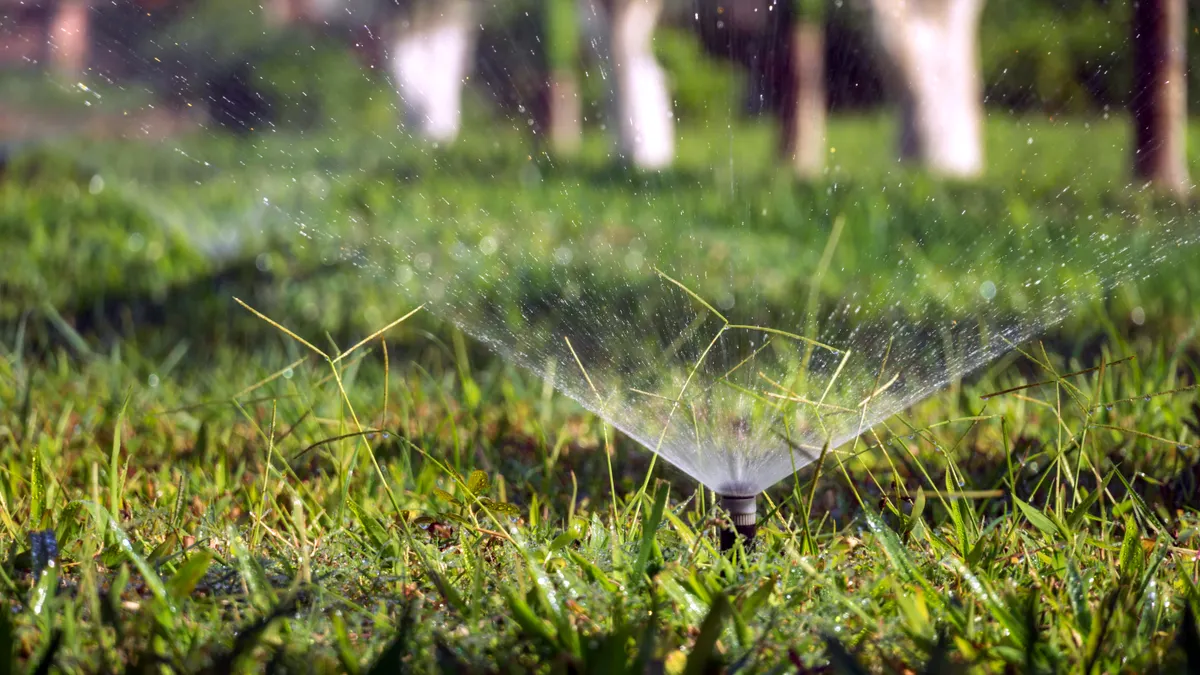
The surface should never dry into a crust during germination. At the same time, puddles can move seed, expose it, or rot it in dense soil. A low sprinkler or hose-end sprayer gives even coverage without blasting the seed. If the seed shifts when water hits it, the spray is too strong.
After the seedlings emerge, shift from frequent light watering to deeper, less frequent watering. That encourages roots to grow downward instead of staying shallow. The transition matters because many repairs fail after sprouting, not before. The seedlings appear, then dry out when watering habits never change.
Watch for two signs that the watering schedule is wrong. If the surface is shiny or muddy, there is too much water. If the seedbed turns dry, crusty, or dusty between waterings, there is too little. Both problems are fixable, and both are common in small spot repairs because people either forget the patch or treat it like the rest of the lawn.
For watering help, see how to water new grass seed and best time to water lawn seed.
Common mistakes that waste seed and what to do instead
The biggest mistake is seeding bare dirt without preparing the soil. Seed dropped onto hard ground often dries out or rolls away, which wastes the seed and leaves the spot empty again. The fix is simple: loosen the top layer and add a thin cover of compost or topsoil before seeding.
A second mistake is using too much seed starter fertilizer or the wrong fertilizer altogether. Heavy feeding can push weak top growth before roots are ready, especially in a small patch. Use the product label and keep the rate modest. If the spot is tiny, it does not need a big lawn-wide application.
A third mistake is covering the seed too deeply. Many grass seeds need light at germination or at least very shallow coverage. If you bury them under a thick layer of topsoil, germination slows or fails. A dusting of compost is enough for most spot repairs.
A fourth mistake is mowing too soon. New grass needs time to root before the blade is cut. Wait until the seedlings are established and tall enough to mow without pulling up. If the patch lifts when you tug lightly on the grass, it is not ready.
A fifth mistake is ignoring the cause. If pets, shade, drainage, or compaction created the bare spot, the repair may look fine for a short time and then fail again. That is not a seed problem. It is a site problem.
For the larger picture of keeping a lawn healthier after repair, see the lawn care basics hub.
Should I reseed or sod bare spots?
Reseed for most bare spots, and use sod only when you need instant coverage or when erosion is a problem. Seed is cheaper, lighter, and easier for small spots. Sod gives immediate green cover, but it costs more, needs careful installation, and still requires watering to root in. For a few small holes, sod is usually overkill.
How long does grass seed take to grow?
Grass seed usually takes days to germinate, not hours, and the exact timing depends on the grass type, temperature, and moisture. Cool, dry soil slows everything down. The patch is working when you see thin green blades emerging evenly from the soil surface and the area stops looking patchy in the center.
Do I need to cover grass seed?
Grass seed usually needs only light cover, not a thick layer of soil. A thin dusting of compost or screened topsoil helps hold moisture and keeps the seed from drying out or washing away. If the covering is so heavy that the seed disappears, it is too much and can reduce germination.
For more detail, the National Turfgrass Evaluation Program is a useful place to compare seed performance, and the University of Minnesota Extension gives practical lawn-seeding guidance.
Drafted with AI; not yet reviewed by a person.

Leave a Reply