Last updated: October 21, 2026
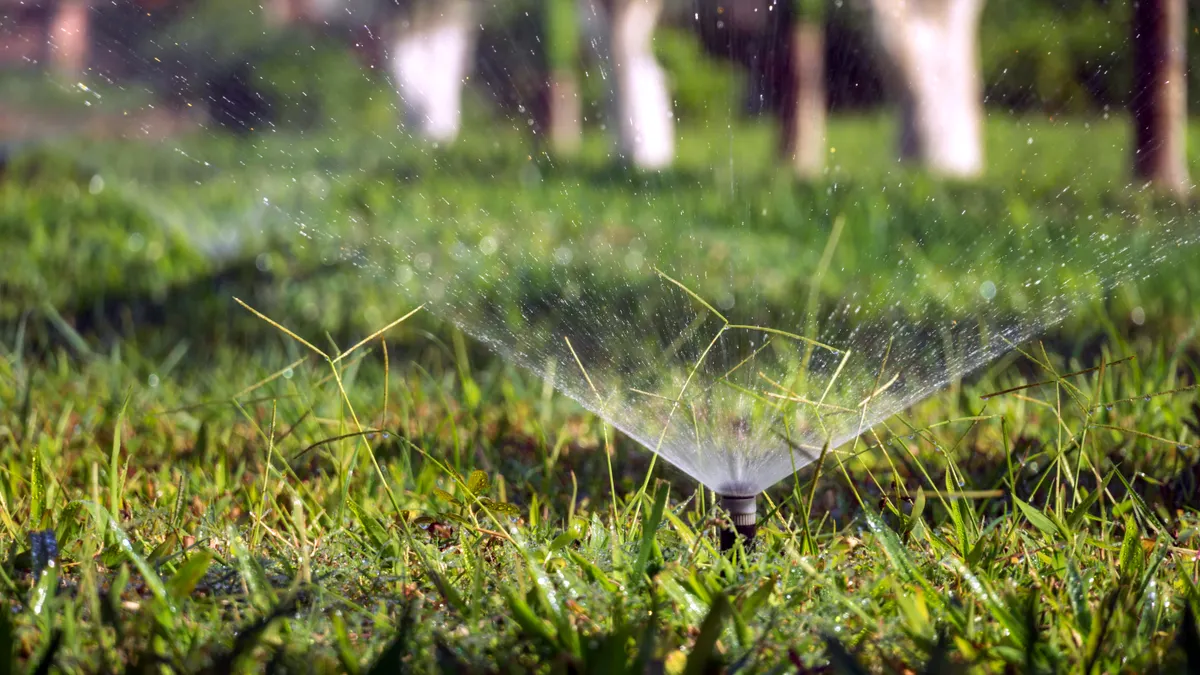
Quick answer: For a backyard lawn, start with the lawn’s shape and hose pressure, then pick the sprinkler pattern that matches them; in practice, that usually means an oscillating sprinkler for a rectangle, an impact sprinkler for a larger or irregular area, or a rotary sprinkler for slower application. This guide on how to choose a sprinkler for a backyard lawn keeps the decision simple: pattern, pressure, and coverage area.
A sprinkler for a backyard lawn should match the lawn’s shape, the spray pattern you need, and the water pressure at your hose bib. That is the real decision, not brand name or price tag. Pick the wrong style and you waste water at the edges, oversoak one strip, or cover only half the yard.
Key takeaways
- Start with the lawn’s geometry, not the box on the shelf.
- Oscillating sprinklers fit narrow rectangles better; impact sprinklers suit wider, irregular areas and higher pressure.
- Rotary sprinklers work well when you want slower application and more even soak-in.
- Your garden hose and water pressure decide whether a sprinkler can actually perform the way it is advertised.
- One sprinkler rarely covers every backyard shape without moving it or splitting the yard into zones.
- A sprinkler timer can help with repeat watering later, but it does not fix a bad match between sprinkler type and lawn layout.
1) Measure the lawn you actually need to water
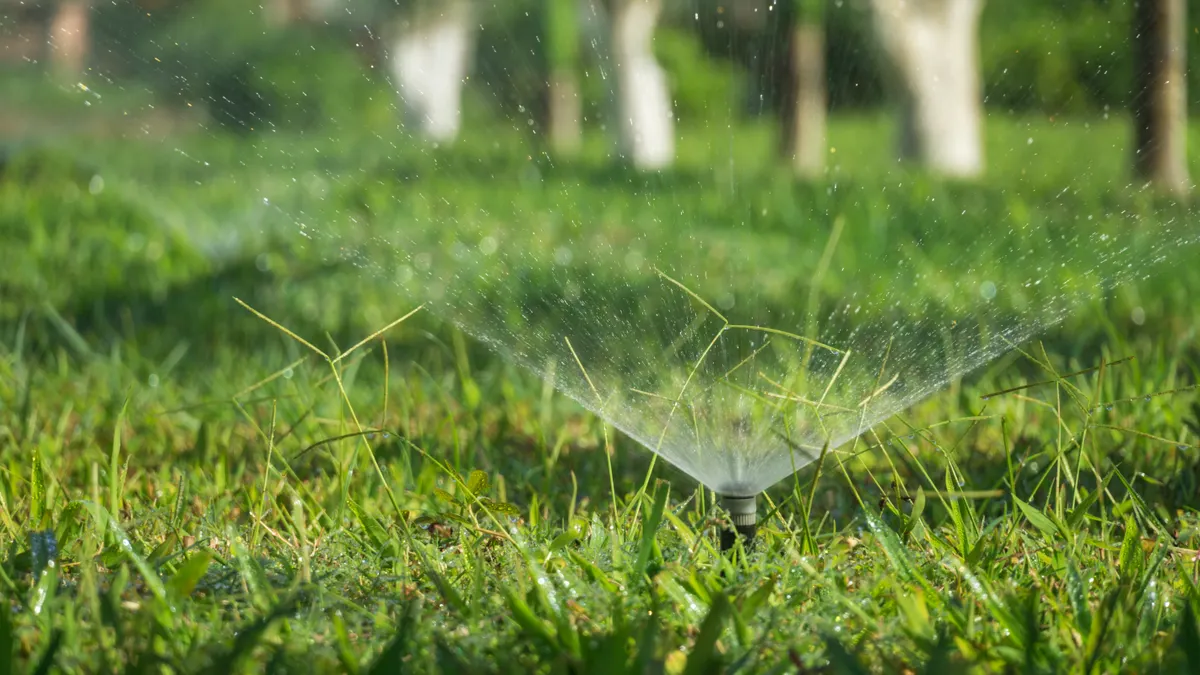
Start with the area that needs water, then choose the sprinkler type that can cover that area cleanly. A tape measure and a rough sketch on graph paper are enough. Measure length and width in feet, then note any curves, narrow strips, trees, patios, or fences that block spray. A 20-by-40-foot rectangle asks for a different pattern than an L-shaped yard with a 6-foot side run.
The reason this comes first is simple: sprinkler performance is mostly about pattern, not brand. A sprinkler that throws a 30-foot-wide band is useful on a long rectangle but poor in a corner lot with odd edges. If the lawn has multiple zones, treat each one separately and, if the layout is complex, consult a lawn irrigation professional. A front strip by the sidewalk may need one sprinkler; the main backyard may need another. For zone-based planning, see the EPA’s WaterSense guidance on irrigation and sprinkler efficiency: https://www.epa.gov/watersense.
A common mistake is buying for the biggest open space and hoping the same unit will cover every corner. That usually leaves dry arcs near fences or soaking near the center. A practical approach is to mark the wet area you want, then allow for some loss at the edge of the spray pattern, since wind and low pressure trim real-world reach.
For planning, it helps to know the lawn area in square feet before shopping. A 1,000-square-foot patch is small enough that a single movable sprinkler may work well. A much larger yard often needs more than one watering position, even if you do not want a permanent irrigation setup. If the yard has one big rectangle and one narrow side strip, count them as separate jobs.
If you are also building a broader setup for the yard, the lawn equipment and tools hub is the right place to branch out from this guide.
2) Which sprinkler pattern matches your lawn shape?
Choose the sprinkler pattern that puts water where grass grows and keeps most of it off concrete, siding, and the street. The main matchups are straightforward: oscillating for rectangles, impact for larger or uneven areas, and rotary for slower, more controlled coverage.
An oscillating sprinkler sends water through a fan-shaped row of nozzles that sweeps back and forth. It is the natural choice for a rectangular backyard lawn with fairly even edges. The spray band is easy to picture, which makes placement simple. It is usually a poor fit for odd shapes because the ends of the band can miss corners or hit landscaping you did not mean to water.
An impact sprinkler throws a pulsing stream in a circular pattern. It works better for irregular lawns, larger open areas, and users who want a tougher sprinkler that tolerates more pressure variation. The downside is that the circle can waste water outside the lawn if the yard is narrow or if you cannot place it near the center of the area.
A rotary sprinkler spins streams in arcs or multiple rotating jets. It is useful when you want slower water application and better infiltration on soil that puddles easily. Rotary heads can be a good answer for slopes or clay-heavy soil because they typically apply water more gradually than a hard, fast spray. The trade-off is that some models need more careful placement and may feel less intuitive than an oscillating unit.
If the lawn is small and square, an oscillating sprinkler is often the easiest first choice. If the lawn is broad, awkward, or broken into open sections, an impact or rotary model is usually better. If you have a long, thin side yard, an oscillating pattern may be the easiest way to reduce overspray.
This is also where people overbuy. A model with a long throw is not “better” if the yard is 12 feet wide. Long throw matters only when the lawn is wide enough to use it.
3) How do water pressure and hose compatibility affect the choice?
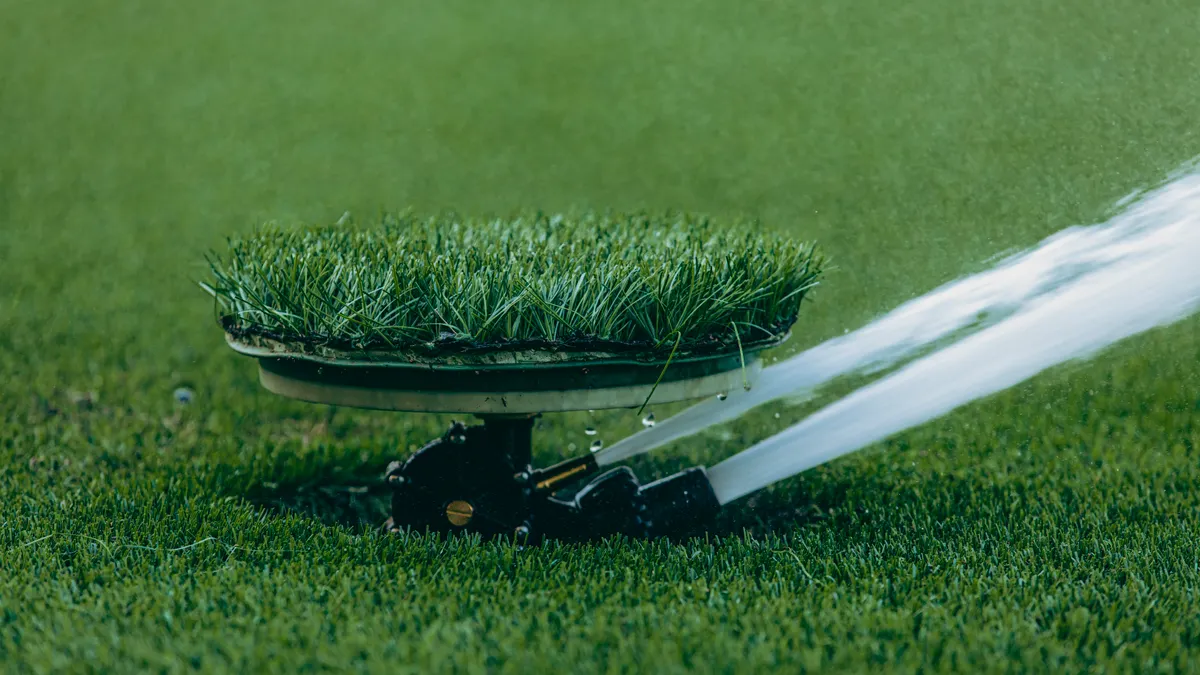
Water pressure and hose compatibility decide whether a sprinkler can hit its advertised pattern at all. A sprinkler connected to a standard garden hose only works well when the hose, fittings, and household water pressure can support the nozzle design. If pressure is too low, the spray falls short; if it is too high for the model, the spray can atomize and drift.
Read the sprinkler’s pressure range before buying. Many products list a recommended pressure in pounds per square inch, or psi. That number matters more than a slick box claim about “extra coverage.” If the sprinkler needs more pressure than your hose line can supply, the pattern collapses and the end of the lawn stays dry. If it is designed for lower pressure, it may perform better on a modest residential setup.
Hose compatibility is just as practical. Make sure the inlet matches a standard garden hose connection, and check whether the sprinkler is stable enough to stay put once the hose pulls on it. A light plastic base can shift as water starts moving through the hose, which changes the spray line. A heavier base or a metal sled can hold position better on uneven grass.
This is one of the main reasons an impact sprinkler can beat an oscillating sprinkler in some yards. Impact units often tolerate a broader range of pressure and still keep rotating. Oscillating models can be fussier if the water supply is weak, especially when the lawn is large and the spray bar needs to move smoothly across its arc.
A simple field check helps before you decide. Hook up the sprinkler, open the hose fully, and watch whether the far edge of the pattern reaches the intended boundary. If the spray collapses after 20 or 30 seconds, the unit is probably mismatched to your supply. If the sprinkler throws a clean pattern and the base stays put, the fit is likely acceptable.
Do not ignore hose length, either. A very long hose can reduce performance and make moving the sprinkler annoying. If the hose has kinks or old washers, the sprinkler may not behave the way the box suggests.
4) Choose coverage size for one zone, not the whole yard
Choose coverage based on one watering zone at a time, because no single sprinkler is the right answer for every backyard lawn. A zone is the area you can water without moving the sprinkler. For many homes, that means a rectangle near the patio, a separate patch along the fence, and maybe a third strip near the driveway.
This matters because sprinkler coverage is not just reach; it is shape. A sprinkler with a 40-foot throw may still be a poor fit if the zone is only 15 feet wide. In that case, the problem is overspray, not shortage of reach. A smaller-radius model often gives better control and less waste.
The cleanest way to size a sprinkler is to compare its stated coverage pattern with your zone dimensions. If the pattern is circular, imagine the radius in the yard. If the pattern is rectangular or fan-shaped, match length and width to the zone’s real shape. A 30-by-40-foot zone may need one sprinkler in one setup and a different model in another if trees, beds, or slopes interrupt the space.
A sprinkler that can be adjusted is useful when the zone is close to the sprinkler’s limit. Adjustable arcs and distance settings help reduce watering on sidewalks and mulch beds. The drawback is that adjustment knobs add complexity, and cheap models can drift out of setting if bumped.
For small lawns, a single movable sprinkler may be enough. For medium or larger yards, a pair of sprinklers in different positions can often outperform one oversized unit. That is not a sign of failure; it is how backyard watering usually works. The goal is even coverage, not one heroic device doing everything.
If your lawn has one dry strip that never seems to get enough water, the issue is usually not volume. It is geometry. Move the sprinkler first before you buy a bigger one.
5) Oscillating sprinkler or impact sprinkler: which one fits better?
An oscillating sprinkler fits a clean rectangle, while an impact sprinkler fits a bigger or less regular lawn. That is the most useful shortcut in this whole decision.
An oscillating sprinkler gives a straight-line spray that sweeps side to side. It is easy to set beside a lawn edge and easy to understand at a glance. For a backyard that is 15 feet by 30 feet, or something close to that shape, it usually wastes less water than a circular pattern. It also tends to feel friendlier for a beginner because the wet area is predictable.
An impact sprinkler throws a rotating pulse and is usually better when the lawn is open, wider, or not neatly rectangular. It can be the smarter choice for a lawn with a large central grass area and fewer hard edges. It also tends to suit users who want a more durable, old-school design. The trade-off is noise and a less refined spray boundary; the clicking action is normal, but it is not subtle.
Rotary sprinklers sit between those two. They are a good option when you want a controlled pattern and slower application, especially on soil that absorbs water slowly. They are not always the easiest choice for a first purchase, because the term covers several designs, from gear-driven heads to multi-stream models. If the package does not clearly show the coverage pattern, skip it and choose a more obvious design.
A practical rule: if the lawn is a rectangle and your hose pressure is ordinary, start with an oscillating sprinkler. If the lawn is irregular or larger, start with an impact sprinkler. If the lawn takes water slowly and you want gentler application, look at a rotary design.
The wrong choice is usually obvious after one watering session. The spray either misses corners, throws into hardscape, or leaves a dry strip between passes. That is why pattern matters more than marketing language. “Heavy-duty” does not mean “right for your lawn.”
6) What should you buy first if you only want one sprinkler?
Buy the sprinkler that matches your most common lawn shape first, then add a second type only if the yard forces it. For many backyard lawns, that means a medium-range oscillating sprinkler for the main rectangle, with an impact or rotary unit later if a separate zone needs it.
If the yard is under about 1,500 square feet and mostly open, one adjustable sprinkler may handle the job well enough to start. If the yard has two distinct watering zones, plan on two positions or two different sprinklers. If the area is highly irregular, an adjustable impact sprinkler is often the safer first purchase because it can reach awkward shapes better than a fixed fan pattern.
A sprinkler timer can be useful later, but it should not influence the first purchase very much. A timer only repeats the schedule you set; it does not improve a mismatched spray pattern. If the lawn layout is wrong for the sprinkler, automation just repeats the mistake.
When choosing the first unit, look for three things: adjustable distance, a stable base, and a standard hose connection. Those three features solve more real backyard problems than fancy packaging or a long list of modes. A sprinkler without them can still work, but it is more likely to be fiddly.
The one thing I would not buy first is a specialty sprinkler aimed at a narrow use case unless the lawn clearly demands it. If the yard is simple, keep the equipment simple. If the yard is complicated, split the problem into zones instead of trying to make one device do everything.
For a general backyard lawn, the most accurate wet pattern is usually the best purchase, not the longest reach.
7) A simple buying checklist that keeps you from guessing
Use a quick checklist before you pay for a sprinkler, and you will avoid most bad matches. First, confirm the lawn shape: rectangle, circle, narrow strip, or mixed zones. Second, check the hose connection and make sure it fits a standard garden hose. Third, look for the pressure range on the package or manual so you know whether the sprinkler can work with your supply. Fourth, compare the spray pattern to the lawn area in feet, not just in vague coverage language.
If your lawn is mostly rectangular, mark oscillating as the first option. If it is irregular or broad, mark impact. If the soil is slow to absorb water, consider rotary. If the lawn has a narrow side strip, do not expect a circular pattern to handle it without overspray. If one area is shaded, sloped, or blocked by a fence, assume you may need to move the sprinkler more than once.
You should also decide how much adjustment you are willing to make every time you water. A simple unit with fewer settings is easier to live with. A more adjustable unit gives better control, but only if you are willing to set it carefully. That is the trade-off: convenience versus precision.
The biggest mistake is buying by label alone, especially when the packaging promises “all-purpose” coverage. Backyard lawns are rarely all-purpose. They are shapes, edges, and zones. A good sprinkler respects that reality.
A second mistake is assuming higher price means better fit. A premium model can still be wrong for a 10-foot-wide strip. Price may buy smoother adjustment or stronger materials, but it does not change the geometry of the yard.
If you want the shortest answer possible, use this one: match sprinkler pattern to lawn shape, then confirm the hose and pressure can support it. Everything else is secondary.
What type of sprinkler is best for a lawn?
The best type depends on the lawn’s shape and your hose pressure. An oscillating sprinkler is usually best for a rectangular lawn, while an impact sprinkler is often better for a larger or irregular yard. A rotary sprinkler can be the better pick when you want slower, more even water application. The wrong type is the one that sprays onto hardscape or misses corners.
Drafted with AI; not yet reviewed by a person.

Leave a Reply