
Last updated: October 27, 2026
Quick Answer: In 3 clues, you can usually narrow a yard down to Kentucky bluegrass, tall fescue, bermudagrass, zoysiagrass, or St. Augustinegrass. In this guide to how to identify grass type in your yard, start with the blade, the way it grows, and whether it behaves like a cool-season grass or a warm-season grass.
Key Takeaways
- Start with a healthy square foot and check the blade, stem, and growth pattern.
- Blade width, tip shape, texture, and stem attachment together help narrow grass type.
- Growth habit can matter more than color because it affects mowing and watering.
- Cool-season or warm-season is often the fastest way to narrow the field.
What to look at first when identifying grass type

Start with one square foot of healthy grass and look at the blade, the stem, and the growth pattern. A ruler, a notebook, and a phone camera help a lot. The goal is not to name the grass from one feature. The goal is to stack 3 or 4 visible clues until the answer stops being fuzzy.
The fastest practical first pass is this: check blade width, feel, and whether the grass spreads by runners. Fine, narrow blades often point one way; broad, coarse blades point another. Then look at the lawn as a whole. Some grasses make dense mats. Some form clumps. Some creep sideways across the soil. Those habits are more useful than color, because color changes with watering, nitrogen, and mowing height.
One common mistake is to begin with seed bags, old receipts, or what a neighbor says. That can send you in the wrong direction immediately. A lawn can also contain more than one grass type, especially near edges, repair patches, and shady corners. If one strip looks different from the rest, treat it as a separate sample and, if needed, consult a local extension office or turf specialist such as the Penn State Extension grass identification guide.
How do I identify grass type from the blades?
You can identify grass type from the blades when you combine blade width, tip shape, texture, and how the blades attach to the stem. Blade shape is the most visible clue, but it only works if you compare a few blades, not one twisted leaf.
Follow these steps in order:
-
Cut or pull a small sample from a clean spot. Take 3 to 5 stems from the same area, preferably from a patch that has not just been scalped. You want mature blades, not the odd stressed blade at the edge. If the sample looks shredded by a dull blade, wait for new growth before judging it.
-
Measure blade width with a ruler in millimeters. Very narrow blades often belong to bermudagrass or zoysiagrass. Wider blades are more likely to be tall fescue or St. Augustinegrass. Kentucky bluegrass usually sits in the middle, with medium-width blades. A millimeter reading is more reliable than a visual guess, because the eye exaggerates thickness.
-
Feel the blade between your fingers. A rough, stiff blade leans toward tall fescue or some zoysiagrass. A softer blade often suggests Kentucky bluegrass. St. Augustinegrass feels broad and flat, almost coarse compared with fine-bladed turf. This step matters because texture stays visible even when color shifts after rain or fertilizer.
-
Look for a pointed, boat-shaped, or blunt tip. Kentucky bluegrass often has a distinct boat-shaped tip. Bermudagrass tends to look finer and more pointed. St. Augustinegrass usually has broader, blunt-looking blades with a heavy feel. Tip shape is useful, but only after you rule out torn tips from mowing.
-
Check whether blades are folded or flat. Some warm-season grasses, including bermudagrass, can show folded blades. Tall fescue more often looks flat and ribbed. This is a small clue, but it helps when the lawn has been cut at the same height for months and the overall shape is less obvious.
A good sample often reveals a pattern in under 2 minutes. If the blades all look medium-width, soft, and boat-tipped, Kentucky bluegrass rises to the top. If they are coarse and wide, tall fescue or St. Augustinegrass becomes more likely. If they are fine and wiry, bermudagrass or zoysiagrass deserves a closer look.
Which growth habit tells me the most?

Growth habit tells you more than color because it shows how the grass fills space, and that changes how you should mow and water it. Some grasses spread with rhizomes or stolons, while others grow in clumps, and that difference is obvious once you know where to look.
Here is the practical split:
- Kentucky bluegrass spreads by underground rhizomes, so it can knit itself into a smooth, dense lawn. If you see a patch that seems to repair itself slowly from below, that is a strong clue. It often makes a soft, uniform turf when managed well.
- Tall fescue grows mostly in bunches or clumps. It does not usually knit as tightly from underground spread. A lawn that stays open between tufts, especially after mowing stress, often includes tall fescue.
- Bermudagrass spreads aggressively by both stolons and rhizomes. It can creep into beds, cracks, and neighboring turf. That sideways spread is one of the clearest identifiers.
- Zoysiagrass also spreads, but more slowly and in a denser, thicker mat than bermudagrass. It often feels firmer underfoot and can make a very tight surface.
- St. Augustinegrass spreads by stolons above ground, forming broad, coarse runners. If you can see thick stems crawling over the soil and rooting at nodes, that is a major clue.
Growth habit matters because it predicts maintenance. A spreading grass can recover from wear faster, but it can also invade flower beds and edging. A bunch-type grass may stay where you put it, but bare spots can persist longer. That trade-off is why a visual ID matters before you set a mowing height or change fertilizer. The wrong grass at the wrong height can thin out, bruise, or scalping can become a pattern instead of a one-time mistake.
Is my lawn a cool-season grass or a warm-season grass?
Yes, the cool-season versus warm-season split is often the quickest way to narrow the field. Cool-season grasses stay more active in spring and fall, while warm-season grasses peak in summer and slow down when nights get cool.
This is the easiest way to sort the list:
- Cool-season grasses: Kentucky bluegrass and tall fescue
- Warm-season grasses: bermudagrass, zoysiagrass, and St. Augustinegrass
That difference matters because it changes the mowing schedule, watering rhythm, and fertilizer timing. A cool-season lawn usually looks strongest in cooler weather and may thin in hot, dry stretches. A warm-season lawn usually wakes up later in spring, fills in during heat, and may go dormant or brown after a cold spell.
Use season as a clue alongside blade and growth habit. A lawn that greens up very early in spring often points toward cool-season turf. A lawn that stays sleepy until the soil warms in late spring or early summer is more likely warm-season. If your yard looks thin in March but thick in July, that pattern tells you more than the color of a single blade.
This is where generic advice often goes wrong. A person sees a green lawn in April and assumes “healthy grass” means the same care plan for everything. It does not. For example, a warm-season lawn can look underfed if you treat it like Kentucky bluegrass in early spring; if you are unsure, consult a local extension guide before changing fertilizer. A cool-season lawn can scorch if you mow it too short when heat settles in.
For deeper lawn care guidance after you identify the grass, the lawn care basics hub is the right next stop.
What seed heads and stems tell you when the blades are unclear
Seed heads and stems can solve the problem when the blades are too damaged, too matted, or too mixed to read cleanly. A grass that has been mowed hard may hide its leaves, but it often still shows its flowering structures at the right time of year.
Look for these clues:
- Kentucky bluegrass can show open, branched seed heads that look airy.
- Tall fescue may show more upright seed heads, often on stalks that stand above the canopy.
- Bermudagrass seed heads are typically more delicate and less showy, and they can appear when the grass is growing vigorously in warm weather.
- Zoysiagrass seed heads are less common in many lawns, so the stems and blade texture usually matter more.
- St. Augustinegrass is often identified by its thick stolons and broad blades before seed heads become useful.
The stem itself is worth a close look. If you see thick above-ground runners with nodes, St. Augustinegrass or bermudagrass jumps ahead. If the turf rises from a denser base without obvious runners, tall fescue becomes more plausible. A lawn that seems to weave itself together with fine creeping stems often points to bermudagrass, especially when the mowing height is low.
A 10x hand lens can help if you want to inspect nodes, ligules, or auricles, but most homeowners do not need botanical detail that deep. The simple question is whether the plant creeps, clumps, or forms a dense mat. That answer is usually enough for mowing and watering decisions.
Match the grass to real-world care decisions
You do not identify grass type for trivia. You do it because the wrong mowing height, watering habit, or fertilizer schedule can make a lawn look worse in 2 weeks.
Use the ID this way:
- If it is Kentucky bluegrass or tall fescue, treat it as cool-season turf. It usually wants a different calendar than bermudagrass, zoysiagrass, or St. Augustinegrass.
- If it is bermudagrass or zoysiagrass, expect warm-season behavior and seasonal dormancy in cooler weather.
- If it is St. Augustinegrass, remember its broad blades and stolons. That grass often looks coarse and fills sideways, so edge control matters more than with bunch-type turf.
- If the lawn contains a mix, manage the dominant grass first and note the exceptions. A yard with 80 percent one type and 20 percent another should not be treated like a pure stand of either one; if the split is hard to judge, consult a local extension office or turf specialist.
The biggest practical mistake is to fertilize, mow, or irrigate based on a label someone else used years ago. Sod can be replaced. Seed can be overseeded. Yards also get mixed over time. A patch near a sidewalk may be bermudagrass, while the shaded back corner is tall fescue. If the lawn behaves differently in different sections, split it into zones instead of forcing one answer.
Another trap is assuming “thick grass” means “healthy grass.” Dense growth can hide scalping, matting, or thatch. A tight zoysia lawn and a stressed bermudagrass lawn can both look short and stiff, but they do not want the same mowing pattern.
For botanical confirmation beyond the field clues, university extension guides and turfgrass identification charts from the National Turfgrass Evaluation Program are useful references. Those sources are worth checking if the lawn still seems ambiguous after you compare blade shape, growth habit, and seed heads. See also the National Turfgrass Evaluation Program and your local extension-based grass ID guide.
When the yard has more than one grass type
A mixed yard is normal, and it changes the answer from “What grass do I have?” to “What grass dominates this section?” Many suburban lawns contain at least 2 turf types after patching, oversowing, or years of wear.
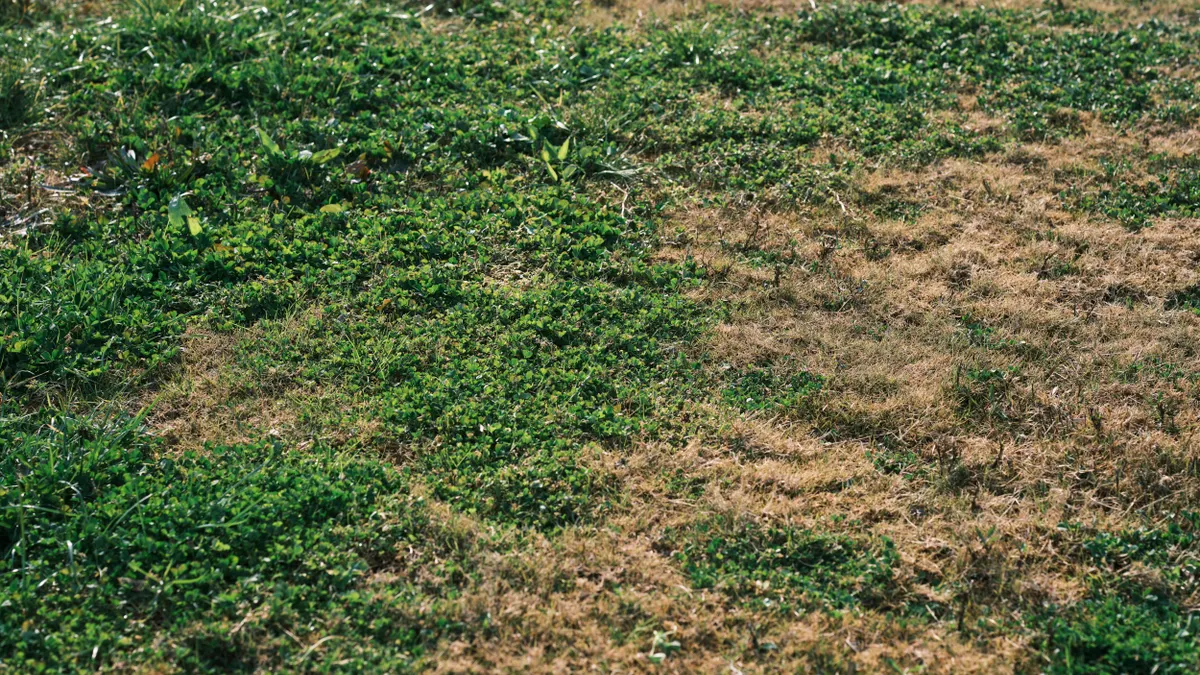
Walk the yard in 3 zones: front, back, and the most shaded or most damaged area. Take one sample from each. If the front lawn has fine blades and underground spread but the side strip has coarse, broad runners, you are probably looking at different grasses or at least different conditions pushing the same grass in different directions.
Pay attention to transitions. A hard edge where one texture stops and another begins often marks a different species. A gradual shift may mean one grass is stressed and another is filling in. That distinction matters. A lawn with a 50/50 mix will rarely respond well to one perfect-care schedule. It usually needs the dominant grass to set the rules, with a tolerance for the weaker patches.
This is also the point where a homeowner can waste time chasing a wrong label. The cost is usually a season of mismatched mowing or fertilizer, not a disaster, but the lawn can thin out or look uneven. If you want a clean answer, photograph each zone in the same light and compare blade width, runner type, and season of growth side by side.
What type of grass do I have?
You have the grass type that best matches the blade width, growth habit, and season of active growth in the same patch. The answer is rarely based on color alone. Kentucky bluegrass and tall fescue are cool-season grasses; bermudagrass, zoysiagrass, and St. Augustinegrass are warm-season grasses. If the lawn is mixed, identify the dominant section first.
Can I identify grass by the blades?
Yes, you can often identify grass by the blades, but only if you include texture, width, and tip shape. Blade clues work best when you compare several healthy blades from the same spot. A single damaged leaf can mislead you. Runners, seed heads, and seasonal growth give the blade clue its real value.
Why does grass type matter?
Grass type matters because mowing, watering, and fertilizing all depend on whether the lawn is cool-season or warm-season, and on whether it spreads or grows in bunches. A plan that fits Kentucky bluegrass can be wrong for bermudagrass. The wrong fit can leave the lawn thin, stressed, or uneven even if the care is otherwise consistent.
Drafted with AI; not yet reviewed by a person.


Leave a Reply