Last updated: November 19, 2026
Key Takeaways
- Shut the mower off, let it cool, and pour gas slowly from an approved fuel can.
- Fresh gasoline and a clean can help prevent clogs, hard starts, and spills.
- Keep the mower level, fill slowly, and stop short of the top.
- Handle the fuel cap gently, keep the seal clean, and tighten it snugly.
How to fuel a gas lawn mower safely starts with the engine off, the mower cool, and fresh gasoline from a fuel can used through a funnel. This page shows the safe order, what to check before you pour, and the mistakes that cause spills and fire risk.
What safe refueling looks like
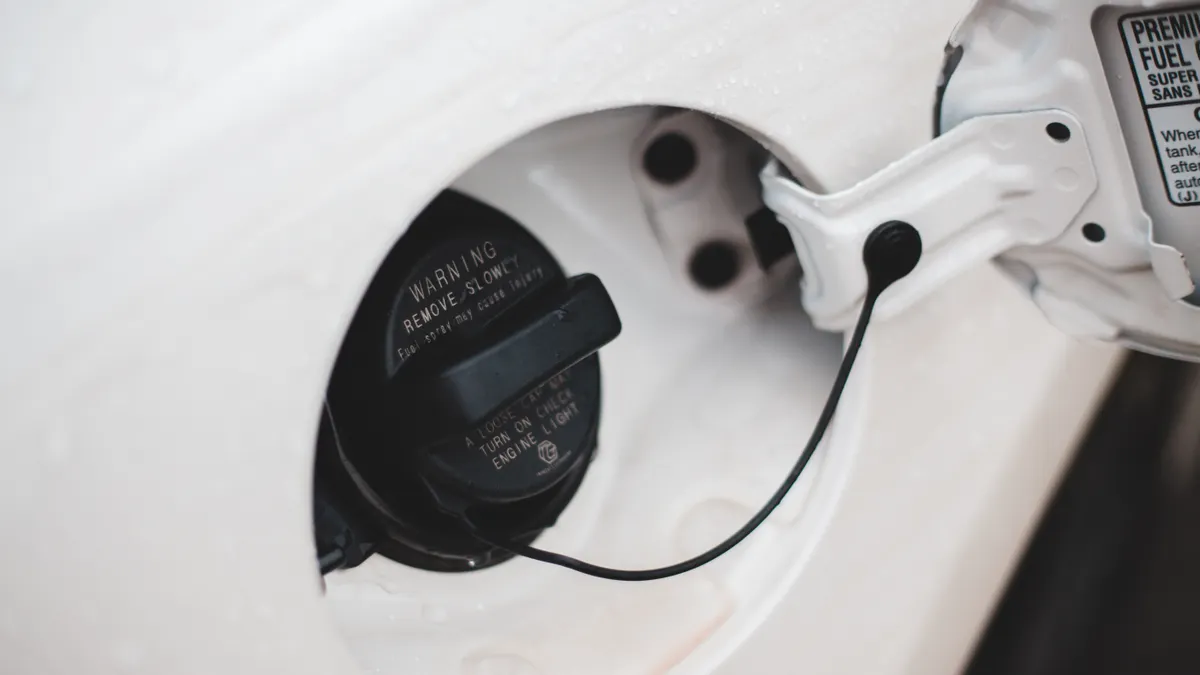
Safe refueling means you shut the mower down, let the engine cool, open the fuel cap carefully, and pour gasoline slowly from the right container. The goal is simple: no heat, no sparks, no overflow.
Picture this: you’ve finished mowing, the tank is low, and you want to top off before you put the mower away. The right move is to stop, wait, and fill in a spot where a spill can be cleaned fast. That’s the whole job.
- Engine off
- Mower on level ground
- Fuel can nearby
- Funnel ready
The truth is, most fuel problems start with haste. A hot muffler, a wobbly can, or a cap opened too fast can turn a simple task into a mess. Keep the mower outside while you refuel, and don’t do it in a closed garage. The U.S. Consumer Product Safety Commission warns that gasoline vapors can ignite quickly, so distance from heat matters.
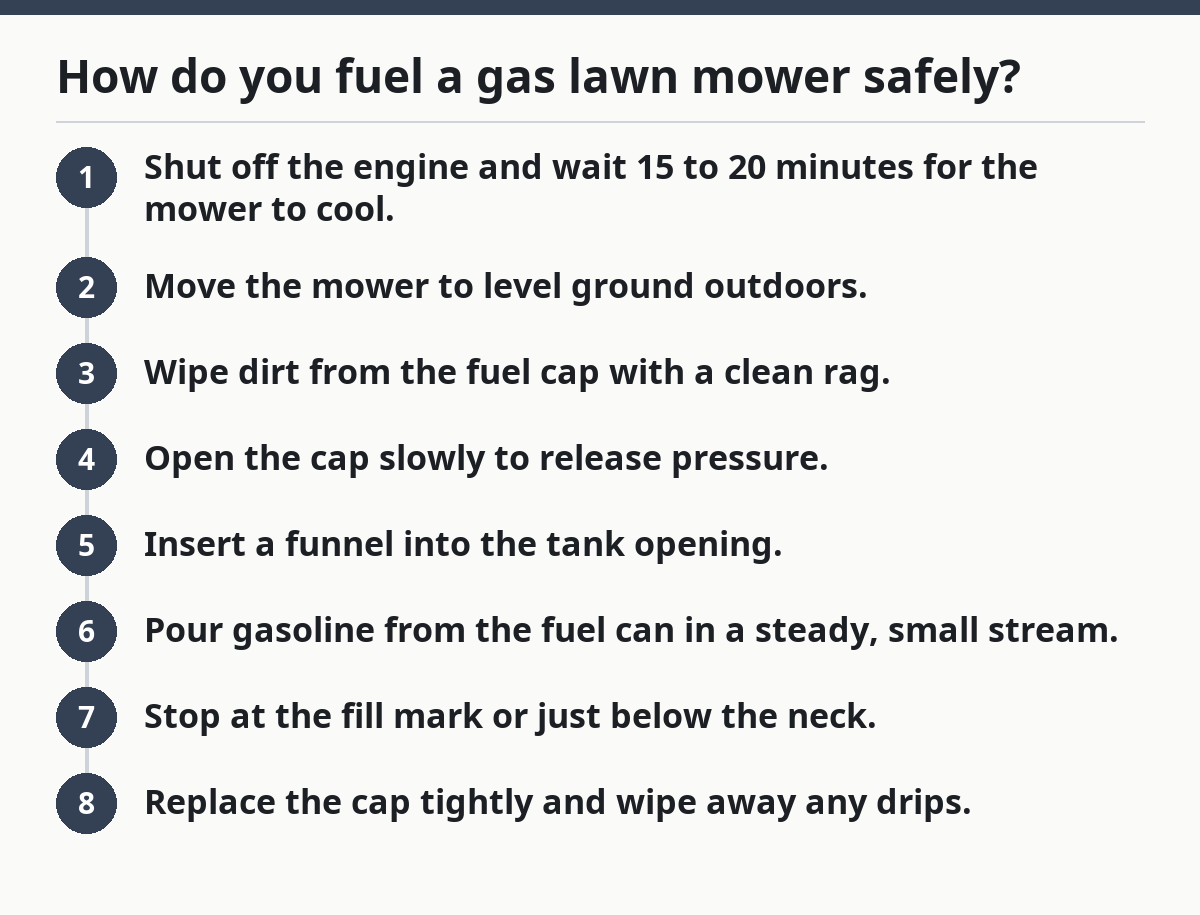
How do you fuel a gas lawn mower safely?
You fuel a gas lawn mower safely by cooling the engine first, opening the cap slowly, and filling only to the maker’s fill line or just below the neck if no line is marked. That method cuts spill risk and leaves space for fuel expansion.
Picture this: you’re standing by the mower with a full fuel can and a dry driveway. You want the gas in the tank, not on the deck, your shoes, or the muffler. This is where a calm, fixed order matters more than speed.
- Shut off the engine and wait 15 to 20 minutes for the mower to cool.
- Move the mower to level ground outdoors.
- Wipe dirt from the fuel cap with a clean rag.
- Open the cap slowly to release pressure.
- Insert a funnel into the tank opening.
- Pour gasoline from the fuel can in a steady, small stream.
- Stop at the fill mark or just below the neck.
- Replace the cap tightly and wipe away any drips.
A slow pour matters. A funnel helps when the tank opening is small or the can spout is awkward. If the tank splashes back, you’re pouring too fast or the mower is tilted. The American Red Cross also advises keeping gasoline away from ignition sources and handling it in open air.
What kind of gasoline and fuel can should you use?

Use fresh gasoline from an approved fuel can, because stale fuel and poor containers create clogs, starting trouble, and spills. For many small engines, a clean can with a tight cap is just as important as the gasoline itself.
Picture this: the gas station pump is close, but the can in your shed has been sitting for a while. You’re not just feeding the mower—you’re deciding whether the fuel stays clean between the store and the tank. That makes the container part of the job, not an afterthought.
- Use an approved fuel can
- Keep the cap sealed
- Choose fresh gasoline
- Avoid dirty containers
Old fuel can lose quality as it sits, and water or grit in the can can end up in the carburetor. That leads to hard starts and rough running. If the fuel smells sour, looks cloudy, or came from a can that has been open for a long time, don’t top off the mower with it. The EPA notes that fuel quality can degrade in storage, which is why fresh gas is the safer choice.
A funnel helps here too, especially if the can spout is wide or the tank opening is narrow. It keeps the pour centered and cuts the chance of fuel running down the side of the mower deck.
Which spill-prevention habits matter most?
The habits that matter most are keeping the mower level, pouring slowly, and never filling above the safe level. A few extra seconds save you from gas on hot parts, gas on the ground, and fuel smell that hangs around all afternoon.
Picture this: you’ve got one hand on the can and one eye on the tank, but the mower is parked on a slope. Even a small tilt can push fuel toward the cap opening and send it back out. That’s why the setting matters as much as the pour.
- Park flat
- Pour slowly
- Leave headspace
- Stop before overflow
Don’t overfill. Gasoline expands with heat, so a tank filled to the top can push fuel out later. That extra fuel can leak through the cap or smell up the garage. Leave room at the top unless your mower manual says otherwise.
If you spill, stop immediately and wipe it up with a rag. Let the area dry before restarting the mower. A small spill is still a spill, and the safe move is to treat it like one. If the spill is more than a few drops, or if fuel reaches hot parts, consult the mower maker or a qualified small-engine technician before restarting.
What should you do with the fuel cap and tank opening?
You should handle the fuel cap slowly, keep the seal clean, and close it until it is snug. A loose cap can leak, and a dirty opening can let grit fall into the tank.
Picture this: the fuel is in, but the job is not done until the cap is back on right. A cap that cross-threads, sticks, or doesn’t seat fully can undo the whole refill. This is a small part with a big job.
- Inspect the cap gasket before opening.
- Set the cap on a clean surface, not on grass or dirt.
- Check the tank neck for debris.
- Thread the cap back on by hand.
- Tighten it until it sits firmly, not forced.
If the cap is cracked, the gasket is missing, or the threads feel damaged, replace it before the next fill. A bad cap can leak fuel during transport or storage. That’s not just annoying; it’s a fire risk and a mess waiting to happen.
The fuel cap area is also where people rush. Don’t. Wipe off dust first, then open and close the cap with care. You’re protecting the tank from grit and the mower from leaks.
How should you store fuel for the mower between fills?
Store gasoline in a sealed fuel can in a cool, dry place away from ignition sources, because safe refueling starts before you even touch the mower. If the can sits in the sun or near a water heater, you’ve already made the next fill less safe.
Picture this: you’re done mowing and the can still has fuel in it. You need that fuel to stay usable and contained until the next time the mower needs it. Storage is part of refueling safety, not a separate chore.
- Seal the can
- Keep it cool
- Store it dry
- Set it upright
Do not leave an open can next to the mower. Fumes build fast, and fuel smells can spread through a garage. Keep the can upright so the spout and gasket stay cleaner, and so the lid seals the same way next time.
If fuel sits too long, use caution and check the mower manual or a small-engine professional before pouring it in. Older gasoline can make starting harder and can leave residue in the fuel system. Fresh fuel is easier on the mower and safer to pour because you’re less likely to reopen the cap over and over chasing a starting problem. The National Institute for Occupational Safety and Health advises storing flammable liquids in approved containers and away from ignition sources.
What mistakes cause most refueling accidents?
The biggest mistakes are refueling a hot mower, using the wrong container, and pouring too fast. Those errors lead to burns, spills, and fuel where it should never be.
Picture this: the mower has just come in, the muffler is still hot, and the fuel can is whatever you found first. That’s the setup for trouble. The fix is to slow the whole process down and use the right tools every time.
- Refueling hot
- Using open cups
- Filling too full
- Ignoring spills
Never use a cup, bottle, or random jug instead of a proper fuel can. Those containers tip easily and don’t seal the same way. Never smoke nearby, and don’t refuel beside a running engine or near anything that sparks.
Here’s the catch: the “small” mistakes are the ones people repeat. A little splash on the deck, a cap left loose, a can stored open for a week—each one seems minor until it isn’t. The safer habit is boring on purpose.
For broader upkeep tied to fuel handling and mower care, the lawn equipment maintenance guide is the next place to go. This page stays focused on refueling safety, and that narrow focus is what keeps the steps clear.
Can you refuel a hot mower?
No, you should not refuel a hot mower. Wait until the engine and muffler cool down first, because hot surfaces can ignite gasoline vapors. A wait of 15 to 20 minutes is a practical minimum for many mowers, but the safe rule is simple: if it still feels hot, keep waiting.
How long does gasoline stay good for a mower?
Gasoline does not stay good indefinitely in a mower or a can. Fresh fuel is best, and old fuel can cause starting trouble, rough running, and residue in the fuel system. If gas has been sitting for a long time, use caution and avoid pouring it straight into the tank, or ask a small-engine professional whether it is still usable.
Is ethanol-free fuel better for small engines?
Ethanol-free fuel can be a better fit for some small engines because it avoids the water-attracting side of ethanol-blended gas. That can help reduce storage problems, especially if fuel sits for a while. Check your mower manual first, since fuel recommendations can vary by engine design.
How do you avoid spilling gas on a mower?
You avoid spills by using a funnel, keeping the mower level, and pouring in a slow stream. Stop before the tank is completely full, and wipe the cap area before and after filling. If the tank splashes back, pause and slow down rather than forcing more fuel in.
Drafted with AI; not yet reviewed by a person.





Leave a Reply