Last updated: November 19, 2026
Key Takeaways
- Seeded lawns usually get their first cut at 3 to 4 inches, once the grass stands on its own.
- Keep the first mow short and gentle so young blades keep enough leaf to regrow.
- Fresh sod should stay unmowed until it roots well enough to resist lifting.
- A higher mower setting helps young grass recover after the first cut.
A new lawn should be mowed only after the grass is tall enough to cut without pulling free, and the right time depends on whether it was seeded or laid as sod. For seedlings, wait until the grass reaches about 3 to 4 inches; for fresh sod, wait until the sod has rooted. When to mow a new lawn for the first time depends on that stage, and the steps below show how to judge it, set the mower blade height, and make the first pass without tearing up young grass.
The first mow depends on how the lawn was started
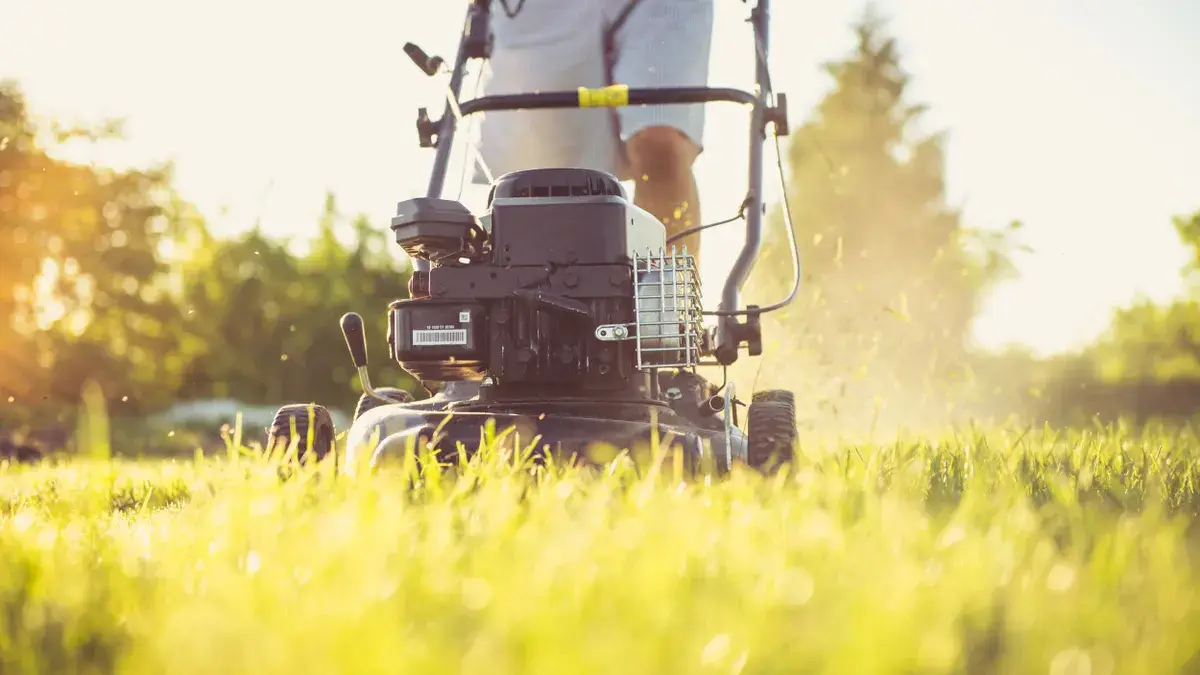
If you seeded the lawn, the first mowing usually happens when the new grass is 3 to 4 inches tall and can hold itself upright. If you laid sod, the first mowing waits until the sod has rooted into the soil below, not just looked green on top.
Because of that, seedlings are easy to bruise and pull out. Fresh sod can look ready while it is still floating on shallow roots. Wrong timing costs you a thin lawn and patchy spots you’ll have to reseed.
Here’s the catch:
- Seeded lawn: mow when the grass is tall enough to bend, not topple.
- Sod: mow only after it resists a light tug at the edge.
- Both: never remove more than one-third of the blade at once.
A generic lawn article often skips the plant stage and talks only about “grass height.” That leaves out the rooting test for sod and the fragility of young seedlings. Those are the two things that decide whether the first mow helps or hurts.
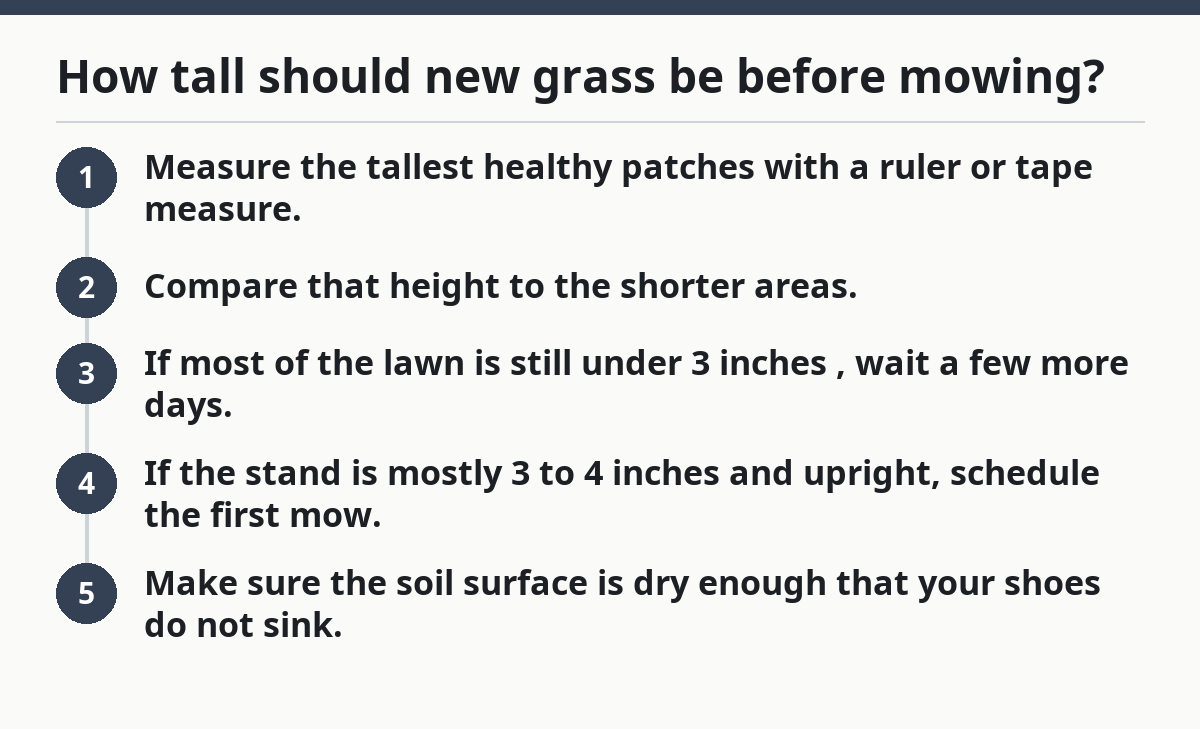
How tall should new grass be before mowing?
New grass should be 3 to 4 inches tall before its first mow, and that height gives the blade enough leaf to survive the cut. Shorter than that, the mower is more likely to scalp the plant or yank it out by the roots.
Picture this: you’re standing at the edge of a newly seeded yard, and the grass looks uneven. Some blades are 2 inches, some are 4, and you want to clean it up fast. The right move is to wait until most of the lawn reaches the target height, then mow lightly.
- Measure the tallest healthy patches with a ruler or tape measure.
- Compare that height to the shorter areas.
- If most of the lawn is still under 3 inches, wait a few more days.
- If the stand is mostly 3 to 4 inches and upright, schedule the first mow.
- Make sure the soil surface is dry enough that your shoes do not sink.
A light first cut is the goal, not a short lawn. The mower should only trim the tips. If you cut a third or more of the blade off, the grass spends its energy recovering instead of thickening.
One more rule: if the lawn is wildly uneven, mow the taller parts first and leave the shortest patches alone for a few more days. That keeps the whole stand from being cut too low just to match the shortest spot.
Can you mow sod before it roots?
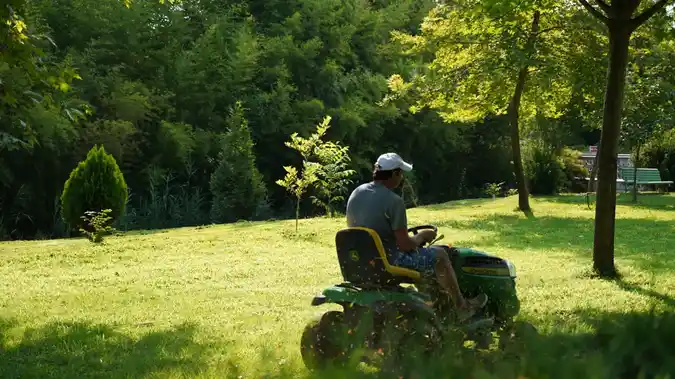
You should not mow sod before it roots, because unrooted sod can shift, wrinkle, or tear when a mower wheel crosses it. The grass may look established within days, but the root connection underneath is what keeps the slab in place.
Picture this: you’re looking at fresh sod that already looks like a finished lawn. The color is right, the seams are closing, and the urge to mow is strong. Resist that urge until the sod holds fast when you test it by hand.
Use this rooting check:
- Pick an edge or seam in an out-of-the-way spot.
- Gently lift one corner with your fingers.
- If the slab rises easily, it is not ready.
- If it resists and you feel the turf cling to the soil, it is getting close.
- If the sod has rooted enough to need a tug, the first mow is usually safer.
The first pass on sod should still be gentle. Set the mower high, avoid sharp turns, and do not mow when the ground is soft from heavy watering. A spinning wheel on loose sod can leave a ridge you’ll keep seeing for months.
By contrast, waiting too long also causes trouble. Sod that gets too tall can flop over and trap moisture. That does not mean you rush it; it means you watch the rooting, then mow once the slab is anchored and the blades are upright.
Set the mower blade height higher than you think
The mower blade height should be set high for the first mow, usually around the upper end of the mower’s range, so the cut only trims the top of the grass. A high setting protects seedlings and gives the lawn a better chance to thicken after the cut.
Picture this: you’re rolling a mower toward a young lawn and thinking a shorter cut will make the yard look finished. That instinct is common and wrong. The first mow is a trim, not a reset.
Use this setup:
- Set the mower to its highest or near-highest cutting position.
- If the mower has numbered settings, choose the setting that leaves the grass well above the soil line.
- Keep the blade sharp enough to cut cleanly; a torn blade edge stresses new grass.
- Avoid mowing when the lawn is wet, because wet blades clump and can pull young plants.
A taller setting is safer even if the lawn looks a little shaggy after the first cut. You can lower the height later, after the grass has had time to recover and grow stronger. New lawns fail when the first mow tries to force a “finished” look too early.
Do not scalp the lawn. Scalping exposes soil, weakens seedlings, and can leave brown streaks where the blade dug in. If the mower is too low, raise it before you start. The University of Minnesota Extension advises keeping the first cut high and removing no more than one-third of the leaf blade.
The first mowing pass should be slow and simple
The first mowing pass should be slow, straight, and light, with no tight turns and no aggressive overlap. The goal is to clip the tips, not flatten the lawn or stress the roots.
Picture this: you’re making the first run across a lawn that has only recently filled in. The mower moves fine, but every wheel track matters more than it will later in the season. A careful pass avoids dragging seedlings sideways or shearing fresh sod seams.
- Start with a dry lawn and a full fuel tank or charged battery.
- Mow in straight lines across the flattest section first.
- Walk at a steady pace so the mower does not bog down.
- Avoid sharp turns at the edge; lift or pivot gently if the turf is fragile.
- Leave the clippings only if they are light and short, not clumped.
- Stop if the mower starts tearing the grass instead of slicing it.
The cut should look modest when you finish. If the lawn suddenly looks “cleaned up” in one pass, the blade height was probably too low. New grass should still look like a young lawn after its first cut, just less shaggy.
A common mistake is mowing too fast because the grass is uneven and the job feels temporary. That creates wheel ruts on soft soil and shredded tips on tender blades. Slow is not just neater; it is safer for the lawn’s root system.
Mistakes that damage new grass fast
The biggest mistakes are mowing too soon, cutting too short, and turning the mower on soft ground. Each one can thin the lawn, slow rooting, or leave bare spots that need reseeding.
Picture this: you’re trying to fix a patchy new lawn and make it look even in one afternoon. That is exactly when small mistakes cost the most, because young turf has no reserve.
Common errors and what they cost:
- Mowing at 2 inches or less: the lawn can be scalped and left weak.
- Mowing sod before rooting: seams can lift and break.
- Turning sharply on young grass: seedlings can be bent or uprooted.
- Mowing wet turf: clippings mat down and blades can tear.
- Using a low blade height on the first pass: the lawn spends energy recovering instead of growing.
The fix is simple and boring, which is usually the right answer in lawn care. Wait for the height. Check the root hold. Raise the deck. Make the first pass gentle.
A generic guide often says to “mow regularly” and stops there. That misses the point for a new lawn. The first cut is not a routine chore; it is a stress test. Treat it that way, and the lawn comes through cleaner, with less repair work later.
What to do after the first cut
After the first cut, keep watering and watching the lawn, because the grass still needs time to thicken and root deeper. The first mow is only one step in establishment, not the finish line.
Picture this: you’re looking back at the yard after the first mowing and wondering if it needs another pass tomorrow. It usually does not. Give the lawn time to recover and grow back before you cut again.
Use this post-mow checklist:
- Leave the lawn alone for a few days unless a few tall spots are clearly out of line.
- Keep watering on the schedule the lawn already needs.
- Watch for lifted seams on sod or bare streaks in seeded areas.
- Let the grass reach the same 3 to 4 inch range again before the next cut.
- Stay with the same high mower setting for the next mowing or two.
The first mow often reveals weak spots you could not see before. Thin patches, low spots, or soil that stayed too wet become easier to spot once the grass is trimmed. That is useful information, not a failure.
If you want the broader mowing picture after this step, the lawn mowing guide on this site covers the next stages once the lawn is established.
How tall should new grass be before mowing?
New grass should be about 3 to 4 inches tall before the first mow. That height gives the plant enough leaf surface to keep growing after the cut. If the grass is shorter than that, wait; if it is much taller, mow only a little off the top.
Can you mow sod before it roots?
No, fresh sod should not be mowed before it roots. If the slab lifts easily at a seam or edge, it is too early. Wait until the sod grips the soil well enough that a light tug does not lift it. The United States Golf Association also notes that newly laid turf should not be mowed until it is firmly rooted.
Should you bag the first mow on new grass?
Usually yes, if the clippings are long enough to clump or cover the seedlings. Light clippings can be left on a healthy, dry lawn, but a first mow often produces uneven bits that can smother tender grass. Bagging keeps the surface open while the lawn is still young.
How high should the mower be for new grass?
Set the mower high for the first cut, usually near the highest setting the mower offers. The blade should only trim the tips, not shorten the lawn dramatically. A higher setting is safer for seedlings and rooted sod alike, and it lowers the chance of scalping.
Drafted with AI; not yet reviewed by a person.





Leave a Reply