Last updated: November 29, 2026
Quick answer: In most cases, choose 1 low-volume option—a bubbler, micro-spray, or drip emitter—rather than a lawn sprinkler. For watering trees and shrubs, a low-volume sprinkler that wets the root zone, not the trunk or leaves, is usually a better fit than a turf head because woody plants need slow, deep watering, not broad surface coverage.
Key takeaways
- Trees and shrubs usually do better with slow water near the root zone than with a wide spray over the whole plant.
- A lawn sprinkler often wastes water on trunks, sidewalks, and dry air, so it is often the wrong tool for many woody plants.
- A bubbler gives a small, concentrated flow; a micro-spray covers a small area; a drip emitter gives the most controlled low-volume watering.
- The right choice depends on plant size, spacing, soil, and whether the goal is deep watering or light surface wetting.
- If you want one simple rule: choose the smallest system that can wet the root area without soaking the crown.
What should a sprinkler do for trees and shrubs?
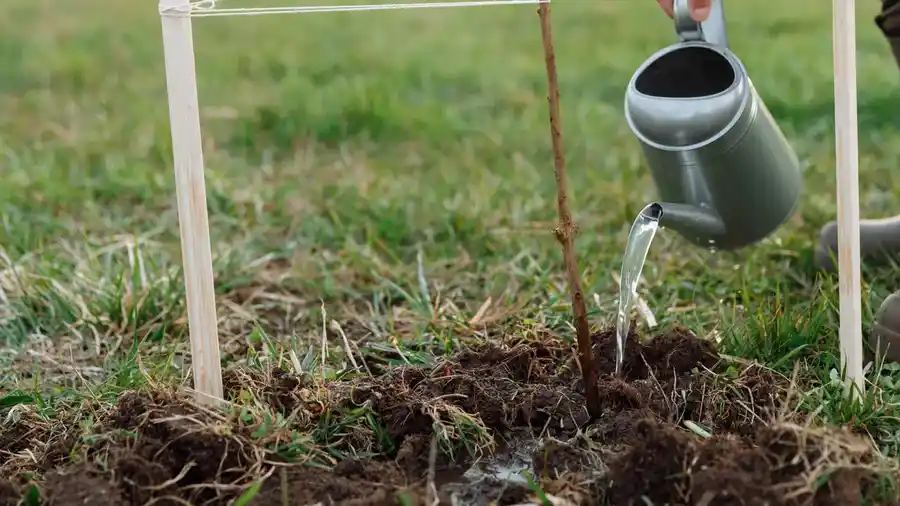
A sprinkler for trees and shrubs should water the root zone, not spray the plant like a lawn. That means the water needs to land under the canopy, spread into the soil, and soak down far enough to reach roots.
That is the main difference between woody plants and turf. Grass wants even coverage across a flat surface. Trees and shrubs need water placed where their roots can use it, often farther out than people expect. A young shrub may need only a small wetted circle, while a larger tree may need a wider ring under the drip line.
Low-volume methods work best here. A bubbler puts out a gentle flow in one spot or a few spots. A micro-spray sends water in a small pattern, often as a mist or fan. A drip emitter sends water slowly, drop by drop, which is useful when you want deep watering and little waste.
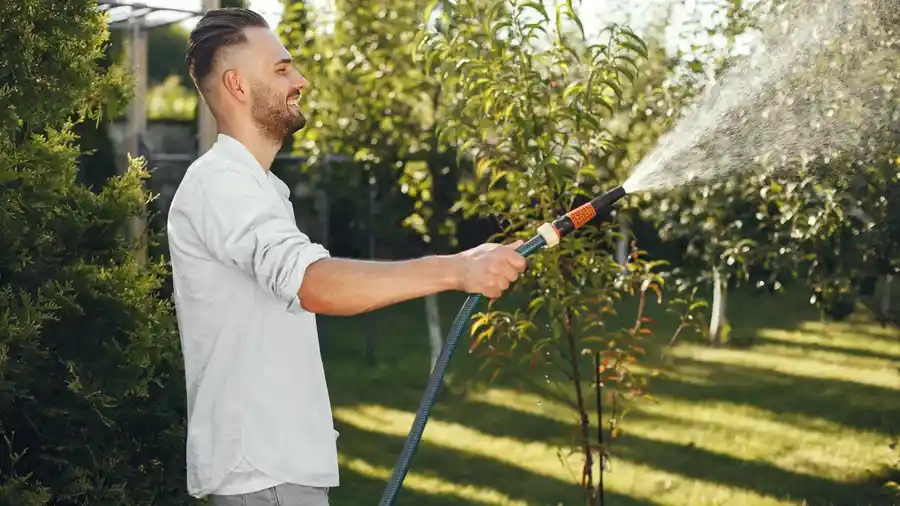
A lawn sprinkler is often a poor fit for many of these jobs. It throws water too high, wets leaves and trunks, and often misses the root zone at the edge of the canopy. It also loses more water to drift and evaporation, especially in wind. That makes it a poor choice when the goal is steady soil moisture around woody plants rather than surface wetting.
For background on outdoor watering efficiency, the EPA WaterSense program and the Irrigation Association are useful references. WaterSense focuses on reducing waste outdoors, and the Irrigation Association covers irrigation parts and layout choices. A good starting point is the EPA WaterSense site and the Irrigation Association’s education resources.
Which type fits trees and shrubs best?
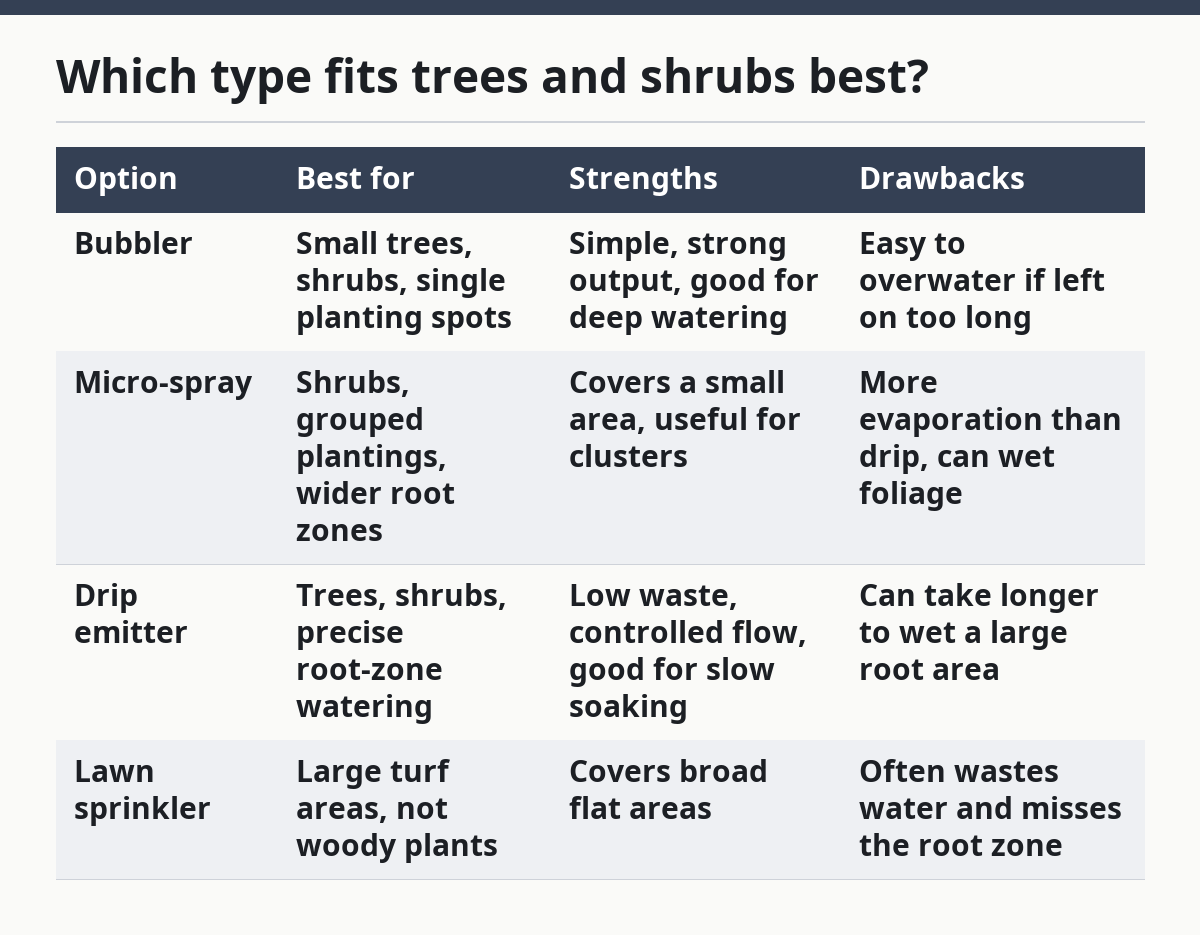
The best fit is usually a bubbler, micro-spray, or drip emitter, depending on the plant size and the soil. The right one is the one that gives the root zone water at the speed the soil can absorb it.
| Option | Best for | Strengths | Drawbacks |
|---|---|---|---|
| Bubbler | Small trees, shrubs, single planting spots | Simple, strong output, good for deep watering | Easy to overwater if left on too long |
| Micro-spray | Shrubs, grouped plantings, wider root zones | Covers a small area, useful for clusters | More evaporation than drip, can wet foliage |
| Drip emitter | Trees, shrubs, precise root-zone watering | Low waste, controlled flow, good for slow soaking | Can take longer to wet a large root area |
| Lawn sprinkler | Large turf areas, not woody plants | Covers broad flat areas | Often wastes water and misses the root zone |
A bubbler makes sense when you want water delivered in one place without a fine mist. It is often a good fit for a young tree or a shrub bed where you want soil wetting near the base, but not a lot of spray. The drawback is simple: the output can be too strong if the run time is too long.
A micro-spray is useful when the root zone spreads beyond one point. It can wet a wider circle around a shrub or several plants in one bed. The trade-off is that it behaves more like a small above-ground spray than a drip line, so it can lose more water to air and wind.
A drip emitter is the most precise of the three. It is often the best option when the soil needs slow watering and you want to keep water off leaves and trunks. It is less flashy, but it often does the job better for woody plants. The trade-off is slower coverage, so a large tree may need more than one emitter to wet the full root area.
How do I match the sprinkler to the root zone?
You match the sprinkler to the root zone by watering under the canopy edge or just beyond it, then choosing a pattern that covers that area without soaking the trunk. For many trees, the useful roots spread out near and beyond the drip line, not right at the trunk.
A young shrub often has a smaller root zone, so a single drip emitter or a small micro-spray can be enough. A larger shrub or small tree may need more than one point of delivery. The goal is not to make the plant look wet. The goal is to make the soil moist where the roots feed.
A common mistake is placing the water source right next to the trunk. That can keep the bark too damp and leave the outer root zone dry. Another mistake is using one tiny emitter on a large tree and assuming the job is done. One point of water may help the surface soil, but it may not reach enough of the feeding roots.
Soil changes the choice too. Sandy soil drains fast, so it often needs slower repeat watering. Clay soil holds water longer, so a slow system matters even more because runoff can happen if the flow is too high. In both cases, the answer is still low-volume watering, not a broad lawn pattern.
How do I choose between bubbler, micro-spray, and drip emitter?
Choose a bubbler for a small, focused root zone, a micro-spray for a wider planted area, and a drip emitter when precision matters most. That is the short version, and it holds up well for most trees and shrubs.
If the plant is a single tree with a clear root area and you want deep watering, a bubbler is often the simplest answer. If the plant is part of a shrub bed or several plants share soil, a micro-spray can cover more ground with fewer parts. If water use matters most, or you want the most control over where the water goes, use drip.
Here is the practical trade-off:
- Bubbler: best when you want a stronger flow in one spot.
- Micro-spray: best when you need a light pattern over a small zone.
- Drip emitter: best when you want slow watering and less waste.
A generic lawn sprinkler is wrong for this job because it treats woody plants like grass. Trees and shrubs do not need the same kind of even, shallow coverage that a turf area needs. They need water placed in the soil, often in a ring, not a shower from above. If you are unsure, consult a landscape irrigation professional, and check guidance from the EPA WaterSense program before you choose a layout.
If you are choosing between the three for the same plant, start with drip if you want precision, bubbler if you want speed, and micro-spray if the root zone is wider and shallow. That is the choice point most readers actually need.
When should you not use a lawn sprinkler?
You should not use a lawn sprinkler when the goal is deep watering of trees and shrubs. A turf sprinkler is made for broad coverage, and that makes it a poor fit for woody plants that need water at the roots.
This matters most in three cases. First, when the sprinkler waters the trunk and leaves more than the soil. Second, when wind pushes the spray away before it reaches the root zone. Third, when the area around the plant is small and the spray overshoots onto pavement or grass that does not need it.
A lawn sprinkler can also encourage shallow watering habits. If the soil only gets a brief surface wetting, roots may stay near the top instead of growing deeper. That is not the goal for trees and shrubs. Deep watering is usually the better pattern because it supports a steadier moisture profile in the soil.
There is one time a turf-style sprinkler can seem useful: when several shrubs sit in a wide bed and the root areas overlap. Even then, a micro-spray or drip line is usually the better fit because it is easier to place water where the roots actually are. For a woody planting, that precision matters more than broad coverage.
What steps help me set it up correctly?
Set it up by aiming for the root zone, using the smallest useful output, and checking the soil after watering. That is the core procedure for trees and shrubs.
- Mark the root area. Place the watering point under the canopy edge or around the shrub’s root spread, not against the trunk. This gives the water a real target instead of spraying open ground.
- Choose the low-volume tool. Use a bubbler for a focused spot, a micro-spray for a wider small bed, or a drip emitter for the most controlled watering. The result should be moist soil, not standing water.
- Run it long enough to soak the soil, not flood it. Deep watering means the moisture moves down, so a short burst is usually not enough. The exact run time depends on the soil and the flow.
- Check the wet area. Look for damp soil across the root zone, not just near the surface. If the trunk is wet and the edges are dry, the placement is off.
- Adjust the layout if the plant grows. As a tree or shrub gets larger, the watering area usually needs to move outward too. A small setup that worked at planting time may be too tight later.
The most common mistake is trying to solve a woody-plant problem with a lawn-coverage tool. That wastes water and often misses the roots. The second mistake is making the system too strong. A low-volume tool is useful because it gives the soil time to absorb the water.
A simple check is to ask whether the setup is helping the soil, not just making the plant look wet. If the answer is no, the sprinkler choice is probably wrong.
What matters more than the sprinkler itself?
Placement and run time matter more than the label on the part. A good bubbler in the wrong spot can be less useful than a modest drip emitter aimed at the root zone.
That is why woody plants are different from lawn areas. The same water pattern that works on grass can fail on a tree or shrub because the target is smaller, deeper, and more uneven. The plant does not care whether the part is called a head, nozzle, or emitter. It cares whether the root zone gets enough water.
So the right question is not “Which sprinkler is best in general?” It is “Which one wets this tree or shrub’s roots with the least waste?” For most readers, that answer is a low-volume option, not a broad spray.
Can i use a sprinkler on trees and shrubs?
Yes, but only if it is the right kind of sprinkler and it waters the root zone instead of the trunk and leaves. A lawn sprinkler is usually the wrong choice because it spreads water too widely and wastes more of it.
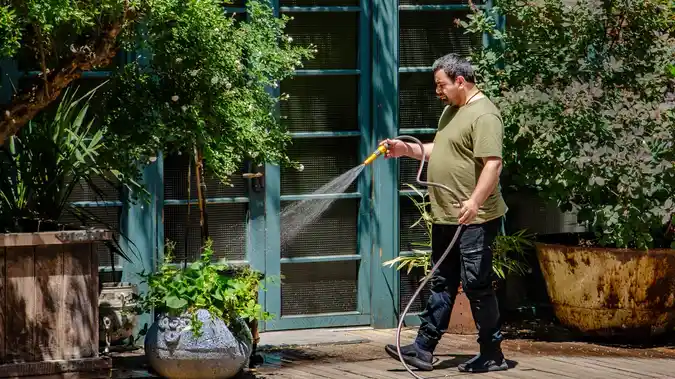
A bubbler, micro-spray, or drip emitter is usually a better fit. These give you low-volume watering, which is what woody plants usually need. The better the placement, the better the result.
What is the best way to water shrubs?
The best way to water shrubs is to water slowly at the root zone so the soil can absorb it deeply. A drip emitter is often the cleanest option, while a micro-spray can work well for a shrub bed.
The main mistake is watering only the surface. Shrubs do better when the moisture reaches the active roots, not just the top inch of soil. That is why slow watering usually beats a fast spray.
should trees be watered by sprinkler or drip?
Trees are usually better watered by drip or another low-volume method than by a lawn sprinkler. Drip puts water where the roots can use it and wastes less on air, bark, and pavement.
A sprinkler can help only if it is acting like a controlled low-volume tool and is placed to wet the root zone. For most trees, drip or a bubbler is the smarter choice because it supports deep watering instead of shallow surface wetting.
Drafted with AI; not yet reviewed by a person.
Leave a Reply