Last updated: November 29, 2026
Quick Answer: For most watering jobs, pick one of five sprinkler head types: spray for small, fixed shapes; rotary for larger turf areas; impact for rugged outdoor spots; bubbler for trees and shrubs; and micro-spray for tight beds and container groups.
In short: choose the head by the job, not by the pipe. Use a spray sprinkler for small, even coverage; a rotary sprinkler for larger turf areas that need slower watering; an impact sprinkler for tough outdoor spots that need a durable throw; a bubbler for trees, shrubs, and basins; and a micro-spray for tight beds and container groups.
For how to choose a sprinkler head type for each watering job, a solid starting point is the EPA WaterSense program on irrigation efficiency and the Irrigation Association’s guidance on irrigation parts and setup: EPA WaterSense and Irrigation Association.
Key takeaways
-
Match the head to the watering job first, then refine from there.
-
Spray heads cover a fixed pattern fast; rotary heads cover the same area more slowly.
-
Impact heads are best when durability matters more than quiet operation.
-
Bubblers deliver water at the base of a plant, not across a wide patch.
-
Micro-sprays suit small planting pockets and container groups, not open turf.
What is a sprinkler head type?
A sprinkler head type is the way the nozzle throws water, and that determines where it belongs. The main choice is between fixed spray, rotating streams, impact throwers, bubblers, and micro-sprays.
That matters because each one handles a different shape and size of area. A 180-degree spray head is often used for an edge, while a 360-degree rotary head is often used to cover the middle of a zone. A head that fits a 4-foot bed will be a poor match for a wide lawn strip.
So the fastest useful way to choose is to think in one sentence: small and precise, rotating and slower, forceful and durable, or low and direct. Once that sentence is clear, the right category usually stops being confusing.
Spray sprinkler or rotary sprinkler?
A spray sprinkler works for smaller areas that need quick, even coverage, while a rotary sprinkler works for broader turf areas that benefit from a slower throw. That is the main split most readers need to make.
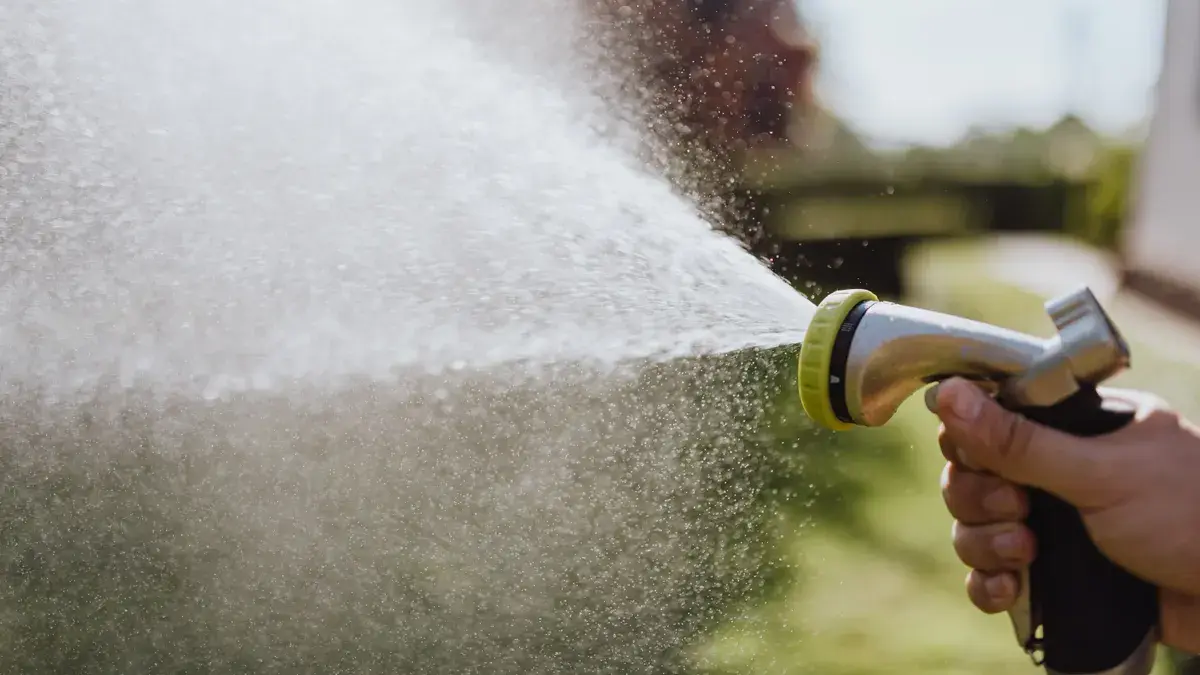
Spray heads send water in a fixed pattern, often 90, 180, or 360 degrees. That makes them easy to place along edges, narrow strips, and smaller lawn sections. The drawback is that they apply water faster, so they are a poor fit where runoff is already a concern or where the area is large enough to need slower delivery.
Rotary heads send out moving streams instead of a fixed fan. That slower output is their biggest strength, especially in larger zones where the soil needs time to absorb water. The trade-off is that they are usually more complex to match to tight corners or tiny patches.
  Criteria
  Spray sprinkler
  Rotary sprinkler
  Winner for this condition

  Coverage style
  Fixed fan of water
  Moving streams
  Spray for small, exact shapes

  Typical pattern
  90, 180, or 360 degrees
  Adjustable rotation
  Spray for simple edges

  Water application pace
  Faster
  Slower
  Rotary for soil that needs more soak time

  Best fit
  Small zones and narrow strips
  Larger turf areas
  Rotary for broader areas

  Precision at edges
  Strong
  Mixed
  Spray for border work

  Complexity
  Simple to place
  More setup-sensitive
  Spray for straightforward jobs

  Overlap control
  Easy to understand
  Needs cleaner layout
  Spray for quick installs

  Common weakness
  Can waste water on the wrong-sized area
  Can feel slow or overbuilt in small spots
  Depends on area size
A spray head is wrong for a big open area unless the zone is intentionally small and the layout is simple. A rotary head is wrong for a narrow bed that needs focused watering at the edges. If the job is a patch of turf with a compact shape, spray often wins. If the job is a wider zone and the soil needs time to take water in, rotary is the safer pick.
For a reader deciding between the two, the simplest rule is this: choose spray when the area is compact and the pattern matters more than the throw; choose rotary when the area is wider and the slower delivery matters more.
When does an impact sprinkler make sense?
An impact sprinkler makes sense when toughness and throw matter more than quiet operation or a tidy look. It is the old-school choice for exposed areas where a sturdy head is more useful than a low-profile one.
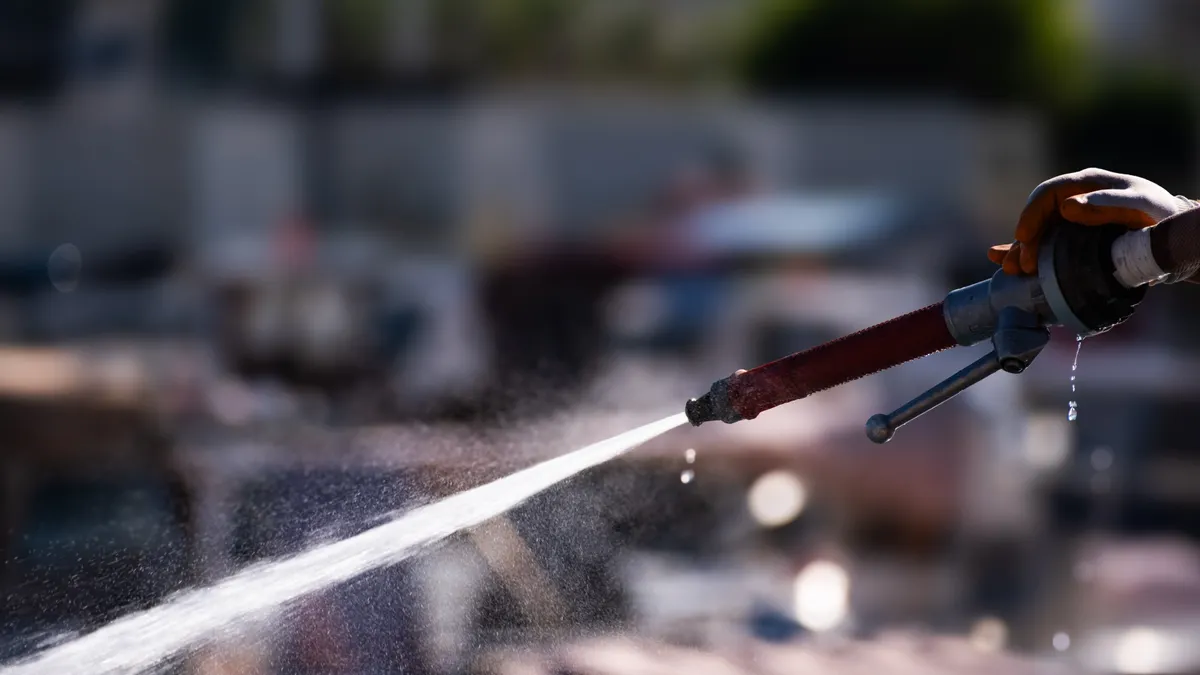
Because the visible arm and clicking action are part of the design, this can be a strength in rough spaces where the mechanism is built to keep working under harder conditions. The downside is obvious: impact heads are louder and less subtle than spray or rotary heads, so they are a poor fit near a patio, bedroom window, or any place where noise will annoy people.
Impact heads also make less sense when the watering job needs precision. They are not the first pick for small beds, delicate plant groupings, or any area where a clean, tight pattern matters more than durability. If the space is open, exposed, and not fussy, they can be the right tool.
This is the category to choose when the job description sounds like “plain, rugged, and covering open ground.” It is not the category to choose when the job sounds like “quiet, exact, and tidy.”
When should you pick a bubbler?
A bubbler is the right choice when water needs to go at the base of a plant instead of across a wider surface. That makes it useful for trees, shrubs, and planting pockets that need a concentrated soak.
Bubblers do not behave like lawn heads. They are made to deliver water low and close, which is a strength around root zones, basins, and other spots where runoff would be a problem. The main drawback is simple: they do not cover ground evenly over a large area, so they are not a substitute for spray or rotary heads.
That makes the bubbler a specialized tool. It is strong when the target is a single plant or a small group with roots that need steady watering near the base. It is weak when the target is a broad patch of turf, because the water stays too localized.
If the job is “water this plant without wetting the whole bed,” bubbler is usually the cleanest answer. If the job is “cover this rectangle of grass,” a bubbler is the wrong device.
Where do micro-sprays fit?
Micro-sprays fit small planting areas, tight beds, and container groups where a lighter, more targeted pattern is useful. They sit between a full-size spray head and a bubbler in terms of reach and focus.
They work well when the area is too small for a standard lawn head but still needs coverage across a little patch rather than one root point. That makes them useful for compact ornament beds and mixed plantings. The trade-off is that they are not the best answer for wide turf, and they are not as direct as a bubbler when a single base watering point is the goal.
Micro-sprays are also easy to misuse when the area is too open. In a wider space, the pattern can feel too light or too scattered, and that can leave dry spots if the layout is not tight. They are best when the planting is close together and the aim is gentle coverage, not long throw.
If the job sounds delicate, small, and grouped, micro-spray belongs in the shortlist. If the job sounds like open lawn or one deep root zone, it does not.
Which type should win for the most common jobs?
The best practical answer is simple: spray for small and fixed shapes, rotary for larger lawn areas, impact for rough durability, bubbler for root-zone watering, and micro-spray for compact beds or containers. That is the cleanest way to sort the choices without overthinking it.
If the job is a narrow strip, an edge, or a small square, spray usually wins because the pattern is easy to match. If the job is a larger zone of grass, rotary usually wins because the slower delivery is a better fit. If the job sits in a rougher outdoor area and noise is not a concern, impact can be the hard-wearing choice. If the job is a tree base or shrub basin, bubbler is the more direct tool. If the job is a tight planting pocket, micro-spray fits better than a full lawn head.
The wrong choice usually shows up fast. Too much throw for a small area leads to waste. Too little precision in a bed leads to dry spots. Too much force around roots can move water where it is not wanted.
When should the answer change?
Therefore, the verdict changes in a few specific cases. If the area is small but oddly shaped, a spray head can beat a rotary head even if the zone is not tiny. If the area is exposed and rugged, an impact head can be better than a quieter option. If the goal is watering one tree or one shrub cluster, a bubbler is better than either spray or rotary.
There is also one important exception: if the layout mixes lawn, beds, and containers in a single zone, no single head type is ideal. Mixed zones usually force a compromise, and that compromise is often the wrong one for at least one part of the area. In that case, separating the watering jobs matters more than arguing about one head type.
Another exception is a space where coverage looks easy but the plants are fragile. A micro-spray can be the better fit than a stronger pattern simply because it is gentler and more local. The last exception is a broad turf area where the soil needs time to absorb water; there, rotary tends to outclass spray because slower application is the point.
The verdict: which one should you choose?
Ultimately, choose spray if the area is small, edge-based, or shaped like a simple fan and needs quick, even coverage. Choose rotary if the area is broader turf and the slower delivery matters more than speed. Neither if the job is a tree base, shrub basin, or mixed planting zone that needs a different kind of head entirely.
Which sprinkler head is best for lawns?
Rotary heads are usually the better lawn choice when the area is broader and needs slower watering. A spray head still fits smaller lawn sections, narrow strips, and simple edges, but it is easier to overuse in open turf. For a lawn job, the question is not “which head is strongest?” It is “which head matches the size and shape of the grass?”
What is the difference between spray and rotary sprinklers?
Spray heads throw a fixed fan of water, while rotary heads move streams across the area. Spray is faster and simpler for small shapes, usually with 90, 180, or 360-degree patterns. Rotary is slower and better for larger areas that need time to absorb water without runoff.
When should I use a bubbler instead of a sprinkler?
Use a bubbler when the water needs to go at the base of a plant, not across a wide surface. That makes it a better choice for trees, shrubs, and basins than for turf. If the goal is a lawn, a bubbler is the wrong tool; if the goal is a root zone, it is often the right one.
Drafted with AI; not yet reviewed by a person.
Leave a Reply