Last updated: November 19, 2026
Quick answer: edge the lawn every mowing cycle, then do a deeper reset every few weeks if growth is heavy. For how to edge a lawn along sidewalks and flower beds, cut a clean vertical line first and keep it trimmed after that. A half-moon edger makes the sharpest border; a string trimmer is faster for upkeep. The steps below explain when to use each tool, how deep to cut, and how to keep the edge from spreading back into the walk or bed.
Key Takeaways
- A clean lawn edge starts with a guide line, not with freehand trimming.
- Use a half-moon edger for a crisp cut at sidewalks, curbs, and bed lines.
- A string trimmer works best for touch-ups between full edging sessions.
- Keep the tool vertical at hard surfaces and slightly angled at beds.
- Fewer passes beat heavy cutting; overworking the edge makes the trench ragged.
- A monthly touch-up is easier than fixing a wide strip of overgrowth.
What lawn edging does at sidewalks and flower beds
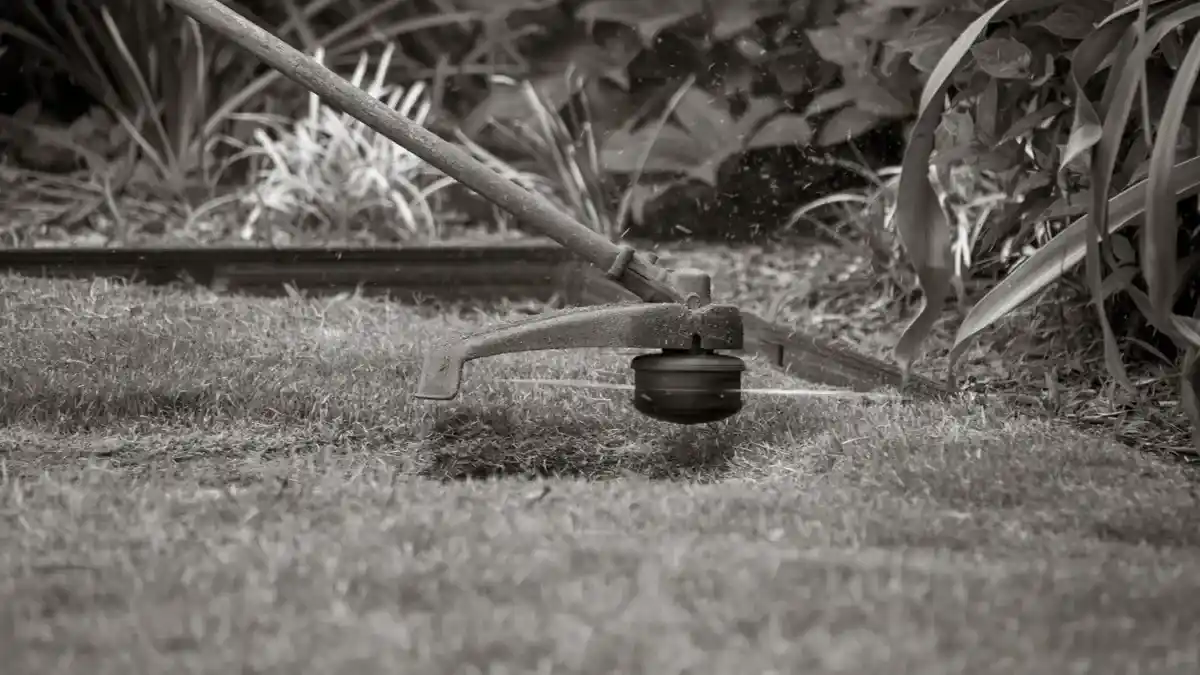
Lawn edging creates a narrow boundary that keeps grass from spilling over concrete and into beds. At a sidewalk, that means cutting the turf back so the pavement edge shows again; at a flower bed, it means forming a clean line that stops the lawn from creeping under mulch.
Picture this: you’re standing at a sidewalk with a dull grass lip curling over the concrete, and the flower bed beside it has vanished under runners. The fix is one clean edge, not a deeper cut every time. A straight line is easier to maintain than a rounded, worn channel.
There are two jobs here:
- Manual edging for the first cut or a reset.
- Maintenance edging for quick cleanup before the lawn gets shaggy.
The first job is slower but cleaner. The second one is faster and should be light. If you try to do both with the same heavy pass, you end up with a trench that crumbles and a bed line that looks chewed up.
A good edge also helps the rest of the yard look finished. It frames the mow pattern, keeps clippings off the walk, and makes the border between turf and bed obvious from the curb.
For a broader lawn-care sequence, see the mowing guide and the yard cleanup checklist.
How to edge a lawn along sidewalks and flower beds
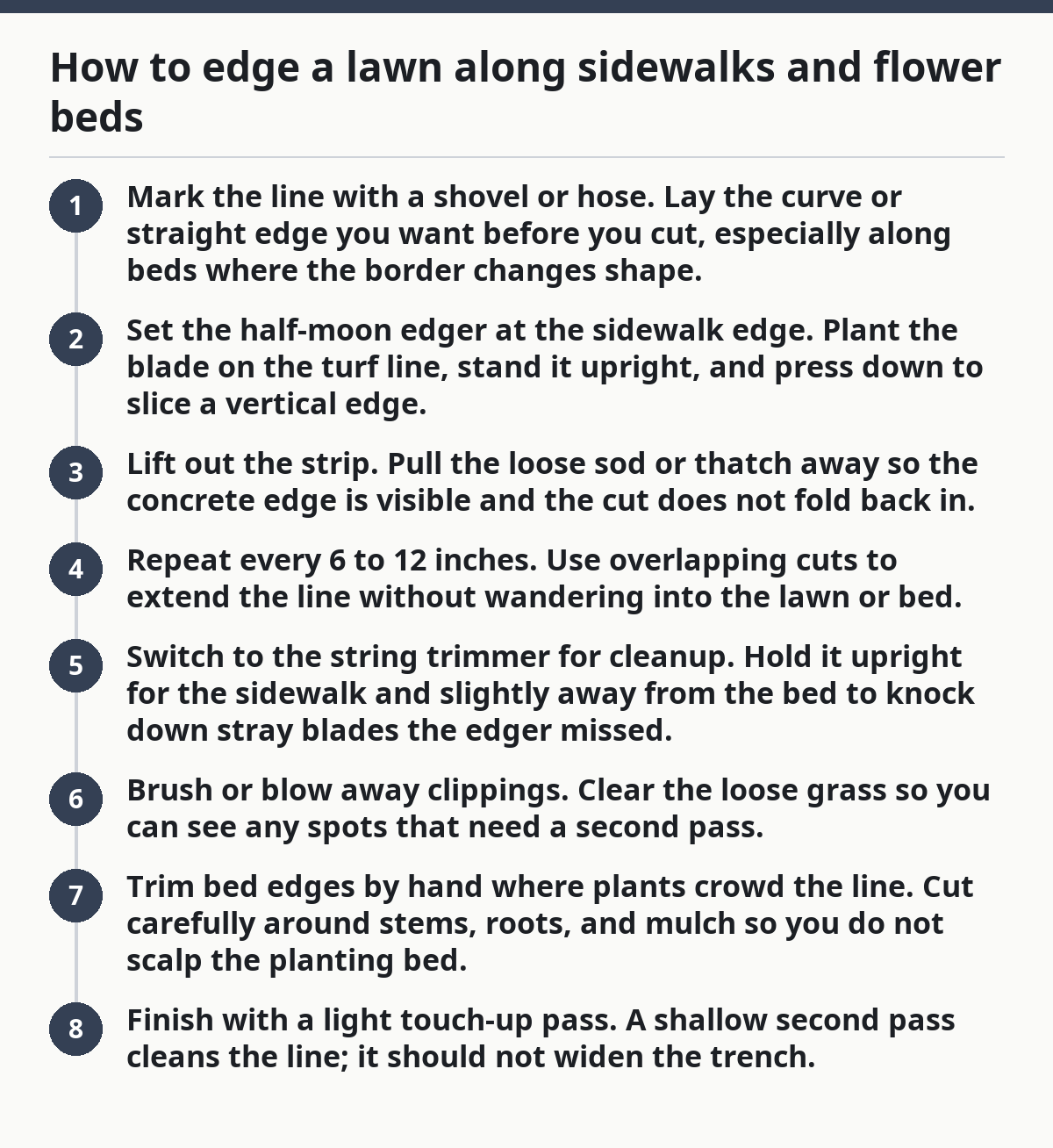
You edge a lawn by marking the line, cutting the turf vertically, and clearing away the loose strip so the border stays visible. That is the whole move. The details below keep the cut straight and prevent the edge from caving in.
Picture this: you’re facing a sidewalk on one side and a mulched bed on the other, with grass leaning into both. A half-moon edger or string trimmer can handle it, but the tool has to match the surface and the finish you want.
- Mark the line with a shovel or hose. Lay the curve or straight edge you want before you cut, especially along beds where the border changes shape.
- Set the half-moon edger at the sidewalk edge. Plant the blade on the turf line, stand it upright, and press down to slice a vertical edge.
- Lift out the strip. Pull the loose sod or thatch away so the concrete edge is visible and the cut does not fold back in.
- Repeat every 6 to 12 inches. Use overlapping cuts to extend the line without wandering into the lawn or bed.
- Switch to the string trimmer for cleanup. Hold it upright for the sidewalk and slightly away from the bed to knock down stray blades the edger missed.
- Brush or blow away clippings. Clear the loose grass so you can see any spots that need a second pass.
- Trim bed edges by hand where plants crowd the line. Cut carefully around stems, roots, and mulch so you do not scalp the planting bed.
- Finish with a light touch-up pass. A shallow second pass cleans the line; it should not widen the trench.
The result should be a narrow, readable border, not a ditch. If the edge looks torn, you cut too much at once.
Should I use a half-moon edger or a string trimmer?
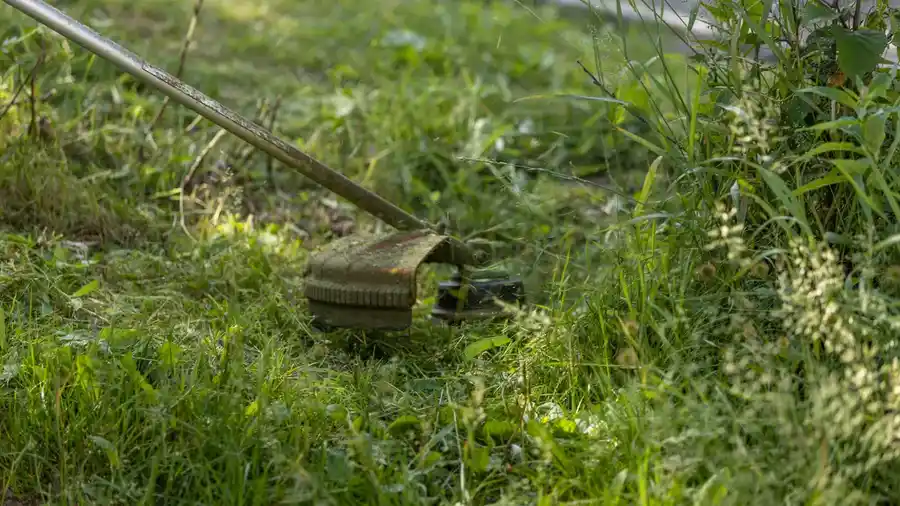
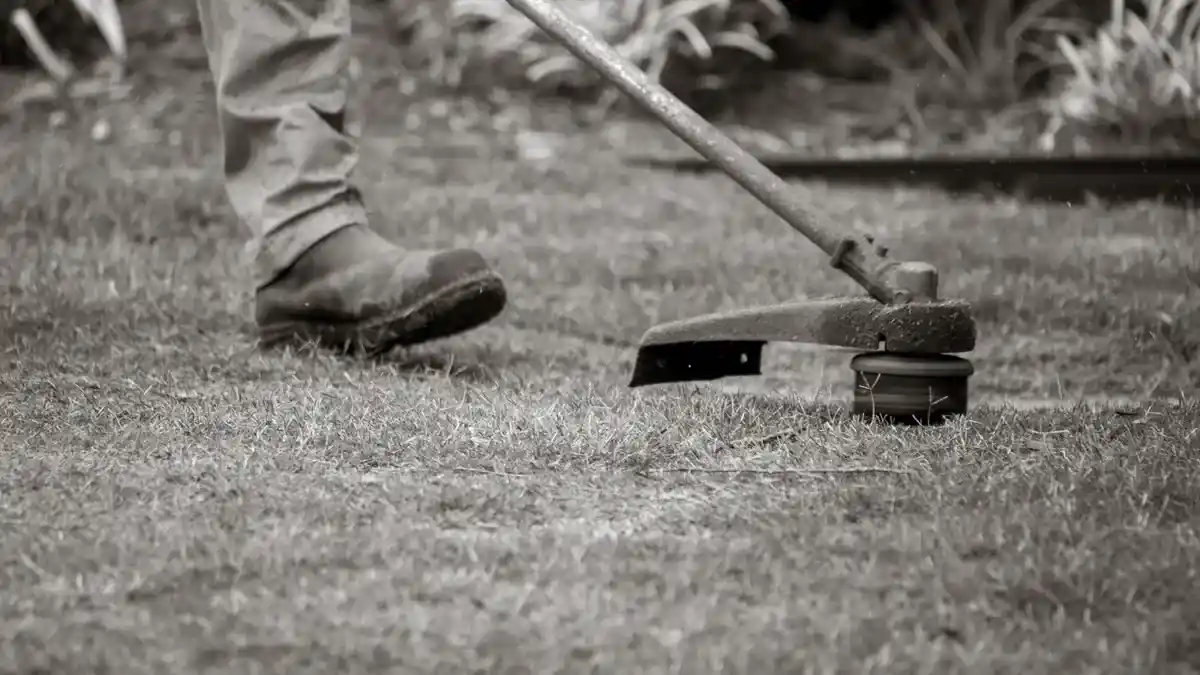
You should use a half-moon edger for the first cut and a string trimmer for maintenance. The edger gives the cleanest line at sidewalks and curbs; the trimmer is quicker for weekly or biweekly touch-ups.
Picture this: you’ve got an overgrown strip along a concrete walk and a flower bed edge that has faded into the lawn. A half-moon blade bites into the turf and makes a true line. A trimmer can follow, but it is less precise if you start with it alone.
Here’s the catch:
- A half-moon edger cuts deeper and straighter.
- A string trimmer is faster but easier to overcut.
- Concrete edges expose mistakes fast, because any wobble shows in the line.
Use the edger when:
- the border has disappeared,
- grass has grown onto the sidewalk,
- the bed line needs a reset after weeks of growth,
- or the curb edge has built up a thick lip.
Use the trimmer when:
- the line is already visible,
- you just need to knock back new growth,
- or you are cleaning up after mowing.
The truth is, many lawns need both. The edger does the hard reset. The trimmer keeps the line honest between resets. If you only own one tool, the trimmer is more flexible, but it will not match the crispness of a manual blade on a neglected edge.
How do you keep the edge straight along curbs and walks?
You keep the edge straight by using the hard surface as a guide and by taking short, overlapping cuts instead of one long sweep. Curbs and sidewalks reward patience; a wandering blade makes a jagged border that takes twice as long to fix.
Picture this: you’re edging a long sidewalk run, and your eyes keep drifting ahead while your hands drift off the line. That is how curves become waves. Short passes keep the blade honest.
Use this simple pattern:
- Stand your feet square to the edge.
- Keep the blade or trimmer shaft vertical.
- Move forward in small steps.
- Stop every few feet and look back at the cut.
On curbs, follow the concrete lip rather than the grass. On sidewalks, keep the edge tight to the slab so the turf does not creep back over the corner. If the concrete is chipped, follow the best visible line, not every broken nick.
A few habits help:
- Use a string line on long straight runs if the border is hard to read.
- Cut in daylight so shadows do not hide the edge.
- Make one correction at a time; repeated back-and-forth passes widen the trench.
If a section has already gone crooked, do not chase every bump. Reset the worst spot, then blend the next few feet into it. A slightly softened line looks better than a sawtooth border.
For more on keeping straight borders, see the sidewalk edging tips and curb cleanup guide.
How do you edge flower beds without damaging plants?
You edge flower beds by cutting the lawn side cleanly and leaving room for roots, mulch, and stems. The goal is a neat border, not a trench that steals space from the bed.
Picture this: you’re working beside perennials, edging between grass and mulch, and the plants are only a few inches from the line. A half-moon blade is still the right tool, but it needs a lighter hand and a slower pace.
Use these bed-safe habits:
- Keep the blade on the lawn side of the edge.
- Cut a narrow strip, then inspect before taking more.
- Avoid chopping into exposed roots or plant crowns.
- Pull loose grass out by hand near tight plant clusters.
- Leave the mulch line smooth, not hollowed out.
A bed edge often looks best when it is a little softer than a sidewalk edge. Hardscape wants a sharper vertical line; plant beds usually look better with a clean but slightly gentler border.
The mistake to avoid is carving too close to the plants. That costs root space, exposes irrigation lines, and leaves the bed with a thin, brittle edge that falls apart after rain. If the bed is crowded, switch to hand tools for the last few inches.
How often should you edge a lawn?
You should edge a lawn whenever the grass begins to spill over the border, and that is often every mowing cycle for fast-growing yards. A full reset with a half-moon edger is less frequent; light maintenance with a string trimmer is usually enough between deeper cuts.
Picture this: you’ve just mowed, and the yard looks close to finished, but the sidewalk still has a soft fringe and the bed line is starting to blur. That is your timing cue. Do not wait until the grass has built a thick shelf over the concrete.
A simple schedule works for most lawns:
- After mowing for quick cleanup on visible edges.
- Every few weeks for a deeper manual reset if growth is heavy.
- After rainy spells when grass pushes fast and soft growth shows first.
If you let edges go too long, the work gets harder fast. The lawn grows over the sidewalk, soil packs into the cut, and the bed line collapses into a rounded hump. Then you are not edging anymore — you are rebuilding the border.
For readers who want the rest of the mowing sequence, the lawn mowing guide on this site covers the larger yard-care flow. This page stays focused on border work.
Common edging mistakes that ruin the line
The biggest edging mistakes are cutting too deep, rushing the line, and using the wrong tool for the surface. Each one changes the look of the edge and makes the next cleanup harder.
Picture this: you wanted a neat sidewalk border, but now there is a wide trench, loose soil, and grass blades hanging into the cut. That happens when the blade keeps digging instead of trimming.
Watch for these problems:
- Cutting too deep: it widens the trench and leaves the edge fragile.
- Using only the trimmer: it frays the line instead of slicing it.
- Working when the soil is soaked: the edge tears and smears.
- Ignoring clippings: they hide the line and make future cuts sloppy.
- Chasing perfection in one pass: the edge gets wider every time you “fix” it.
Do this instead:
- take a shallow first cut,
- make a second pass only where needed,
- clear debris before judging the line,
- and save deep resets for when the border has truly collapsed.
A good edge should look sharp, narrow, and repeatable. If it only looks good on the first day, it is not a good edge. It is a one-time repair.
How often should you edge a lawn?
You should edge a lawn often enough that grass does not roll over the border between cuts. For many yards, that means a quick touch-up after mowing and a deeper cleanup every few weeks.
If the edge is already hidden, you have waited too long. Frequent light edging is easier than one heavy session.
Is a string trimmer good for edging?
Yes, a string trimmer is good for edging touch-ups along sidewalks and bed lines. It is fast and useful for keeping a visible border in shape between manual cuts.
It is not the best tool for rebuilding a neglected edge. A half-moon edger makes a straighter, cleaner first cut.
How do you keep grass from growing into flower beds?
You keep grass from growing into flower beds by edging the border regularly and pulling stray runners before they spread. A clean cut line blocks the lawn from creeping into mulch and around plant stems.
A deeper manual edge helps when the border has softened. Mulch and a neat edge make the line easier to spot next time.
Should you edge before or after mowing?
You should usually edge after mowing. Mowing first exposes the true border, so the edger or trimmer can clean up what the mower missed.
That said, a light edge before mowing can help on badly overgrown lines. For most yards, though, mowing first makes the edging faster and more accurate.
Drafted with AI; not yet reviewed by a person.





Leave a Reply