Last updated: November 19, 2026
Quick Answer: To stop How to stop grass clippings from matting on the lawn, mow dry, cut less, and bag clumps; a 20- to 30-minute wait can help before raking.
Key Takeaways
- Heavy clippings mat when they land thick and stay on top of the turf.
- To stop matting, mow drier, cut less at once, and bag overloaded areas.
- Bagging works best on wet, tall, or visibly clumping grass.
- Clean up clumps by waiting briefly, loosening them with a lawn rake, and removing the worst spots before they harden.
Grass clippings are matting because they’re being dropped too thick, too wet, or too long. How to stop grass clippings from matting on the lawn starts with lowering the load, breaking up the clippings, and cleaning up the heavy patches right after mowing. The steps below settle what to change first and when a lawn rake beats a second pass.
What actually causes grass clippings to mat
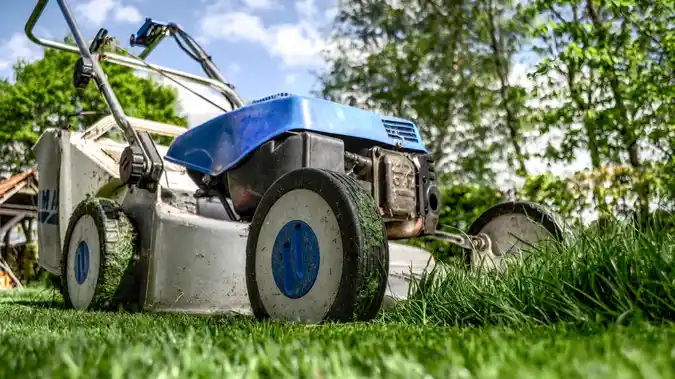
Grass clippings mat when the mower leaves a heavy layer that sticks together instead of falling through the turf. Wet blades, dull cutting edges, and a packed mower deck make the pile worse, especially after a long mow or a late-day cut.
Picture this: you finish mowing and see gray-green ropes lying across the lawn, then notice the grass under them is flattened and damp. That’s not just messy. It blocks airflow at the soil line and slows drying. A mulching mower can help if it is set up right, but it can also make the problem worse when the grass is too tall or wet.
According to Oregon State University Extension, grass clippings are usually fine when they are short and dry, but they can clump when mowing conditions are poor. The University of Minnesota Extension also notes that wet turf and long growth raise the chance of buildup.
The usual causes are:
- Wet grass blades that stick together instead of separating
- Too much cut at once, which leaves long clippings that bunch up
- Mower deck buildup, which blocks airflow and discharge
- Slow mowing speed, which dumps clippings in one place
- Turns and overlap spots, where the mower lays extra material
The fix starts with the cut you leave behind. Shorter clippings spread out more easily, while long, damp clippings form a mat fast. If the lawn is already thick, the safer move is to collect the clippings with a grass catcher or rake them up after the mow rather than forcing them to stay in place.
How do I stop grass clippings from matting on the lawn?
You stop grass clippings from matting on the lawn by mowing drier, reducing the amount you cut, and choosing bagging when the lawn is already overloaded. The goal is to make the clippings small enough and dry enough to settle between the blades of grass instead of sitting on top.
Picture this: you’re at the mower with a damp lawn and a full catcher starting to clog. The answer is not to keep going the same way. A few small changes to the cut will do more than trying to spread a heavy pile afterward.
-
Raise the mower deck and remove less grass in one pass.
A higher cut leaves shorter clippings that break apart faster. If the lawn is very overgrown, mow once high, then make a second pass later instead of taking everything in one shot. -
Use a grass catcher on thick or damp growth.
Bagging keeps heavy clippings off the surface when the lawn is already prone to clumping. Empty the catcher before it gets packed full, or airflow drops and the machine starts dropping bunches. -
Switch to mulching only when conditions are right.
A mulching mower works best on dry, moderate-height grass. It recuts clippings into smaller pieces, but it is not a fix for soaked turf or very long grass. -
Slow down your ground speed and avoid deep overlap.
Moving too fast can leave clippings in windrows. A steadier pace gives the mower deck time to lift and cut the grass more evenly. -
Rake the heavy spots immediately after mowing.
A lawn rake can break up dense patches before they become a mat. Use it on visible clumps, especially along turns, edges, and discharge lines.
If the clippings are thin and spread out, they usually disappear on their own. If they’re thick enough to hide the grass beneath, bag them or rake them now.
Which mowing setup helps most: bagging or mulching?
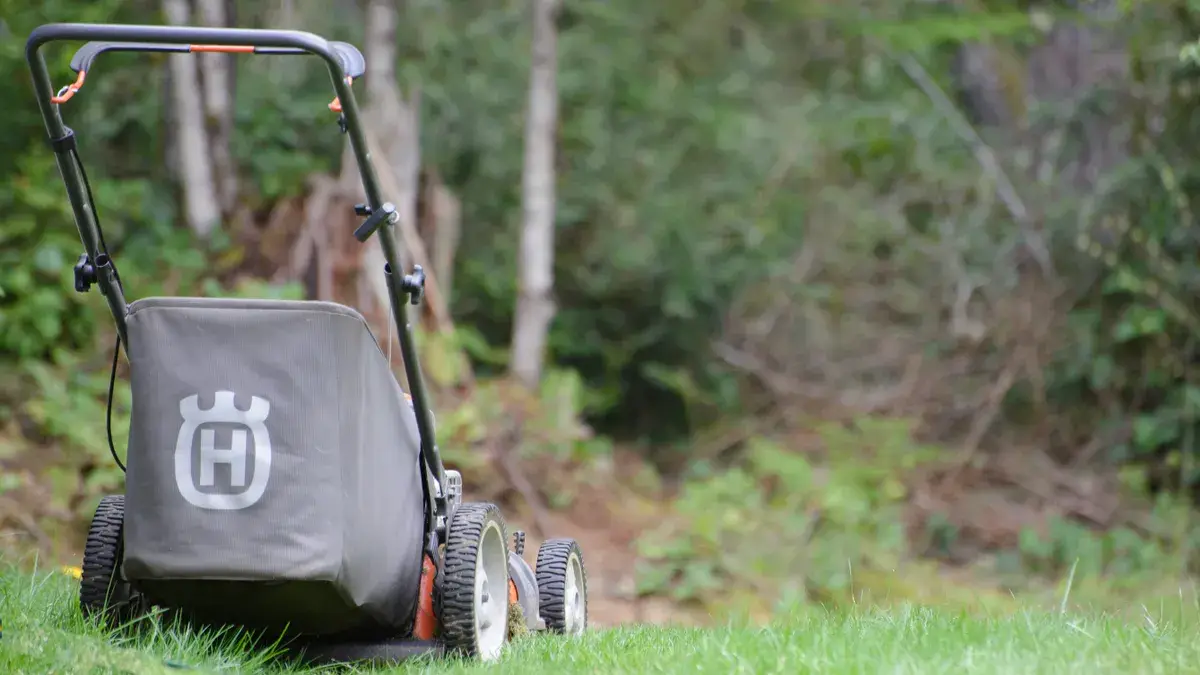
Bagging helps most when the lawn is wet, tall, or already leaving visible clumps. Mulching helps most when the grass is dry and cut often enough that the clippings stay small.
Picture this: you’re deciding whether to keep the side discharge open, attach the catcher, or switch to mulching. That choice changes the cleanup more than almost anything else, because mower airflow and clipping size drive the whole mess.
Bagging is the better choice when:
- The grass is wet
- The lawn is overgrown
- You see windrows after each pass
- The grass is thick enough that clippings stay on top
- You need a cleaner finish for a visible front yard
Mulching is the better choice when:
- The grass is dry
- You mow often enough to keep cut length modest
- The deck is clean and airflow is strong
- You want fewer clippings to collect afterward
Here’s the catch: mulching does not magically erase clippings. It only works when the mower can keep the pieces moving inside the deck and cut them down again. If the lawn is wet, a mulching mower may simply smear the clippings into a layer that lies flat on the turf.
A good rule is simple. If the clippings are short and scattered, mulch them. If they are long, damp, or piling up in rows, bag them. A grass catcher is slower because you must empty it, but it gives you the cleanest result when the lawn is at risk of matting.
Why wet grass clippings build up so fast
Wet grass clippings build up because moisture makes them cling to one another and stick to the mower deck, which reduces airflow and sends out clumps instead of a fine spread. That is why a lawn can look fine at the start and messy after only a few passes.
Picture this: you mow after rain or heavy dew, and the deck starts leaving blobs at the discharge side. That’s the point where the lawn is telling you to stop fighting it. Wet clipping buildup is one of the easiest problems to prevent and one of the hardest to fix after the fact.
What to do instead:
- Wait until the grass surface is dry to the touch
- Empty the catcher often if you’re bagging
- Clean packed grass off the mower deck before it cakes on
- Take smaller passes if the grass has grown fast
- Skip mulching if the clippings are visibly clumping
A thick layer of wet clippings can flatten turf beneath it and leave a sour-looking patch for days. On a warm day, those piles can also slow drying even more. That’s why a lawn rake matters here: it spreads the pile out so air can get through.
The truth is, a dry mow is not just easier. It changes the physics of the cut. Dry clippings fall apart. Wet ones bind together. If you only remember one thing, remember that.
How to clean up clumps without tearing up the lawn
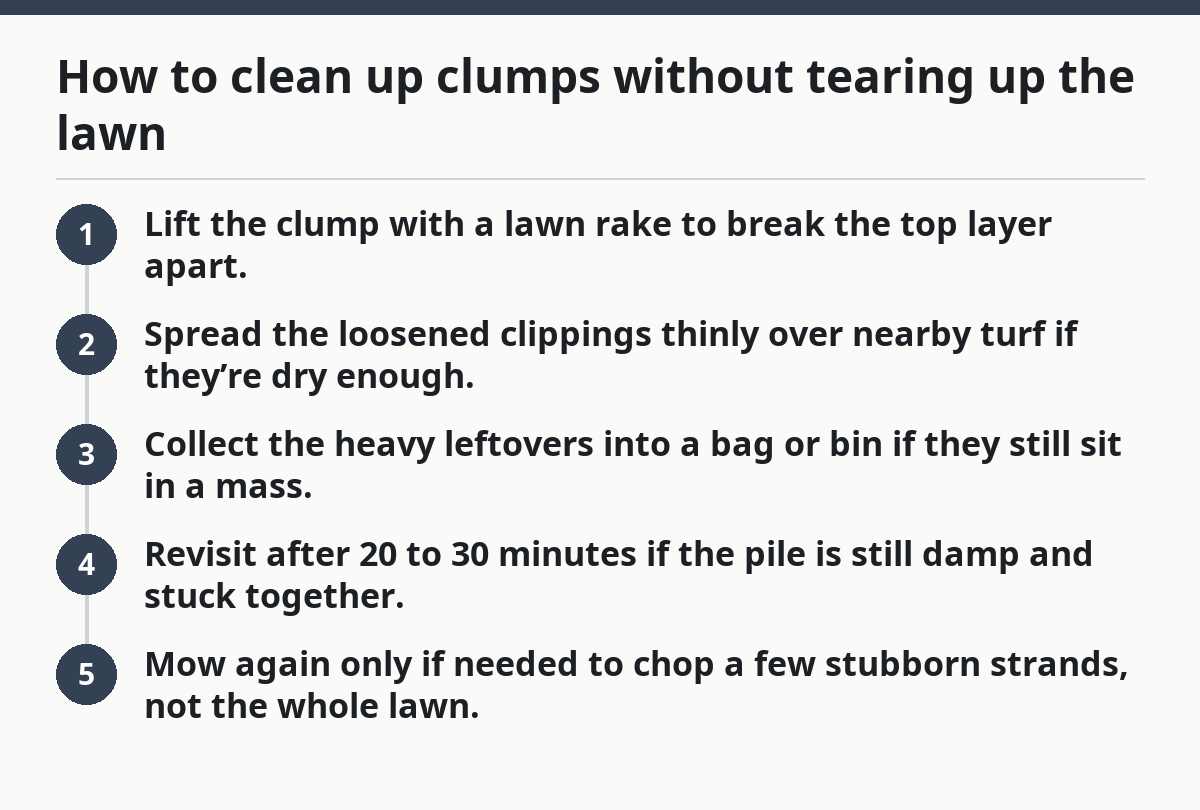
You clean up clumps without tearing up the lawn by waiting a short time, loosening the pile with a lawn rake, and removing the heaviest spots before they harden. The goal is to break the mat, not scour the turf.
Picture this: you’ve already mowed and the clippings are sitting in dense patches. If you drag a heavy rake across the whole yard, you can pull up good grass with the bad. That’s why a lighter touch and the worst areas first are the safer approach.
Use this order:
- Lift the clump with a lawn rake to break the top layer apart.
- Spread the loosened clippings thinly over nearby turf if they’re dry enough.
- Collect the heavy leftovers into a bag or bin if they still sit in a mass.
- Revisit after 20 to 30 minutes if the pile is still damp and stuck together.
- Mow again only if needed to chop a few stubborn strands, not the whole lawn.
A light rake is better than a hard pull. If the clippings are still damp, they may slide apart better after a short wait. If they’re already packed down, don’t leave them there hoping they’ll vanish. They won’t.
This is also where a grass catcher earns its keep. If you can remove the clumps before they dry into a crust, you avoid the patchy look that comes from smothered grass underneath. That said, a catcher is not a cure for bad mowing conditions; if the lawn is persistently wet or overloaded, consider adjusting the mowing plan or consulting a lawn care professional. The Clemson Cooperative Extension also recommends mowing only when conditions are suitable and removing excess clippings when they smother turf.
What the mower deck has to do with matting
The mower deck has a lot to do with matting because airflow inside the deck moves clippings out and down; when that airflow is blocked, the grass gets dumped in clumps instead of dispersed. A dirty deck can turn a decent cut into a messy one.
Picture this: you’re mowing, and the discharge starts acting weak even though the blades are spinning. The deck may be coated with damp grass, which reduces lift and makes the mower carry more weight than it should.
Keep an eye on these signs:
- Grass starts sticking under the deck
- The mower leaves heavy lines behind
- Clippings gather in the same spot every pass
- The cut looks uneven even on short grass
A clean deck helps both bagging and mulching. With a mulching mower, it matters even more, because the deck has to keep the clipping pieces moving long enough to cut them smaller. If the deck is loaded with wet buildup, it can’t do that job.
I’d put it plainly: if the mower is smearing rather than cutting and moving clippings, the deck needs attention before the next mow. A dirty deck doesn’t just look bad. It changes how the machine handles the grass in front of it.
When a lawn rake is the right tool
A lawn rake is the right tool when the clippings are already on the turf and need to be loosened, spread, or removed in a hurry. It is the simplest fix for localized matting after a mow.
Picture this: your lawn has a few bad spots near turns, under a tree, or where the mower slowed down. You do not need to rake the whole yard. You only need to deal with the places where the grass is buried.
Use a lawn rake when:
- Clippings are piled in small rows
- The grass underneath is flattened
- Bagging is no longer an option because the mow is done
- You need a quick cleanup before the pile dries hard
Do not use a heavy hand. A rake that digs into the soil will do more harm than the clippings. Light strokes are enough to break the mat. If the clippings are still thick after that, bag the material or remove it from the lawn entirely.
Raking is fast because it focuses on the trouble spots. You don’t have to rework the whole yard. You just fix the spots that will bother you tomorrow.
How to keep clippings from matting next time
You keep clippings from matting next time by mowing before the grass gets too long, choosing the right discharge method for the conditions, and not cutting wet grass when you can avoid it. Those three choices prevent most of the cleanup.
Picture this: you’re planning the next mow, and the last one left a mess. This is where the problem gets easier. The habits that prevent matting are simple, but they work only if you use them before the clippings hit the lawn.
Use this checklist before mowing:
- Wait for a dry lawn surface
- Empty or remove packed grass from the catcher
- Keep the mower deck clear
- Use bagging on dense or damp growth
- Switch to mulching only when the lawn is dry and light
- Rake the worst patches before they settle
This topic fits into the wider lawn mowing guide, but the fix here is specific: don’t let clippings sit as a single thick blanket. Thin layers disappear. Heavy layers smother. That’s the whole game.
The honest limit is simple. If the lawn is soaked, overgrown, and thick with growth, no setup makes clippings vanish cleanly. In that case, bagging and cleanup are the sane choice. Skip the perfect finish and aim for no matting.
Why do clippings clump on the lawn?
Clippings clump on the lawn because they are too wet, too long, or too heavy for the mower to spread evenly. A weak airflow path inside the deck can make the problem worse, especially when grass buildup is already stuck under the mower. If the lawn is dense, the clippings land in bunches instead of falling apart.
Should I rake clippings after mowing?
Yes, you should rake clippings after mowing when they are sitting in visible piles or flattening the grass underneath. A lawn rake breaks up the mat and lets the turf breathe again. If the clippings are light and scattered, you usually do not need to rake them at all.
Can grass clippings damage the lawn?
Yes, grass clippings can damage the lawn when they form a thick mat that blocks light and air. Small amounts usually settle into the turf and break down fast, but heavy piles can smother grass underneath. Wet clumps are the biggest problem because they lie flat and stay there longer.
How do I mow wet grass without clumps?
The best answer is to wait until the grass dries, because wet mowing is the main reason clumps form. If you have to mow, take smaller passes, slow down, and use a grass catcher instead of mulching. Even then, expect more cleanup than normal and avoid letting the clippings sit in piles.
Drafted with AI; not yet reviewed by a person.





Leave a Reply