Last updated: November 19, 2026
Quick Answer: In most lawns, improve clay soil with 1/4 inch to 1/2 inch of finished compost, repeated over seasons, while also fixing runoff and compaction. The goal is not to turn clay into sand; it is to help water soak in, give roots room to grow, and stop the lawn from staying wet and sealed at the top.
Clay soil in a lawn improves when you fix drainage, keep water moving off the surface, and add organic matter in the right way. If you are asking how to improve clay soil in a lawn, the answer is usually a combination of surface topdressing, runoff control, and patience.
What clay soil in a lawn needs first
Clay soil in a lawn needs better drainage before it needs more fertilizer, more seed, or a thicker topdressing layer. If water sits on the surface after rain or irrigation, roots stay shallow and the grass struggles even when the blades look green for a while.
Clay particles are tiny and pack tightly. That tight structure slows water movement and makes the surface crust over after rain or watering. A lawn on clay often shows puddling in low spots, spongy footing after wet weather, and grass that roots shallowly because the lower soil stays airless for too long.
The fix starts with a clear order of work:
- Watch the lawn after a heavy watering or rain. The surface should darken and absorb water rather than hold visible puddles for hours. If you see standing water in the same spots each time, those areas may need runoff control or regrading, not just amendment; a local drainage professional can help assess that.
- Check whether the problem is drainage or compaction. Clay can drain slowly even when it is not compacted. If the issue is slow seepage and surface sealing, the answer is usually organic matter, topdressing, and water management. If the soil is hard underfoot, that is a different job.
- Add organic matter to the surface in thin layers. Compost is the main tool here. A light application helps soil structure over time and gives roots a better path downward.
- Keep traffic off the wet lawn. A muddy clay lawn seals faster when it is walked on or mowed too soon after rain.
- Repeat the process across seasons. Clay improvement is gradual, not a one-week fix.
A generic article often misses the order. It jumps straight to “aerate and overseed,” then leaves the reader with the same wet spots next spring. The better approach is to solve the water movement problem first, then help the roots.
How to improve clay soil in a lawn: the step-by-step method
Clay soil in a lawn improves best when you work from the surface down and give the soil time between treatments. The method below focuses on poor drainage, surface sealing, topdressing, organic amendments, and runoff control.
-
Mark the wettest areas after rain.
Walk the lawn 12 to 24 hours after a soaking rain and note where water lingers, where the surface shines or crusts, and where grass thins out first. Those spots may be the ones to treat first, but a drainage professional can help confirm whether they need runoff control, grading, or soil amendment. A simple flag or paint marker helps you keep the same locations in view for the season. -
Mow high and stop scalping.
Set the mower to the upper end of the grass’s normal range, often around 3 to 4 inches for many lawn grasses. Taller grass shades the soil, slows surface sealing, and protects roots from heat stress while you work on the soil below. -
Topdress with compost in a thin layer.
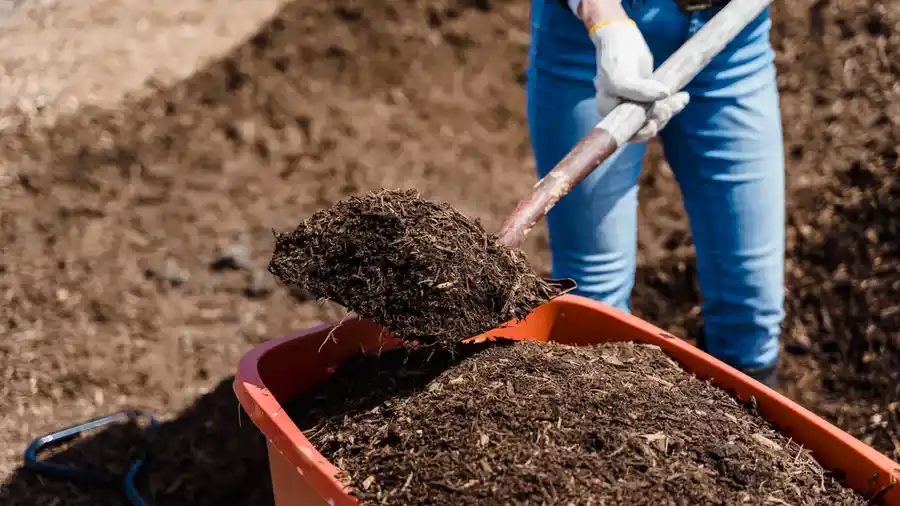
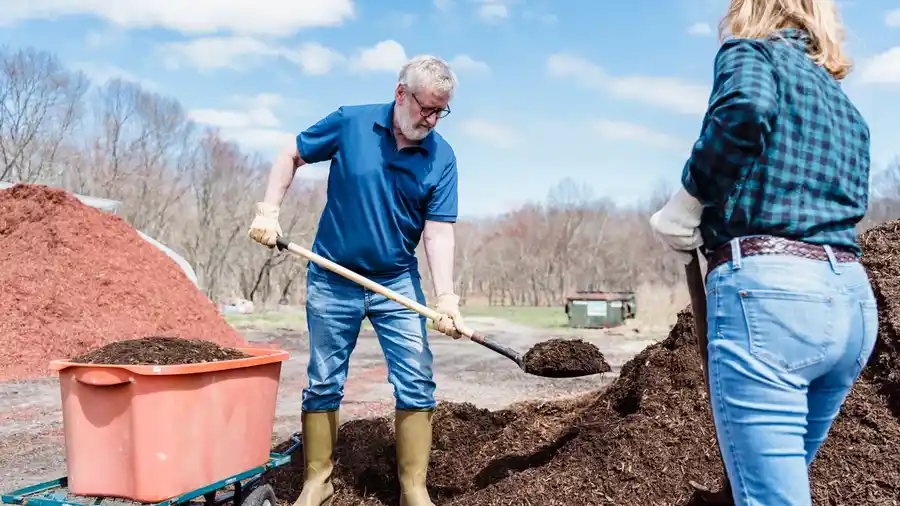
Spread mature compost evenly at about 1/4 inch to 1/2 inch deep. The lawn should still show through after raking or dragging the material in. If the compost sits in a thick mat, it can smother grass and block air movement instead of helping it. -
Brush the compost down into the turf canopy.
Use a rake, drag mat, or level lawn broom to move compost into the leaves and surface gaps. The goal is contact with the soil, not a blanket on top. When this works, the grass blades stand up through the layer and the soil surface looks less shiny and crusted. -
Repeat thin topdressings instead of one heavy dump.
Apply another light layer in a later season or the next year rather than burying the lawn under a thick application. Clay responds better to repeated small changes than to a single heavy load that can suffocate the turf. -
Keep water from pounding the same spots.
Redirect downspouts, adjust sprinkler heads, and stop watering where the soil already stays wet. Clay that receives runoff from roofs, walks, or driveways often stays wetter than the rest of the lawn no matter how much compost you add. -
Reseed thin areas only after the surface is workable.
If the lawn is thin because roots have struggled in wet clay, overseed after you have improved the surface condition. Seed needs a seedbed, not a slick crust. When this step works, you see more even sprouting and fewer bare patches after the next growth flush.
A common mistake is mixing large amounts of sand into clay in the lawn. That can create a dense, concrete-like layer if the ratio is wrong. Compost is the safer path for most homeowners because it improves structure without creating a hard seam.
Can compost help clay soil?
Compost can help clay soil in a lawn, and it is often the first amendment many homeowners try. It improves aggregation, helps water move through the surface more evenly, and gives roots a looser path than bare clay.
The key is quality and amount. Use finished compost that looks dark, crumbly, and soil-like rather than fresh yard waste, wood chips, or sour material that smells strongly of ammonia or rot. Unfinished material can tie up nitrogen or sit on the surface instead of blending into it.
A 1/4 inch to 1/2 inch topdressing is enough for most lawn work. That layer is thin enough to preserve turf cover and thick enough to matter when repeated. If you spread 2 inches in one pass, the lawn may struggle to breathe and grow through it.
Compost helps most when it is part of a longer routine:
- it is applied in thin layers,
- it is brushed into the canopy,
- and it is paired with careful watering.
That last piece matters. Clay that is kept constantly wet will still drain poorly even if compost is present. Compost improves the soil’s structure over time, but it does not make drainage trenches or slope changes disappear.
This is the point where many readers want a quick fix. Clay soil rarely offers one. If the lawn sits on a flat site with poor runoff, compost will help the rooting zone, but it will not solve standing water by itself. If the water source is a roof downspout or a low spot, the fix has to address that source too.
For deeper reading on turf and soil management as a whole, this topic fits with the wider soil and turf health guide on the site. You can also compare compost choices in the lawn care products guide and read the soil testing guide before you amend.
How do I fix drainage in clay lawn soil?
You fix drainage in clay lawn soil by moving water away from the trouble spots and by opening the surface so water can enter instead of pooling. If the lawn stays wet because water has nowhere to go, soil amendments alone will not solve it.
Start with the obvious water sources. A roof downspout that dumps onto clay can overload one section of lawn in a single storm. A driveway edge that sheds water into a low corner does the same thing. Redirecting those flows often gives faster relief than any soil treatment, but a drainage or grading professional can confirm the best fix for the site.
Then look at slope. Even a slight grade change can help water move off the surface. In a lawn with a shallow low spot, a light topdressing over time can help level minor dips, but a deeper depression may need grading or a drain solution. The symptom to watch is simple: if water collects in the same place after every rain, that spot has a surface drainage problem, not just a soil-texture problem.
Avoid sealing the lawn with thick dressings or heavy machinery when the soil is wet. Clay is most vulnerable when soft. Traffic at that time squeezes out pore space and leaves the surface tighter than before.
If you need to improve water entry, pair compost with shallow surface openings created at the right season. The goal is to help rain soak in before it runs off. Once the soil accepts water more readily, roots can grow deeper and the lawn becomes less dependent on constant surface moisture.
Who this is not for: if the lawn sits in a place that regularly floods, or if water stays on the surface for long periods after every storm, a simple compost program will not be enough. In that case, drainage work or grading is the real fix, and soil improvement is only one part of it.
Common mistakes that make clay lawns worse
Clay lawns get worse when the cure is too heavy, too fast, or aimed at the wrong problem. The biggest mistake is trying to “fix” clay with a thick layer of the wrong material. That can bury grass, block air movement, and leave the root zone just as tight as before.
Another mistake is working the lawn when it is wet. Wet clay smears and seals. Footprints and mower tracks can stay in the soil long after the water is gone, and those compressed areas become even more waterlogged in the next storm.
Here are the mistakes I would avoid:
-
Applying a thick blanket of compost at once.
Cost: grass can suffocate, and the lawn may look buried rather than improved.
Do this instead: use 1/4 inch to 1/2 inch layers and repeat later. -
Adding sand without a plan.
Cost: the mixture can set up like a dense, gritty layer if the soil ratio is wrong.
Do this instead: rely on compost and runoff control first. -
Letting sprinklers run on already wet clay.
Cost: surface sealing gets worse and roots stay shallow.
Do this instead: water only when the top layer starts to dry and the turf shows real need. -
Ignoring downspouts and low spots.
Cost: the same puddles return no matter how much organic matter you add.
Do this instead: route water away from the lawn where possible. -
Expecting one season to change the soil.
Cost: frustration and repeated overcorrection.
Do this instead: treat clay improvement as a 12-month process, and consult a professional if the site keeps flooding.
The honest drawback is time. Clay soil can improve, but it does not turn into loam overnight. If a reader needs a lawn usable next weekend, the answer is usually temporary drainage control, not full soil transformation.
What to do after the soil starts improving
Clay soil in a lawn keeps improving when you protect the gains with smarter watering, lighter traffic, and repeat topdressing. Once the surface stops crusting as fast and water begins to enter more evenly, the lawn will usually need less intervention to stay healthy.
Keep mowing high through the season. Taller grass reduces soil temperature swings and helps roots feed from a more stable surface layer. Avoid mowing when the lawn is soggy, because clay marks and compacts easily under equipment.
Water deeply but less often. A shallow daily sprinkle encourages shallow roots and keeps the top layer soft. A longer soak, followed by a dry-down period, encourages roots to go deeper into the improved soil. The exact schedule depends on weather and grass type, but the principle stays the same: do not keep clay constantly wet.
Topdress again in a future season if the lawn still shows bare spots, poor infiltration, or that shiny crust after rain. A thin repeated layer of compost is more useful than a single heavy amendment. The lawn should gradually become easier to walk on after wet weather, with fewer puddles and stronger root hold.
If you still see standing water after these changes, the lawn may need a drainage feature, not just soil improvement. At that point, the soil itself is only part of the story.
Key takeaways
- Clay soil improves best when water is managed first and amendments come second.
- Thin compost topdressing is safer and more useful than a thick blanket.
- Standing water, runoff from hard surfaces, and wet-soil traffic keep clay lawns trapped in a bad cycle.
- The goal is better drainage and deeper rooting, not a complete soil makeover in one season.
- If puddles keep returning in the same place, the lawn may need drainage work beyond soil improvement.
FAQ
Why is clay soil bad for grass?
Clay soil is bad for grass because it holds water tightly and can seal at the surface. That leaves less oxygen around the roots and makes it harder for water to move through the soil profile.
Grass on clay often survives at first, then thins out in wet or hot spells. The main issue is not just the texture itself; it is the way that texture limits drainage and root depth.
Can compost help clay soil?
Yes, compost can help clay soil by improving structure and making the surface easier for water and roots to move through. It works best as a thin topdressing, not as a buried layer.
The best results come from repeated light applications over time. Finished compost is the safest choice for most lawns because it is less likely to smother turf or create a dense layer.
How do I fix drainage in clay lawn soil?
Fix drainage in clay lawn soil by redirecting runoff, leveling obvious low spots, and improving the surface so water can soak in. Downspouts, driveway flow, and flat areas often cause the worst puddling.
Organic matter helps the soil accept water better, but it will not solve a site that repeatedly floods. If the same area stays wet after most storms, drainage work is usually needed in addition to soil improvement.
Should I aerate before topdressing clay soil?
Yes, if the lawn is compacted, aerating before topdressing can help the compost reach the soil surface more effectively. It is usually best done when the lawn is actively growing and not saturated.
How long does clay soil improvement take?
Expect gradual change over multiple seasons, not a one-time fix. Clay improvement is a process, and results depend on drainage, traffic, weather, and how consistently you apply thin amendments.
Drafted with AI; not yet reviewed by a person.





Leave a Reply