
Last updated: November 19, 2026
Key Takeaways
- Mow short, clear debris, and help the lawn dry before cold, wet weather sets in.
- In that order, clippings stay exposed and wet grass is less likely to stay packed down.
- The lawn should head into winter open enough for air and light.
- Water before frost only if the soil is dry and freezing weather will not stop soak-in.
– [What lawn winterization should do before the first frost](#what-lawn-winterization-should-do-before-the-first-frost)
– [How do I winterize a lawn before frost?](#how-do-i-winterize-a-lawn-before-frost)
– [What should I mow to before frost?](#what-should-i-mow-to-before-frost)
– [How do I handle leaves and late-season cleanup?](#how-do-i-handle-leaves-and-late-season-cleanup)
– [Should I water the lawn before frost?](#should-i-water-the-lawn-before-frost)
– [What should be on a winter prep checklist for the lawn?](#what-should-be-on-a-winter-prep-checklist-for-the-lawn)
– [What mistakes cause the most winter lawn damage?](#what-mistakes-cause-the-most-winter-lawn-damage)
– [Why timing before the first frost matters](#why-timing-before-the-first-frost-matters)
– [When should i winterize my lawn?](#when-should-i-winterize-my-lawn)
– [What should i do before the first frost?](#what-should-i-do-before-the-first-frost)
– [Do i need to rake leaves before winter?](#do-i-need-to-rake-leaves-before-winter)
Winterize the lawn before frost by giving grass one last clean mow, removing leaves and debris, watering deeply if the soil is dry, and stopping routine feedings at the right time for your grass type. That last pass matters because frost locks in whatever is left on the lawn: tall grass, wet leaves, and shallow roots all go into winter in worse shape.
What lawn winterization should do before the first frost
How to winterize a lawn before frost starts with a simple goal: leave grass short, clean, and able to dry fast after cold, wet weather. The goal is not to make the lawn look perfect for winter photos; it is to reduce smothering, disease pressure, and broken blades once freezing nights start.
For a typical home lawn, the last pre-winter tasks are simple: mow, rake, remove debris, water if needed, and finish any final cleanup before the first hard frost. A frost warning is not the same as frozen ground, but it is the signal to stop waiting. If your area gets an early frost, the order of work matters more than the calendar.
The phrase “winterize a lawn” often gets used too loosely. It does not mean storing tools, stripping the yard bare, or doing heavy repair after the weather turns. This page is about the last outdoor chores that make sense before frost, not lawn care once winter is already here. The seasonal lawn maintenance hub can handle the broader year-round plan, and the fall lawn care guide can help with the season’s earlier steps.
One honest limitation: a lawn with severe compaction, bare spots, or a fungus problem may need a different fall plan than a healthy turf stand. Winter prep helps most when the lawn is already in decent shape. It is not a rescue job for damage that has built up all season.
How do I winterize a lawn before frost?
You winterize a lawn before frost by finishing the clean-up in a fixed order: mow first, then remove leaves and debris, then water only if the soil is dry, and then stop. Doing it in that sequence keeps clippings from hiding under leaves and keeps wet grass from staying packed down.
-
Check the forecast and count back 24 to 48 hours.
Start when the forecast shows the first frost risk within the next day or two, not after the lawn has already taken a hard freeze. That gives you enough daylight to finish mowing and raking while the grass is still flexible. -
Set the mower for the final cut.
Leave cool-season grass around 2.5 to 3.5 inches for the last mow, and avoid scalping it short. A slightly taller cut protects crowns without matting down under snow. For warm-season lawns, the final height is usually lower than summer height, but not shaved to the soil. -
Mow when the grass is dry.
A dry lawn cuts cleaner and leaves fewer clumps. If the mower leaves windrows or wet clumps, bag or rake them off instead of letting them sit on the turf. The result should be a uniform surface with no piles hiding the blades. -
Rake out leaves, sticks, and other debris.
Use a rake, leaf blower, or mower bagger to clear the lawn so grass is visible from edge to edge. Leaves left in a thick layer trap moisture and can smother grass for days at a time. You should be able to see open turf, not a brown blanket. -
Water only if the soil is dry.
If the ground is still dry several inches down, give the lawn a deep watering before frost. If it is already wet, skip this step. The goal is moisture in the root zone, not a puddled surface that stays slick after the cold hits. -
Finish with a final walk-through.
Look for low spots where leaves collect, compacted edges near driveways, and areas where grass was left too long. Clear those spots now. When the job is done, the lawn should look even, open, and ready for a few cold nights.
This is the core winterization sequence. Anything outside it, like tool storage or mower servicing, belongs on a different page and should not delay the yard work itself.
What should I mow to before frost?
You should mow to a modest final height before frost, usually around 2.5 to 3.5 inches for cool-season grass, so the lawn is short enough to avoid matting but not so short that crowns are exposed. That range is usually the safest general target for a home lawn heading into cold weather.
The right final height depends on the type of grass, but the basic trade-off is the same. Too tall and the lawn traps moisture, bends under leaves, and invites snow mold. Too short and the grass loses insulation and can dry out or suffer winter injury. A middle height gives the blades enough surface to keep feeding the plant while still letting light and air move across the turf.
If your lawn is already long, do not cut it down in one aggressive pass the day before frost. That shocks the grass and can leave ragged tips. Instead, trim it down to a workable height and stop there. On a very overgrown lawn, two mows a few days apart are kinder than one severe cut.
For homeowners who like simple rules, this is the one to remember: the final mow should leave the lawn neat, not buzzed. The blades should still be visible, and the crown should not be laid bare. If the mower is leaving scalp marks, the setting is too low. If the grass is flopping over after you finish, it is too high.
This is one area where “shorter is better” is bad advice. A lawn that is cut too close before winter often looks tidy for a week and then pays for it after the first stretch of freezing weather. The safer choice is the middle ground, even if it feels less dramatic. The mowing guide explains seasonal cutting height in more detail.
How do I handle leaves and late-season cleanup?
You handle leaves and late-season cleanup by removing them before they form a wet mat, because a few dry leaves are a nuisance but a thick leaf layer can smother grass through repeated cold nights. The lawn should go into winter open and breathable.
Rake when the leaves are dry if possible. Dry leaves move easier, weigh less, and do less damage while you work. Wet leaves cling together and drag across the turf, which takes longer and can flatten grass you already want standing upright. If you use a bagging mower or leaf blower, keep the passes light so you do not strip the lawn bare of every bit of organic material.
Pay special attention to places where leaves collect naturally: along fences, under shrubs, beside the house, and in low corners of the yard. Those are the spots where winter rot starts first. A lawn that looks mostly clear from the driveway can still have hidden piles in the back edge or along a garden bed.
Do not leave thick piles for “natural mulch” on the lawn. That idea works for some beds, not for turf grass. Leaves that stay on top of the lawn keep moisture against the blades, block air movement, and create a flat, matted layer once frost and thaw start trading places. If you want to reuse leaves, move them off the grass and into the right place, such as a compost area or a separate bed.
A clean lawn heading into frost is not sterile. Small, scattered bits of leaf are fine. What matters is whether light can still reach the grass and whether air can move across the blades. If you can still see patches of turf clearly after cleanup, you are in good shape.
Should I water the lawn before frost?
You should water the lawn before frost only if the soil is dry and the weather will let the water soak in before freezing. A dry root zone going into winter can leave grass more stressed than one that is evenly moist below the surface.
The best time for this step is before the ground turns hard and before the first frost locks the top layer. A slow, deep watering is better than a quick sprinkle. The water needs to reach the roots, not just darken the top inch of soil for an hour. If the lawn is already damp from rain or irrigation, skip the extra watering entirely.
This is the step many people overdo. More water is not better in cold weather. Saturated soil can stay cold longer, and soggy turf is more likely to get matted down by foot traffic or stuck with leaf debris. If the yard feels squishy underfoot, it does not need more water.
A practical test is simple: if the soil is dry several inches down, water; if it is already moist, stop. In a typical fall pattern, a single deep watering before frost is enough. There is no prize for repeated watering once the nights are already cold. See the watering guide for timing basics.
The useful idea here is balance, not a fixed recipe. A lawn that is already healthy and sitting on normal autumn moisture may need no extra water at all. A lawn that has had a dry spell before the first frost may benefit from one good soak. The weather and the soil decide, not the calendar. The University of Minnesota Extension advises watering only when the lawn needs it.
What should be on a winter prep checklist for the lawn?
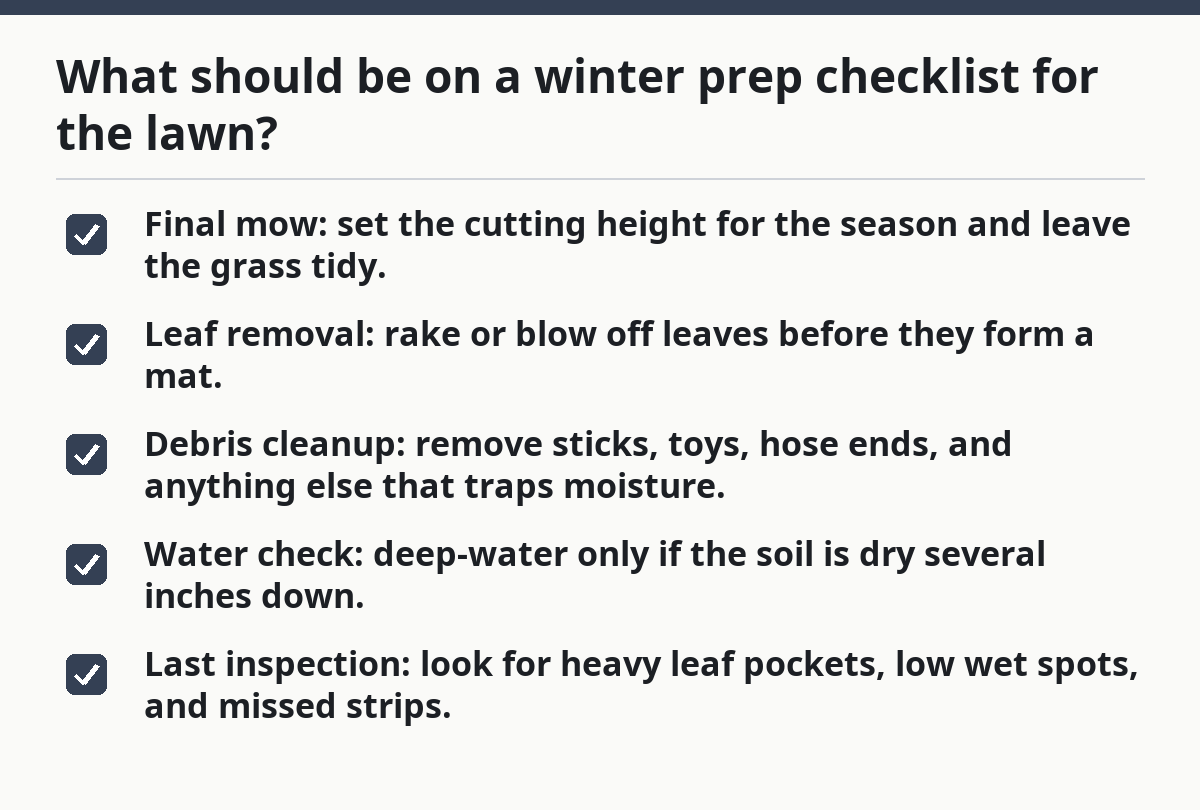
Your winter prep checklist for the lawn should be short: mow, rake, clear debris, water only if needed, and make sure the turf is not smothered when frost arrives. That checklist covers the last jobs that matter most before cold weather settles in.
- Final mow: set the cutting height for the season and leave the grass tidy.
- Leaf removal: rake or blow off leaves before they form a mat.
- Debris cleanup: remove sticks, toys, hose ends, and anything else that traps moisture.
- Water check: deep-water only if the soil is dry several inches down.
- Last inspection: look for heavy leaf pockets, low wet spots, and missed strips.
You do not need a long equipment project on this page. Keep the garden hose usable, store the rake where you can reach it, and leave mower maintenance for a separate article. The goal is to finish the yard, not start a new household project while the temperature is dropping. The lawn care hub can point you to that broader maintenance work.
A helpful way to think about the checklist is “open the lawn before winter closes it.” Each task clears a different kind of blockage. Mowing reduces packing, raking removes smothering layers, and the water check can help prevent drought stress from carrying into spring. If all three are done, the lawn usually enters winter in good shape for a normal home lawn.
One honest trade-off: the cleaner you make the lawn, the more time you spend doing it. A lightly leafed yard can be finished quickly; a yard with heavy tree drop may need a second pass in 2 to 3 days. That extra pass is worth it if new leaves keep falling after the first cleanup.
What mistakes cause the most winter lawn damage?
The most common winter lawn mistake is waiting until after frost to do work that should have been finished while the grass was still active. Once frost is on the lawn, blades are more brittle, and heavy cleanup can do more harm than good.
Leaving leaves in place is the next big mistake. A thin scattering is manageable; a thick layer is not. Leaves lock in moisture, shade the grass, and can create a matted patch that shows up as dead or thin turf in spring. The cost is usually not immediate drama but a weak-looking lawn when warm weather returns.
Cutting too short is another problem. A low scalp can expose crowns and make the lawn less able to handle cold snaps. The result may not appear the same day, but it often shows up as thinning, winter burn, or a slow spring recovery. That is why the final mow should stay in a moderate range instead of chasing a golf-course finish.
Overwatering is the mistake that sounds careful but backfires. If the ground is already wet, extra water just makes the surface soggy and the cleanup messier. The better move is to check the soil, then decide. If it is damp enough, stop there and let the lawn go into winter without the extra moisture. The USDA Natural Resources Conservation Service offers general soil and water guidance.
Why timing before the first frost matters
Timing before the first frost matters because the lawn changes fast once cold nights begin, and the same work becomes harder or less useful after that point. A 24- to 48-hour head start can be the difference between clean grass and a flattened, wet surface.
The frost deadline is not just about temperature. It is about the lawn’s condition. Grass that is dry, upright, and recently cut can handle late fall better than grass buried under leaves or left long and tangled. That is why the right order is more important than trying to do everything “sometime in November.”
In practical terms, the first frost warning should push the final cleanup to the front of the line. If the lawn still needs mowing, do that first. If it still has a full layer of leaves, clear those next. If the soil is dry, water once and stop. After that, the yard is ready to sit through the cold.
This approach will not solve every lawn problem, and it is not meant for lawns that need renovation, overseeding, or major repair. It is the last pre-winter pass, not a cure-all. But for a normal home lawn, getting these steps done before frost is the simplest way to avoid preventable winter damage.
When should i winterize my lawn?
Winterize the lawn in the days just before your first expected frost, not after the frost has already settled in. A 24- to 48-hour window is often enough for mowing, raking, and one last cleanup pass.
The exact date depends on your local weather and grass type. The useful sign is the forecast, not the month on the calendar. If you wait until the lawn is already frosty in the morning, you are late for the clean-up tasks that matter most.
What should i do before the first frost?
Before the first frost, mow the lawn to its final seasonal height, rake off leaves, clear sticks and other debris, and water only if the soil is dry. Those are the jobs that make the biggest difference in how the grass enters winter.
Finish the work while the lawn is still workable. If the grass is already cold, stiff, or covered in wet leaves, start with the simplest cleanup and avoid heavy foot traffic on saturated areas.
Do i need to rake leaves before winter?
You should rake leaves before winter if they cover the grass in a thick layer or keep the lawn damp for long stretches. A few scattered leaves are not a problem, but a mat of leaves can smother turf and leave weak patches in spring.
If the leaf layer is light, a mower pass with a bagger can be enough. If it is heavy, rake or blow it off so the grass can stay open to air and light.
Drafted with AI; not yet reviewed by a person.





Leave a Reply