
Last updated: November 19, 2026
Quick answer: How to seed a lawn from scratch is a 7-step job—prepare bare soil, choose the right seed, spread it evenly, cover it lightly, water it often, and stay off it until it fills in. How to seed a lawn from scratch is easier to get right when you treat the first 2 to 3 weeks as the critical window. The job is simple in order, not in effort: bad prep or uneven watering ruins more new lawns than the seed itself.
Key takeaways
- Good lawn seeding starts with bare, loose soil, not seed thrown on a hard surface.
- Pick grass seed for sun, shade, and your local climate, or the lawn may thin out later.
- Light coverage matters more than heavy coverage; seed needs soil contact, not a deep burial.
- Watering is the make-or-break step after sowing, especially in the first 2 to 3 weeks.
- If the ground slopes badly, stays wet, or has poor soil, the job can get harder and cost more than a simple seed-and-water project.
How do I seed a lawn from scratch?
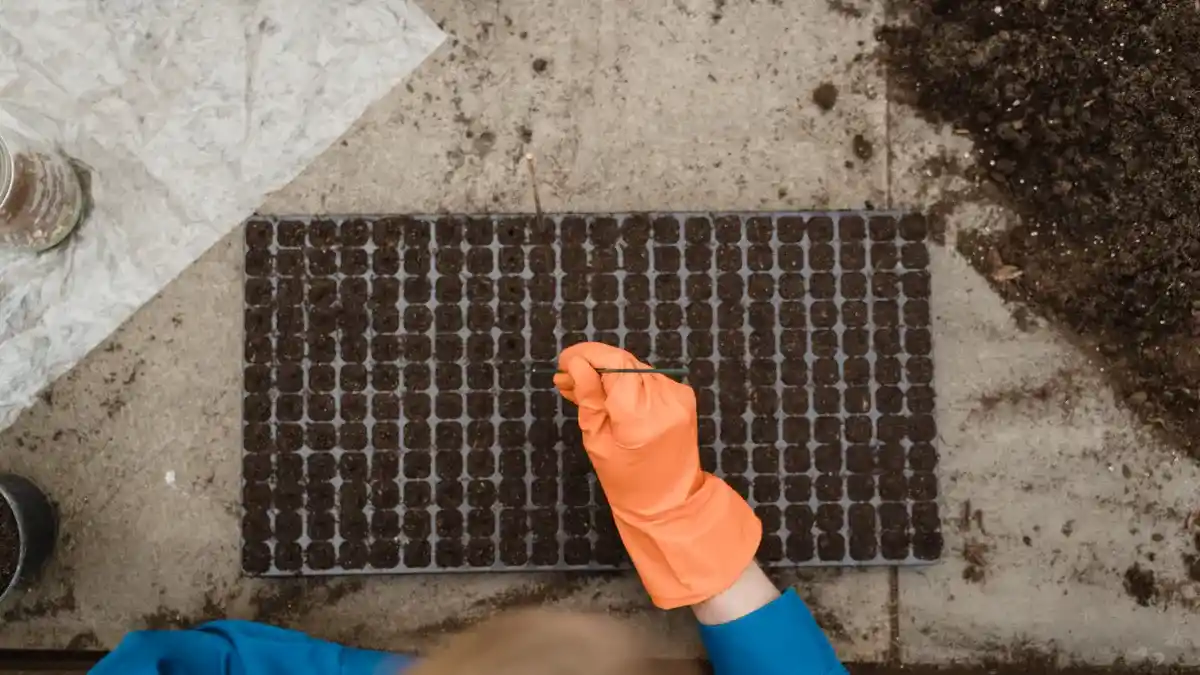
Seed a lawn from scratch by preparing the soil, sowing the right grass seed evenly, covering it lightly, and watering often enough to keep the surface damp. That is the whole job in one sentence, and each part matters because new grass seed only germinates well when it has contact with moist soil and steady moisture afterward.
-
Rake the soil to clear rocks, sticks, dead roots, and clumps, then loosen the top layer so seed can sit on soil instead of debris. A soil rake or landscape rake is the right tool here, and the goal is a smooth, crumbly seedbed, not a packed yard.
-
Test the grade with a straight board or a visual check across the yard, then fill low spots before seeding. Water should not pool, and seed should not wash into dips after the first rain.
-
Spread starter fertilizer only if the soil is ready and you want the young grass to have early nutrients. Use the product label as the guide, because too much fertilizer can burn new seed instead of helping it.
-
Select grass seed for the site conditions before you buy or spread anything. Full sun, part shade, and heavy shade all call for different mixes, and a seed blend meant for dry sun usually performs poorly in shade.
-
Load a broadcast spreader and spread the seed in two passes, one direction and then the other, so coverage is even across the yard. This reduces bare stripes and piles of seed in one corner.
-
Cover the seed with a light layer of mulch straw or a very thin soil dressing so birds, wind, and runoff do less damage. The seed should still be near the surface; burying it too deep slows or blocks sprouting.
-
Water the lawn so the top layer stays damp, not flooded, until germination starts. A light spray is better than a hard stream, because heavy water can move seed around and expose it.
-
Keep foot traffic off the lawn until the grass has begun to fill in and the roots have taken hold. The first few weeks decide whether the lawn thickens or ends up patchy.
What soil prep does new seed need?
New seed needs loose, clean soil with good seed-to-soil contact, and that usually means more prep than people expect. If the surface is compacted or covered with debris, the seed dries out before it can sprout. A soil rake, a level surface, and a clean seedbed do more for success than buying a fancier seed mix.
For a bare yard, the prep stage is where mistakes get expensive. Skipping it can mean reseeding later, and that usually costs more in seed, water, and time than doing the bed right the first time. A flat yard also makes mowing easier later, which saves trouble after the grass matures.
If the soil is very poor, hard, or full of fill dirt, expect extra work before seeding. That can mean adding topsoil, loosening the ground deeper, or correcting drainage before the seed goes down. A lawn seed job is cheaper and easier on workable soil than on a yard that sheds water or bakes hard after rain.
Which grass seed should I choose?
Choose grass seed that matches sun, shade, and local climate, because the wrong mix can leave a thin lawn. Seed packets are not equal, and a blend built for full sun will not hold up well under trees or against long dry spells. The site conditions should drive the choice, not the price tag alone.
A shady backyard needs a different seed mix than a flat, open front lawn. A dry, hot site needs tougher grass than a cool, damp lot. If the yard gets a mix of conditions, a blend that tolerates those conditions usually does better than a single-purpose seed.
For example, a lawn in full sun has a different target than one under trees. If you want a quick reference, the site condition should match the label on the seed bag. That is the easiest way to avoid buying the wrong mix.
Here is the simple trade-off:
| Site condition | What to look for | What can go wrong if you miss it |
|---|---|---|
| Full sun | Seed labeled for high sun exposure | Thin grass and dry patches |
| Partial shade | A mix that tolerates less light | Sparse growth under trees or along fences |
| Heavy shade | Shade-tolerant grass seed | Seedlings that struggle and fade out |
| Dry, exposed yard | Grass better suited to dry ground | Slow fill-in and more watering stress |
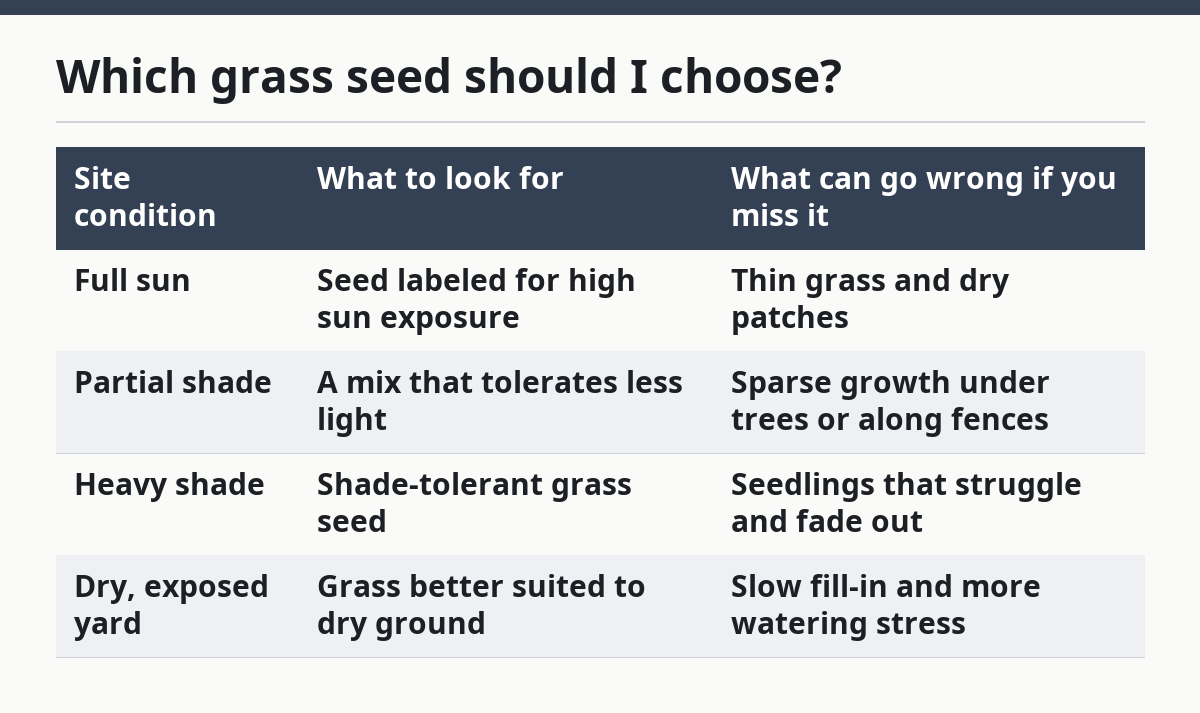
Local conditions matter too. If your area gets long dry periods, frequent rain, or harsh seasonal swings, seed selection has to match that pattern or the lawn can fail after germination. The best seed for the wrong site may still make a poor lawn.
How do I spread seed evenly?
Spread seed evenly with a broadcast spreader and two crossing passes so the lawn does not end up striped or patchy. Uneven coverage is one of the most common mistakes in lawn seeding, and it shows up later as thick spots next to bare ground.
A broadcast spreader is useful because it controls the pattern better than throwing seed by hand. The second pass, made at a right angle to the first, helps cover missed areas and reduces clumps. That matters on a full yard where small misses become obvious once the grass starts to grow.
Do not dump extra seed into bare-looking spots on the first pass. Heavy piles can crowd seedlings, hold too much moisture, and create weak growth. Even coverage gives the lawn a more uniform start and usually needs less cleanup later.
If the seed label gives a spread rate, follow it closely. Seed that is too thin leaves gaps; seed that is too heavy wastes product and makes new plants compete with each other. The aim is an even lawn, not the thickest possible layer of seed on day one.
Do I need mulch straw and starter fertilizer?
Yes, mulch straw and starter fertilizer can both help, but only when used lightly and for the right reason. Starter fertilizer supports early growth, and mulch straw protects seed from drying, birds, and runoff. Neither one fixes poor soil prep, so they work best after the ground is already ready for seed.
Mulch straw should sit as a light cover, not a mat. If it is packed too thick, it can block light and trap seed above the soil instead of helping it settle. The seed still needs contact with the ground, so the straw is a shield, not a blanket.
Starter fertilizer is not the same as a general lawn fertilizer. It is meant for young grass, so the bag and label matter. Using the wrong product or too much of it can hurt seedlings instead of helping them. If the soil already has enough nutrients, a heavy feed can be more harm than help.
This is where a generic lawn article can get it wrong: it treats fertilizer and mulch as optional decorations. For first-time seeding, they are support tools, and they must be used with restraint. If you are unsure about soil nutrients or product rates, consult a local extension office or lawn-care professional before you apply anything. Too much of either one can set the lawn back.
How should I water new grass seed?
Water new grass seed often enough to keep the top layer damp, because drying out is what stops germination and kills young sprouts. The first watering should settle the seed into the soil, and the days after that should keep the surface evenly moist without washing the seed away.
Light, frequent watering is better than a hard soak. A hard stream can move seed out of place and expose it on the surface. The goal is to keep moisture in the top layer where the seed sits, not to flood the yard.
A simple rule is this: if the surface dries completely, the seed is under stress. If water pools, the lawn is getting too much at once. The right amount depends on soil, slope, and weather, which is why new lawns need close attention in the first stage.
This is the step that usually separates a good seeding job from a failed one. The seed may be the right type and the soil may be prepared, but if watering is irregular for the first stretch, the lawn can emerge thin or uneven. The ground does not forgive missed watering in the early days.
For broader lawn establishment timing and climate fit, the lawn establishment guide is the right next stop.
What bad lawn seeding looks like
Bad lawn seeding usually looks like patchy growth, seed sitting on top of the soil, or young grass that sprouts and then dries out. Those signs point to a problem in prep, coverage, or watering, not just weak seed. A lawn that comes in unevenly often needed one more pass with the rake or spreader.
Bare stripes often mean the broadcast spreader was not overlapped enough. Seed piles in one area and thin growth in another usually mean the spread rate was uneven. Seed that disappears into dips or washes downhill means the ground needed more grading before sowing.
Another common failure is watering too hard during the first few days. That can move the seed, expose it, or create crusted soil on top. The fix is not more seed at random; it is better soil contact, lighter coverage, and steadier moisture.
This is also where a seeded lawn can become more expensive than it looked on paper. If the soil is poor, the slope is awkward, or the yard needs drainage correction first, the simple version of the job may not be the right one. A good seeding job starts with honest site conditions, not hope.
How long does lawn seed take to germinate?
Lawn seed usually germinates over a span of days to a few weeks, depending on the grass type and weather. Warm soil and steady moisture speed things up, while cold ground and uneven watering slow the process. If the seedbed dries out, germination can stall before it starts.
Can you seed directly over bare soil?
Yes, you can seed directly over bare soil if the surface is loose, level, and free of debris. Seed on hard, crusted, or compacted ground is much less likely to take because it cannot reach the soil well enough. A quick rake before seeding makes a big difference.
Do you need starter fertilizer when seeding?
Starter fertilizer is often helpful when seeding because young grass needs support at the root stage. It is not a cure for bad soil, and it should be used according to the label. If the soil is already rich or the product is overapplied, the result can be weak or burned seedlings. For product directions and safety, follow the label and the guidance from the USDA and local extension resources.
How often should new grass seed be watered?
New grass seed should be watered often enough to keep the surface damp without puddles. That usually means light watering rather than long soaking, especially early on. If the top layer dries out between waterings, the seed can stop germinating or the new sprouts can die back.
For a general reference on home lawn establishment, see the USDA Natural Resources Conservation Service and your state extension lawn-seeding guide.
Drafted with AI; not yet reviewed by a person.





Leave a Reply