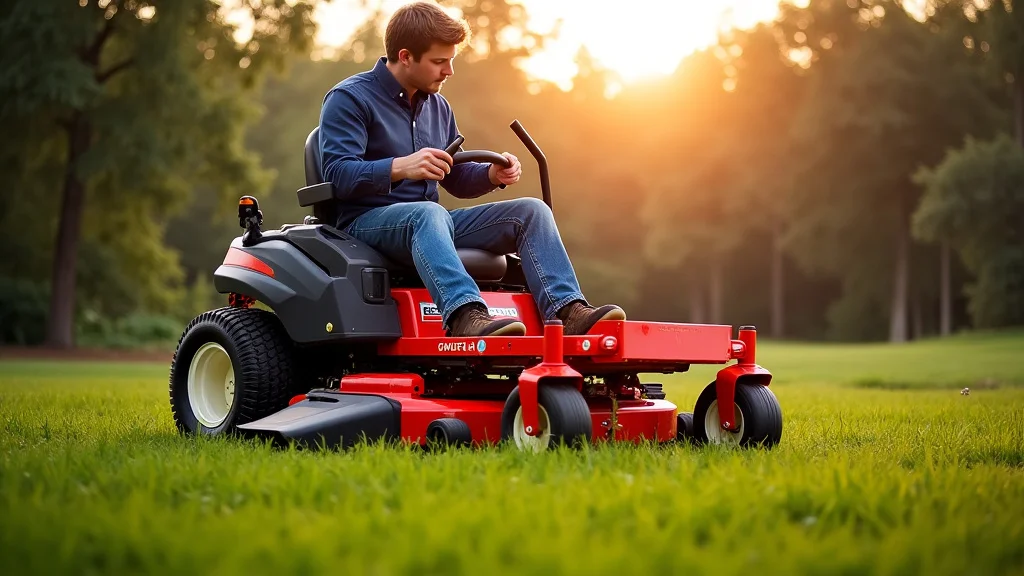
Picture this: It’s Saturday morning, the sun is shining, and your lawn is looking like a jungle. You drag out your old lawnmower, and the chore begins. But what if there was a way to make this process easier, faster, and even more enjoyable? This guide focuses on z turn lawn mowers, exploring how they work and why they might be the perfect solution for your lawn care needs. You will gain a deep insight into the features and benefits of these mowers, their maintenance requirements, and how to choose the right one for your property. This post is designed to equip you with the knowledge to make an informed decision, leading to a more efficient and satisfying lawn mowing experience.
Key Takeaways
- Z turn lawn mowers offer superior maneuverability and efficiency compared to traditional mowers.
- Understanding the key features of these mowers is essential to make the right choice.
- Proper maintenance practices extend the life of your z turn lawn mower and ensure optimal performance.
- Safety precautions are vital when operating these powerful machines.
- You will discover the main advantages and disadvantages of using a zero-turn mower.
- Selecting the appropriate mower size and features depends on your lawn’s specific needs.
Unveiling Z Turn Lawn Mowers: What They Are and How They Work
Z turn lawn mowers are unlike traditional riding mowers, they are characterized by their unique steering mechanism. Instead of a steering wheel, they use two independent levers, one for each rear wheel. This design allows the mower to turn on a dime, making a zero-degree turning radius possible. The wheels can rotate independently and even in opposite directions, enabling incredible maneuverability around obstacles like trees, flowerbeds, and other landscaping features. The innovative design of the z turn lawn mower maximizes cutting efficiency, leading to significant time savings and a more professional-looking result. This section explores how these mowers differ from standard mowers and what makes them unique.
Steering and Maneuverability Explained
The core of a z turn lawn mower is its steering system. Unlike a car that turns the front wheels, these mowers control their direction through two levers. Each lever is connected to a hydrostatic transmission that controls the speed and direction of the corresponding rear wheel. Pushing both levers forward moves the mower forward, pulling them back makes it go backward, and pushing one lever forward while pulling the other back allows for incredibly tight turns. This allows the mower to turn virtually within its own footprint, a feat impossible for standard mowers. This makes it ideal for properties with obstacles, reducing the need for trimming and making the mowing process more efficient.
- Independent Wheel Control: The two levers allow for individual control of each rear wheel. This is key for the mower’s zero-turn capability.
- Hydrostatic Transmission: This is the heart of the system, providing smooth and precise control over the wheels’ speed and direction.
- Zero-Turn Radius: This key feature allows the mower to rotate 360 degrees in place, avoiding the need for wide turns.
- Enhanced Efficiency: The agility of these mowers significantly cuts down on mowing time, especially on lawns with many obstacles.
The Advantages of Zero-Turn Technology
The zero-turn radius isn’t just a cool feature; it brings several practical advantages. It allows you to mow around trees, bushes, and other obstacles without needing to make multiple passes or use a string trimmer. This results in reduced mowing time, as you can efficiently cover the entire lawn in fewer passes. It also reduces the need for manual trimming, saving time and effort. The improved maneuverability makes these mowers ideal for properties with complex landscaping features, irregular shapes, and narrow spaces. They can also offer a more even cut, reducing the chance of scalping the grass and leading to a healthier lawn.
- Time Savings: With the ability to quickly maneuver, mowing time is reduced.
- Reduced Trimming: The precise turns eliminate the need for extensive trimming around obstacles.
- Improved Cut Quality: Less scalping and a more uniform cut promote a healthier lawn.
- Ease of Use: Even though they look complex, many find them easier to operate after a short learning period.
Comparing Z Turn Lawn Mowers to Other Mower Types
Compared to standard riding mowers, z turn lawn mowers offer superior maneuverability. Walk-behind mowers are ideal for small lawns but require more physical effort. The choice depends on the size and complexity of your yard and personal preferences. Tractor-style riding mowers are often more powerful and suitable for large, open areas but lack the agility of zero-turn mowers. The best choice is influenced by the size, layout, and personal preference of the operator, which should guide your decision.
| Feature | Z Turn Lawn Mower | Standard Riding Mower | Walk-Behind Mower |
|---|---|---|---|
| Maneuverability | Excellent (Zero-Turn Radius) | Good (Limited turning radius) | Poor (Manual steering) |
| Speed | High (Often faster mowing speeds) | Moderate | Low |
| Ease of Use | Moderate (Learning curve for levers) | Easy (Steering wheel operation) | Moderate (Physical exertion required) |
| Ideal Lawn Size | 1/2 acre and up | 1/2 acre and up | Small to Medium |
| Price | Generally Higher | Moderate | Generally Lower |
Choosing the Right Z Turn Lawn Mower for Your Lawn
Selecting the right z turn lawn mower involves careful consideration of several factors. The size of your lawn is the primary consideration. Larger lawns will benefit from a mower with a wider cutting deck, which allows you to cover more ground with each pass, and more powerful engines. Smaller lawns may be better suited for a more compact mower. Evaluate the terrain, noting hills, slopes, and any obstacles. Choose a mower with the appropriate horsepower, cutting deck size, and features to handle these unique challenges. This section will walk you through the key aspects to evaluate.
Understanding Engine Power and Deck Size
Engine power, measured in horsepower (HP) or cubic centimeters (cc), influences the mower’s ability to cut thick grass, handle slopes, and maintain consistent cutting speeds. A more powerful engine will be needed for larger lawns or tough mowing conditions. The cutting deck size, measured in inches, determines the width of the area mowed with each pass. Wider decks cut more grass per pass, decreasing mowing time, but they also require more horsepower. The correct combination of engine power and deck size depends on the size of your lawn, the thickness of the grass, and the presence of any hills or slopes. Balance the power and deck size to efficiently achieve optimal results.
- Engine Power (HP/cc): A higher HP/cc provides more power for tough grass and slopes.
- Cutting Deck Size (Inches): Wider decks mean fewer passes, cutting down mowing time.
- Lawn Size: Larger lawns require more power and a wider deck.
- Terrain: Hilly terrain demands more engine power to maintain consistent cutting speeds.
Evaluating Features: Comfort, Durability, and More
Beyond the basics, various features contribute to the overall experience and performance of your z turn lawn mower. Comfortable seats, ergonomic controls, and adjustable armrests can reduce fatigue during extended mowing sessions. The construction materials will significantly impact the mower’s durability and lifespan. Look for features like a heavy-duty steel frame, robust cutting decks, and high-quality components. Consider additional features such as a mulching capability, a bagger for collecting clippings, or an hour meter for tracking maintenance. These considerations are vital to a good return on your investment.
- Comfort Features: Cushioned seats, ergonomic controls, and armrests.
- Durability: Heavy-duty steel frames and robust components increase the lifespan.
- Mulching Capability: This can return nutrients to the lawn and reduce the need for fertilizers.
- Bagger System: For collecting grass clippings, this is a must for a clean yard.
- Hour Meter: Helps keep track of usage, and is essential for maintenance schedules.
Matching Mower Specifications to Your Lawn’s Needs
Matching the mower’s specifications to your lawn’s specific needs is essential for optimal performance and value. For small lawns, a smaller deck size (30-42 inches) and a less powerful engine may be adequate. If your lawn is medium-sized, consider a deck size of 42-54 inches and a mid-range engine. For large lawns or those with challenging terrain, a mower with a deck size of 54 inches or more and a more powerful engine is recommended. Also, consider the presence of obstacles, the slope of the lawn, and the type of grass you have to choose a mower that will deliver a clean, efficient cut.
- Small Lawns (under 1/2 acre): A mower with a 30-42 inch deck and 15-20 HP engine.
- Medium Lawns (1/2 to 2 acres): A mower with a 42-54 inch deck and 20-25 HP engine.
- Large Lawns (over 2 acres): A mower with a 54+ inch deck and 25+ HP engine.
- Hilly or Sloped Terrain: A mower with a more powerful engine and lower center of gravity.
- Lawns with Obstacles: A mower with excellent maneuverability and easy handling.
Maintaining Your Z Turn Lawn Mower for Optimal Performance
Proper maintenance is essential to keep your z turn lawn mower operating at its best and to extend its lifespan. Regular maintenance helps prevent issues, ensuring consistent performance. From routine oil changes to blade sharpening, each task contributes to the mower’s efficiency and longevity. Consistent maintenance not only prevents breakdowns but also ensures your lawn always looks its best. Neglecting maintenance can result in reduced performance, higher fuel consumption, and costly repairs. This section explains the critical aspects of care for your zero-turn mower.
Essential Maintenance Tasks
Several tasks are critical to maintaining the health and performance of your mower. Regular oil changes are vital for proper lubrication, reducing engine wear. Regularly inspect and clean the air filter to prevent dirt and debris from entering the engine, and replace it as needed. Check and sharpen or replace the blades regularly to ensure a clean and efficient cut. Inspect the tires for proper inflation, and check the belts for wear and tear. Store the mower in a dry place during off-season to protect it from the elements. Following these steps consistently will help maintain its peak performance.
- Oil Changes: Follow the manufacturer’s recommendations for oil type and frequency.
- Air Filter Maintenance: Keep the air filter clean to protect the engine from dust.
- Blade Sharpening/Replacement: Sharpen or replace blades for a clean cut.
- Tire Maintenance: Ensure proper tire inflation for a smooth ride and cut.
- Belt Inspection: Inspect belts for wear and replace them if needed.
Troubleshooting Common Issues
While z turn lawn mowers are generally reliable, issues may arise. If the engine won’t start, check the fuel level, battery, and spark plug. If the mower cuts unevenly, inspect the blades, and ensure the deck is leveled correctly. If the mower is losing power, check the fuel filter, air filter, and spark plug. If you encounter any unusual noises, stop the mower immediately and check the belts and pulleys. Knowing how to identify and address these issues can help keep your mower operational. If you’re not comfortable with these checks, it’s best to call a qualified mechanic.
- Engine Won’t Start: Check fuel, battery, and spark plug.
- Uneven Cutting: Inspect and sharpen the blades, and level the deck.
- Loss of Power: Check the fuel filter, air filter, and spark plug.
- Unusual Noises: Check belts and pulleys for damage.
Storing and Protecting Your Z Turn Lawn Mower
Proper storage is essential to protect your z turn lawn mower and to extend its life, especially during the off-season. Clean the mower thoroughly before storage, removing grass clippings and dirt. Drain the fuel or add a fuel stabilizer to prevent the fuel from deteriorating. Disconnect the battery and store it in a cool, dry place. Cover the mower to protect it from dust, dirt, and moisture. Store it in a dry and protected area, such as a garage or shed. Proper storage protects against weather and damage, readying your mower for its next use. Following these procedures will help ensure your mower is ready to perform in the upcoming mowing season.
Common Myths Debunked
Myth 1: Z Turn Mowers Are Too Complicated to Operate
Reality: While z turn lawn mowers look different from standard mowers, the operating principle is straightforward. They use two levers to control steering and speed. After a brief practice period, most people find them easier to operate and more maneuverable. The learning curve is minor, and the advantages in terms of efficiency make it worthwhile.
Myth 2: Z Turn Mowers Are Only for Professional Use
Reality: While professionals frequently use them, these mowers are also an excellent choice for homeowners, particularly those with larger lawns or complex landscapes. They bring efficiency and reduce mowing time. The benefits outweigh any perceived complexity for the average homeowner.
Myth 3: All Z Turn Mowers Are the Same
Reality: There is a wide variety of z turn lawn mowers available, with different features, engine sizes, and deck sizes. They range from basic models to high-end, feature-rich options. This variance allows homeowners to select a mower that best suits their needs and budget.
Myth 4: Z Turn Mowers Are Difficult to Maintain
Reality: Maintenance is similar to other mowers, and it involves tasks like changing oil, sharpening blades, and cleaning the air filter. Modern models often have components with easy access to facilitate maintenance. Regular maintenance is key to the performance and lifespan of any lawn mower, but it doesn’t take special skill.
Myth 5: Z Turn Mowers Are Unsafe
Reality: With the right safety precautions, z turn lawn mowers are safe. Like all power equipment, you should always read and follow the manufacturer’s safety instructions. Always wear appropriate footwear and eye protection and avoid mowing on steep slopes.
Frequently Asked Questions
Question: How do I steer a zero-turn mower?
Answer: You steer a z turn lawn mower using two levers, one for each rear wheel. Pushing both levers forward makes the mower move forward, and pulling them back makes it move backward. Adjusting the levers independently controls turning.
Question: What’s the best way to maintain my zero-turn mower’s blades?
Answer: You can sharpen the blades with a file or a grinding wheel. Make sure the blades are balanced after sharpening. Alternatively, you can have them professionally sharpened or
Question: How do I determine the right size of zero-turn mower for my lawn?
Answer: The ideal mower size depends on your lawn’s size. For small lawns (under 1/2 acre), a smaller deck size may work. For larger lawns (over 1/2 acre), you’ll want a larger deck size for increased efficiency.
Question: What should I do if my zero-turn mower won’t start?
Answer: Check the fuel level, the battery, and the spark plug. Ensure the fuel shut-off valve is open. Examine the fuses and safety switches. If the issue remains, consult the owner’s manual for further troubleshooting.
Question: Are zero-turn mowers suitable for hilly terrain?
Answer: Yes, but choose a mower with a low center of gravity and a powerful engine to prevent tipping. Always mow across slopes, not up and down, for safety.
Final Thoughts
Z turn lawn mowers offer a significant upgrade for lawn care, providing maneuverability and reducing mowing time. Choosing the right model means considering your lawn’s size, terrain, and any preferences. From engine power to deck size, and features, the choices are varied. Regular maintenance keeps your mower in top shape. By knowing the basics and following safety precautions, you can use these mowers efficiently and safely. Selecting the right mower and keeping up with maintenance will transform your lawn care and add years to your equipment. You can transform your weekend chore into a task that is quicker and easier.





Leave a Reply